Page 119 of 135

October 27, 2020 – Have I failed at unemployment?

I guess that you could say maybe I hit the mid-life crisis stage a few years early. I got the car (and sold it), I quit my job without a plan and I am still trying to answer that question succinctly. Last night, I realized bigger truth is that we are asking ourselves the wrong wrong question in life.

I believe the proper question is not ‘What’ but ‘Who do you want to be when you grow up’. As I grow older the wisdom of age starts to come into play. The reason things and a high paying career don’t bring happiness is because they really don’t matter. In fact, they do the opposite by cementing you into your unhappiness by propelling you to do things you don’t really want to do to have things that don’t change the happiness paradigm.

Photo by Diana Platonova on Pexels.com

It is not easy to go from associating a title and worth to an unknown. Let me give an example. Am I unemployed, retired, a struggling entrepreneur (or an idiot)? Last April when I left my job I told people that I was retired. I was mentally burned out from the years of brutal travel and being on the clock 24/7. While I was employed, my mental numbness was soothed by buying things like tools that there was no way I would ever use because I didn’t ever have the time to do so. I was sure that I wanted something different and controlling my own destiny would go a long way toward self fulfillment.

As time went on, I knew that I was too young to ‘retire’ from a financial perspective but I didn’t have any prospects. Of the interviews I did last year, some of opportunities would have paid a lot more to do similar activities. I briefly considered that if I made more money, the struggle and stress would be worth it. Fortunately or not, none of those opportunities worked out and I shifted to unemployed.

As of the turn of this year, I dedicated more effort into finding a replacement job. Little did I know that the Pandemic economy would change the business landscape. For instance, my wife hasn’t been in her office since March. Many of the large tech companies are decentralizing (locations), potentially forever. Social gathering and networking has been pushed into the virtual domain. More so than ever, job searching has become who you know, increasingly online.

My lack of success being unemployed had forced me to become entrepreneurial for better or worse. I think that it is still very much in line with my happiness. I don’t mind working longer from a timeclock standpoint as long I am controlling my destiny. The real problem is that this is emersion learning and commiserate earning. It will be take some years to become proficient and viable in the business aspects.

One of the reasons that I wrote about being grateful last week is that is a who statement rather than a what statement. Despite the title of the job or the salary attached to the title, knowing who you want to be can help shape your circumstance. Trying a litmus test, here are some characteristics that I think will make me happy.

  • I want a faith centered life to provide a framework of principles, decision making, accountability and redemption
  • I want to be a supportive husband, father, son, citizen. I want to be available without guilt to volunteer, attend functions and appointments to do my first duties first
  • I want to have meaningful relationships that help other people people grow into what they want to be or be safe to be themselves
  • I want to be a positive force where applied, wanted or needed
  • I want the freedom of creativity and choice, the scientist in me wants to hypothesize, test and analyze results.
  • I want the ability to learn from and influence my future based on lessons learned or perceived mistakes
  • I want merit based reward, not based on tenure or title. This keeps the incentive to innovate and strive for continuous improvement in front

From those things, what career would you say I should be looking for? There are a few things that are applicable to a job but many are not and none are specific. In my talks with associates in the HR field, their advice is that I am not specific enough in my approach, where I am looking or even my interviewing. The way I see it is that I cant be, that is the crisis and dichotomy that lead me here in the first place. I have subconsciously changed my focus to Who and not What and it seems to show in my job searching.

I am going to start wrapping it up. What I will do is keep pushing forward keeping my values in front, evaluating data consistently and things will fall into place. Just as promised in my stated goals, I want to be a positive force for others so I hope that you spend more time focusing on ‘Who you want to be’ rather than ‘What do you want to be’. If you ever get the Who licked then by all means go for it!

October 26, 2020 – A little more about project planning, with an actual plan

Sometimes when I write, I don’t have a solid end goal in mind. I am writing against the clock to get my content generated so that I can move on to the next thing. I really wanted to get an example plan made up so that I could show it in action, but I didn’t want to spend the time I needed to make the plan, craft a well written article and also get some other work done.

Maybe it would be better to hold off and write something more comprehensive. But, the way I am working now, I am looking for not letting perfect be the enemy of the good. So, today I have created the plan for my mantel project and I can talk about how I use it.

On Friday, I introduced the concept of work segments (or units as I have written above). Remember that those are the blocks of time that you have to complete a particular task, or tasks that have a natural ending. So, I have broken my tasks down to what I think I can accomplish on a given date (assuming no interruptions) with no more than four hours a day. If I treat each unit as a work day and my work days are Monday through Friday, then I would in theory be completed with this project on November 4.

I want to say a little more about planning. In my past, my experience and expectations as a project manager was to over plan (in my opinion). If you look at my plan carefully, you will see that there are still decisions to be made. That means that my end date could very well slip because I didn’t build any extra time for ordering bits, testing colors or making mistakes cutting parts. I am very close to margins on my whole lumber bill of material which means I may have to mill up more lumber to finish this project. The truth is, I should have done some of this planning before I started cutting and now I am hoping to make it work.

Wouldn’t then over planning play into my benefit? Well, maybe; the devil is in the details. In my opinion, the best plan is detailed enough to guide your work yet broad enough to have room for unanticipated elements or decisions that have yet to be made. I also feel like too much detail leads to rigidity causing too much time fiddling with the plan instead of working. I actually made this plan more detailed that I would normally to illustrate how the pieces should work together and the consequences of how one thing might effect the other.

If this project was a job, once my project roadmap is set, then I would just get started. I wouldn’t spend any more time adjusting mid-stream unless there is a change in scope for some reason like this changes from a mantel to a whole fireplace surround. Once the bid is confirmed, then there is nothing really to do except document the hours and cost against the plan. There is probably another article about dealing with change some time in the future. I don’t see it on this project, but if the opportunity arises, I will write about it then.

This plan is really for my me and my wife, this is her project and she is the customer. I do use this process but the main reason that I put it together is so that I have a way to communicate where I am at on the project, what is left to do, any expenses that may occur and when she can expect that I will be done. She does not get into the technical details of how things get done or what tool/technique should be used, but she does understand time. Each decision of the day potentially has a compromise on the schedule. It means that to get this finished, time has to be allocated in the shop in addition to my other business dealings and family life. I also have a much larger project, the farm table waiting for this to get done.

When it comes down to it, there is no real deadline for this project. But as I said on Friday, without deadlines things tend to slip and this might get put aside for months. If this were a job, I would want to add travel time to get materials, planning time, billing time and build more time into the schedule to account for unknown. That would then go into my estimate for my bid.

I am going to keep track of my hours for my own business purposes because I have largely done woodworking as a hobby, but I would like to have in my pocket the effort of a custom mantel. I would also mention that I have the material already so there is no cost there. All in all, this is probably a $2000 project for a paying customer.

October 23, 2020 – Planning for the end and success

If you are like me, then you then you tend to prioritize the things that you want to do over the things that you don’t want to do. Or maybe said a better way, I deprioritize the things that I don’t really want to do and find lots of reasons to not do them. This has lead to projects literally sitting around in the shop for years.

Sometimes, when these projects are personal you want to get away from rigidity, accountability and structure. It is OK not to proceed with a plan because that is part of the escapism or hobby aspect. Other times, even when the project is personal the shop space is used for business purposes and having partial built projects is going to be in the way.

Today, I am going to talk about building a project plan to get things accomplished in your life. These are the techniques that are working for me.

  • Visualize the End State

This probably seems self explanatory, however you need to know what the end state looks like. What is this job going to create, look like, function or how is this going to benefit me? It helps to have an end in mind when starting a project. Without a definable benefit, I would question that there is value to this project.

For wood working projects, I like to sketch out what I think the end state is going to look like. This helps me select the right lumber I am going to need and keep track of the sequencing as I work through the sub steps.

  • Be Realistic About Your Tools, Space, Skills and Available Time

For me, the biggest gotcha here was not looking at the overall time commitment and just starting on something without regard to how long a project was going to take or even whether this was a priority. I would suggest, look at your schedule and determine what available blocks of time do you have consistently. A 1000 hour project is a lot of nights and weekends.

The reason this step is important and in this order is that later, when you are determining your work segments, you are planning to make success within the time that is available. Let me try to be a little more clear. If you only have one hour a day available, your tasks need to broken down to the point that you can succeed within an hour every day.

  • Create Work Segments That Fit Your Available Time

If you only have one hour a day to work on a project, then your planning needs to be to that level. Since I am probably largely going to work on this project as part of working time, I won’t have that short of constraint. I will use it as an example.

  1. 4hrs – Rough Mill lumber 4x 6″x72″

or

  1. 1hr – Find the rough boards in the lumber pile that will yield 6″x72″
  2. 1hr – Rough cut four boards 6″x72″
  3. 1hr – Joint the four rough cut boards
  4. 1hr – Plane the four rough cut boards
  • Create Your Own Deadlines Using Your Work Segments

You can add up all the job parts and put them on a calendar. That will essentially give you a project time line for completion. Just remember that life is here, I don’t live on an island. I don’t have the luxury of every weeknight and all weekend all the time. I suspect that most people don’t either, so don’t build that in to your plan.

Do also build some extra time into each task if possible to correct mistakes. Unless you are an expert (in which case you probably don’t need this help) you are going to have some things to correct. This is time that can be used to jump ahead in the plan if everything goes well.

I know that once I get things planned, I now want to meet or exceed my own deadlines. That is OK. The point of this whole exercise is to get things done and feel good about it.

  • Socialize Your Plan for Personal Accountability

It is pretty easy to do all the previous steps and still not get things done. You have to be on edge a little bit about whether you are going to succeed to keep you engaged. A spouse pushing is a pretty big motivator, but a social media post or a friend could also work.

  • Keep Track of Your Progress for Future Use

Maybe you just guessed at how long something would take and you were badly wrong. You would want to account for that next time. There is also a piece where experience and familiarity can speed things up so it is helpful to keep track of progress for better future estimating.

There you go, you have just project managed your first project. That is all there is to it. I have used this technique to get un-stuck on projects very successfully. It is also a similar mindset to building estimates for my business.

October 22, 2020 – ‘Tacticool’ Thursday

Can you believe another week is almost over? I sure cannot. It seems like I was just writing about a range trip that I thought was going to happen but hasn’t yet. It’s that time of week again to talk about tacticool! I thought that I would write about an old friend, my Gerber 400 lock blade pocket knife.

Before I get started with that, I wanted to talk about the company Gerber and what it has to do with todays knife landscape. According to Wikipedia, the company was started in 1939 in Portland, Oregon. Unrelated to Gerber, Leatherman also began in Portland, Oregon in 1983. Between the two of them they have created a knife mecca spawning CRKT, Benchmade and the US headquarters of KAI/Kershaw knives as well.

This one was the one that stuck with me. Believe it or not, by the time I was fourteen this was my fourth pocketknife (and the first one I didn’t lose). My first knife was a really cheap knife that one of the scales (sides) fell off. The blade was poor metal and the blades didn’t lock causing several cuts. That one I think was ultimately thrown away. My second was a Boy Scout branded Schrade knife that was much more durable but it was lost within a few months after a beach trip. My third knife was a swiss army knife. model ‘Camper’. That one also got lost at the beach which is when I bought the Gerber.

This knife has been my constant companion ever since. It has been to Mexico, Canada, Europe and Asia. It skinned my first deer. It has helped me eat lunch when I needed to eat around bad spots in fruit or forgot the steak knife or butter knife. There have been times when it was the only knife for dinner, or the picnic cheese plate. It has opened countless packages, cut hose, twine and rope, scraped rust off, cleaned fish, popped balloons for clean-up, splinter scalpel and used as a second rate screwdriver to name a few functions.

I have other knives, but I like this one. It is light and slim with no clip to get in the way. I am not in love with knife clips. I am not convinced that they even make you knife more accessible. They certainly scrape things up when you rub the clip against furniture, the wall or your upholstery. Even though clips are ubiquitous, they are the first give away that you are armed.

Another reason I like this knife is that it was inexpensive. I paid less than $20 in the late 1980s for this knife. Because of that, it hasn’t gotten babied. I have other much more expensive knives that largely stay home to keep them protected – it sounds silly when you write about it. I have cut steel wire and opened paint cans with this blade. Don’t get me wrong, I am not intentionally abusing it, it just happens to be the only tool I have at the time.

The mirror finish, or chrome plating or whatever makes the blade shiny was gouged on the first sharpening. Largely because I didn’t hold the knife properly and didn’t know what I was doing when I attempted to sharpen the knife. Those marks are still there, I don’t think about them often but when I do it takes me right back to being at summer camp. Part and parcel with that is how much life has changed since then and how much more skilled I am than when I was a young teenager.

One of the things that really impressed me when I first got this knife was how well the blade and lock mechanism fit together. I thought that was precision craftsmanship. It still may be because when I look at the fit of most knives today, those parts are almost always rounded to prevent extra fitting needed.

I will also point out that over the years, the parts have worn. Everything still locks up tight, but just from this picture you can see some of the gap that has developed from over thirty years of daily carry in the scales. So, it is not quite as impressive as it used to be but it is always something I thought was special about it.

I am always on the lookout for the replacement of this knife. In my head I am thinking that I should carry and upgrade. I am thinking about the Buck 722 right now even though I think that one is about the same category. But I always come back to – why? I have at times carried two knives under the ‘two is one and one is none’ idea, but I get tired of my pants falling down with all the weight.

“Beware the man with one gun, he probably knows how to use it”. I think you could substitute knife in that spot. If you run into me, I will likely have this knife on my person. It was my first piece of EDC gear and it is my most consistently carried piece of gear. I have had it longer than any key on my key chain or wallet or item in my wallet.

October 21, 2020 – New project beginning

I have to say that I have been struggling a bit today. I know what I want to write about tomorrow, but today is a challenge. My mind is elsewhere, I don’t really want to be in front of the computer and I suspect that it has to do with some recent job rejections.

About a month ago now, my wife asked me to prioritize some build projects. One was a mantel over the fireplace and the other was a farm table. At that time, I had several concurrent jobs as well as a drywall repair job upstairs where the table is part of the whole scheme. That means now is the soonest I could get started.

I think that the mantel is going to be relatively simple. So that is the project that I should start on first. I am posting a picture of the table inspiration below.

Going out on a limb here, but with constant effort, I should be able to do this in less than a month, including two benches with the table and the mantel. Part of my previous issues included not spending dedicated time on the project. Well, that shouldn’t happen if I am spending my time building a business and partially working (plus my wife wants them).

Now you know the push of the next month’s worth of posts. Unless I score a big job, you can expect more problems and commentary about wood, maybe some tool reviews if I have to buy anything new for this project.

Alright. Now I have shaken the cobwebs out, it is time to wrap this up and get to work. I think that Friday will be how to build a successful project plan.

October 20, 2020 – I want to be grateful

Have you ever had an opinion that you alone held, especially the one where you believe you are right and everyone else is wrong? That is the kind of thing where you look at yourself in third person and you say how can you possibly believe something different than everyone else.

I guess that is way I can describe my gratefulness ‘gene’. I don’t really see it until I look back on myself in third person. I don’t tend to recognize all of the good things and tend to dwell on the negative.

Here are a list of some of the things that have happened within the last week.

  1. I have had two job interviews this week
  2. I have been helping my in-laws clean-up and organize. I took a load to the dump of their stuff and it included a bunch of mine as well.
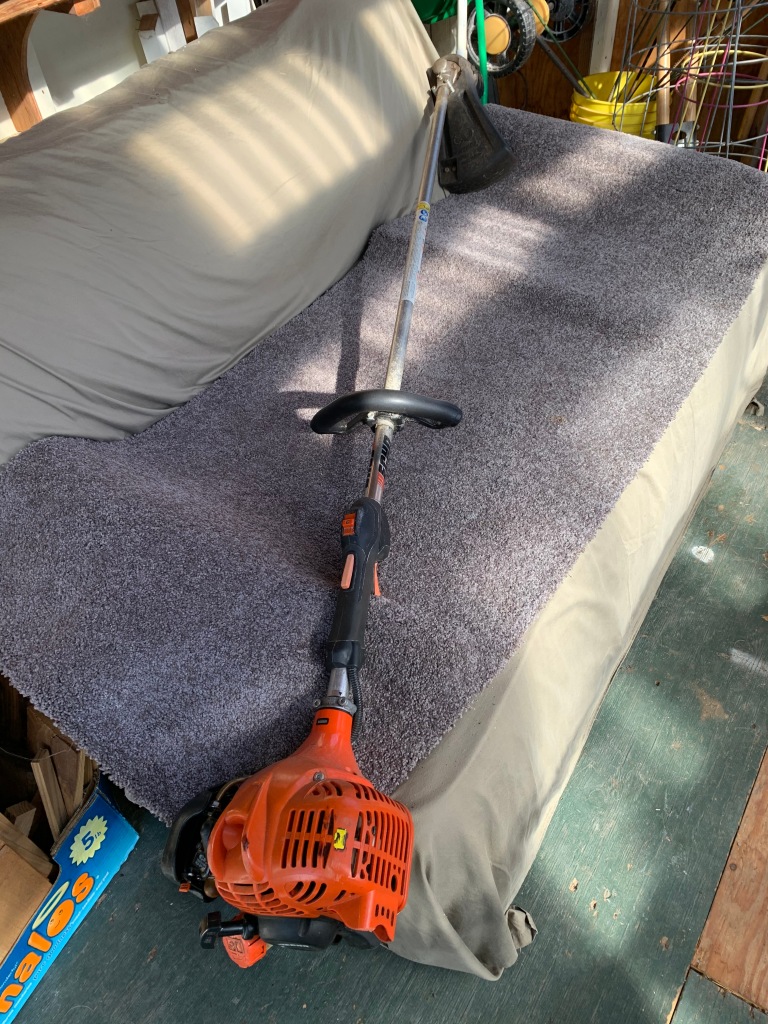
  3. My father-in-law gave me a nice string trimmer that he is no longer using
  4. The neighbors gave me a bag full of mushrooms that they foraged this week
  5. I visited the new brewery in town with my wife for the first time. We had a nice time.
  6. I also went out with friends for a social evening on Saturday.
  7. We completed our 2019 taxes and were net neutral on owning money. This was a first in many years.
  8. My daily alignment walks seem to be helping me set daily priorities and be more in touch with spirituality.
  9. I have completed preserving everything that is available to do so. Yesterday I canned peppers as pickled jalapenos.
  10. I completed a job on-time and in-budget.

When I look at the list, almost every single item also has a negative counterpoint. For instance, I had two interviews last week and I also had two rejections. One of them came as I was writing this post; perfect opportunity to practice seeing the positive.

When I look at the list, I am actually impressed with the number of things that seem to be positive. At this moment, it kind of makes me feel like I really am a negative person. I don’t feel that way but comparing my problems versus my reality it sure seems that way. So, it is something that I will continue to work on.

I will keep thinking praying and listening to try and become more grateful. I will keep writing and speaking to show my feelings. I hope to become a better person in the end.

October 19, 2020 – Store what? Why?

If you are like most people, including myself then you have municipal supplied water at your house. And when that is the case, the quality and frankly safety of the water is completely dependent on another entity the water provider. Now, that is normally not a problem but consider when there is one, you are potentially days away from the beginning of the problem.

It potentially seems wrong but I have seen more problems with water than any other utility outage. Last year, there was about a four month boil order in place for the state capital residents. That is over several hundred thousand residents affected by water quality.

When that incident first occurred, there was a reverse 911 call put into effect. This was in the mid-afternoon and by the next day, water was sold out throughout the entire area. We were not effected because our town has a different source of water, nevertheless the water was gone in all the towns in our area.

This was the beginning of a chronic culture of panic behavior. It was the same with toilet paper or hand sanitizer. People are not prepared to deal with any sort of outage or service disruption. Inventory in stores are not deep enough to service the needs of the entire population.

This is why I store water. Just plain tap water put into seven gallon jugs. I dump the water about once a year to inspect the containers and just refresh the supply. This usually happens in conjunction with our annual hunting trip, because we use the jugs to bring water to camp for the trip.

A minimum recommendation is to store one gallon per person, per day. That is for drinking, cooking and sanitation. I’ve got enough water to last about a week at that rate.

When I was in college, we had a localized flood turned landslide that wiped out a bunch of infrastructure including water delivery. In that case, the water was out for around a week. National guard had setup portable toilets and water distribution within two days of the event and showers came about three days later. While I am not saying any event will follow the others, there are two examples of what can happen.

Water can be saved in any clean container. Opaque is better than clear because it restricts light causing growth of biological life. You can put up some amount of water almost free. Even if you are paying for it at a store, it should be less than $2/gallon. The mark of someone that is prepared is that they are taking advantage of this time of plenty to accommodate if there is scarcity.

October 15, 2020 – ‘Tacticool’ Thursday

I thought that I would write about flashlights today. Now that the daylight situation is rapidly moving towards less than twelve hours a day in my area, it will soon be darker longer than light. Something I carry on my person is a flashlight.

Number one, a flashlight is probably the most used piece of gear that I routinely carry. It is useful when you drop something under the desk or taking a detailed look inside a furnace or diagnosing a basement light issue. I don’t think that it is too hard to try and find the virtues and uses of a flashlight.

A few examples of my flashlights

In today’s phone culture, most people think that the flash LED is an adequate light. While it is true that the one you have is the best one, I maintain that you are better off using this function as a back-up rather than your only flashlight.

A dedicated flashlight is a much better tool than the phone light. Flashlights are made to have the beam focused for longer distance. They can have a much longer run time and create a more intense cone of light. They also don’t take away power from the most important function of a flashlight, communication. Finally, it offers redundant capability.

Even though I have many different lights, consider the batteries. I have some that take AA, AAA, D, CR123 and rechargeable batteries (and even some others). All those different combinations are fine, but for everyday carry use flashlights that might share batteries for other devices like a GPS. That would mean you could carry one spare set of batteries and use them interchangeably if needed.

Flashlight technology has evolved rapidly in the last ten years. LED technology is part of that. The amount of power (usually measured in lumens) and run time has seen an amazing amount of improvement. Ten years ago when I bought the Surefire Executive (pictured in the middle) the high powered flashlights used CR123 batteries and put out 60 lumens of light for two hours. Now you can buy a 200 lumen light for $10 and it will run for 16 hours.

If you have cordless tools, often you can purchase a flashlight that will use the batteries for your tools. Not only is this helpful when you need to work on something in the dark, but they are sure handy around the house for a ready to go, bump in the night light by the door.

From a personal safety standpoint, another reason to have a light on you is self defense. A light can be used to identify a threat or blind an intruder. The shape of the tool also makes it useful as a kubaton. Of course, that kind of proficiency needed training and practice.

For full transparency, I am not always carrying a light. Obviously, it would be helpful to have everything you need when you want it. But in my case, the weight of all the gear pulling you pants down or your pockets jambed full all the time, I make a judgement call. When I am leaving the house I usually think to myself is it likely I will be somewhere in the dark. In the summertime the answer is usually no unless I am going somewhere after dark or going somewhere like a movie theater or mall. That calculus changes in the cooler months.

Besides having one on your person, one by the door and one in your go bag I would recommend you keep one in each vehicle as well. It is almost worth considering replacing old flashlights given how much improvement there has been. If you are looking for a starting point the Streamlight Stylus Pro for $25 is a good start.

October 14, 2020 – Fiberglass mesh or paper tape for drywall?

This is pretty esoteric, right? I mean it probably ranks right up there with plywood vs OSB or MDF vs solid wood trim in terms of excitement factor. Since I had some issues using both, I actually did some research about the subject myself.

This is the advantage of a scattered and lack of focus blog is that I can just write about whatever I am doing at the time and try to make it seem interesting and that I am an expert. Well folks, if you are reading this either I am an expert (to you) or you are desperate for this very important decision, so let’s get into it.

Drywall became a product in the 1950’s to replace plaster. It came into common use in the 1960’s and there is no looking back. It seems like some specific areas of the country still use plaster (over a backer board like drywall) but it is drywall for most of us.

The primary advantages of drywall are that it is inexpensive, quick to hang and is fireproof. The paper backing will burn but not gypsum (the white stuff). The disadvantages are that it is not waterproof at all and will support hazardous mold and mildew growth with continuous wetness. Also, doing a nice job of finishing requires some skill.

In my area of the country, drywall is finished with a texture to hide the lack plastering skills (or making smooth walls). Other areas of the country, it is more prevalent to see smooth finishing. What we are most concerned about in this post is the seems where two pieces of drywall meet. Tape is put over the seems to cover any gap if the drywall panels expand and contract with temperature and relative humidity.

Conventional wisdom says paper tape is the first, best solution. It is cheaper than the fiberglass tape and seams to be easier to work with. You start by putting a mud bed, the width of one putty knife, I like the four inch knife. It is said that as that panels move behind the tape and you get a more consistent smooth finish.

In the picture above, the paper tape was incorrectly applied without the mud bed behind the paper tape. This has led to the tape pealing off over the years without adhering to the drywall. I have made the repair by adding new tape and top coat. I will use a wider knife (6″) for the next layer on top. The third pass if there is one will be an 8″ knife. You keep building successively wider knives and passes until the the tape disappears.

In this picture you see another manifestation to the same fault. A crack has developed where the paper tape edge transitions. Again, the mud bed was not set behind the tape creating a gap.

Fiberglass tape’s best use is covering gaps. This material is much more rigid and all the grooves allow you to press mud into the tape. I have found that it takes thicker passes to cover the fiberglass adequately, but it does do the job of covering smallish gaps, like less than 3/4 of an inch.

In my bathroom that I just completed, the contractor used fiberglass tape exclusively and it came out great. So, it is not that it can’t be done but I think it takes more experience to do a nice job.

The secrets that I have learned are as follows.

  1. Do not overwork knife when applying joint compound. Less is more because you can always add more later.
  2. When using wide knives, work the joint compound out of a tray rather than the container you purchased. You need to be able to continuously scrape your knife edge clean and get an even layer of compound on the knife. That can only be done when you container is big enough to hold the knife.
  3. Big, blobby mistakes can be sanded down but it is a dusty mess and surprisingly a lot of work. Use a sanding screen rather than sand paper to do this job. Screen is found around the sandpaper in stores and doesn’t clog nearly as quickly.
  4. For texturing, I layer a bed of joint compound and then dab at it with wadded up plastic bag. I then knock down all of the dimples with a clean trowel or knife to get the effect.
  5. Don’t feel bad if you are intimidated or don’t get it right. This takes practice to do a nice job. I have only recently gotten the confidence to do whatever, whenever. I used to do everything possible not to disturb the drywall for fear of finishing failure. Now, I find it easier to cut out a whole wall if it will make it quicker to do a job.

So, you see the answer depends on the situation. Both can work and both have advantages with different variables.

October 13, 2020 – What to do with liver?

I am definitely not pretending to know the answer. I don’t know how many people have ever seen a beef liver, but I would estimate the size to be around 10 pounds. That is a lot of meat that many people probably don’t think they like.

When I get one, I try to pre-process it a bit. I cut it into chunks, de-skin it and make it generally more easy to cook straight out of the freezer. The question still remains what to do with it. Maybe it will help if I talk about what I do and what I have tried.

There are at least a few tips that I use pretty routinely.

  1. Soak the liver in milk overnight. I suppose you can use milk, cream, half and half or buttermilk. I usually try to use was seems to be on the verge of expiring and cut with the balance of milk. This technique seems to remove some of the minerally taste that is usually part of the turn-off for liver.
  2. Cook liver rare (or medium). One of the things that turns it into shoe leather is over cooking. It also seems like overcooking also brings out the stronger flavors and the rarer it is, the more mild it is.
  3. Prepare only what you think you will eat for the meal. Reheating results in over-cooking.

Here are some things I have tried over the years with liver

  1. By far and away, it seems like the most successful preparation is liver and onions. I think one reason is that you can avoid over cooking.
  2. Boudin – a cajun sausage that is made with pork, rice, and spices. My result was OK, the problem was that it was too dry and needed more fat. I am going to try this again someday.
  3. Chili – I thought that maybe I could spice my way out of liver, but it still ended up being pretty livery, so not recommended.
  4. Fake foie gras or pate – I have tried grinding cooked liver with butter and spices but I didn’t find it terribly appetizing on a cracker.
  5. Hash – This one has some promise. Fry with potatoes, onion, pepper, bacon, and serve with eggs.

Traditionally, liver is a fresh meat. It has been one of the first cuts and eaten immediately after butchering. The lore is that organ meat provided a source of essential nutrient when choices are limited.

I think that it is also worth observing that organ meat is the first thing animals eat when eating other animals. So, there is something to this, I am still looking for the right combinations of recipe and technique. Until then, I would be interested in other people’s ideas because I still have a lot of liver in the freezer.