Category: Review

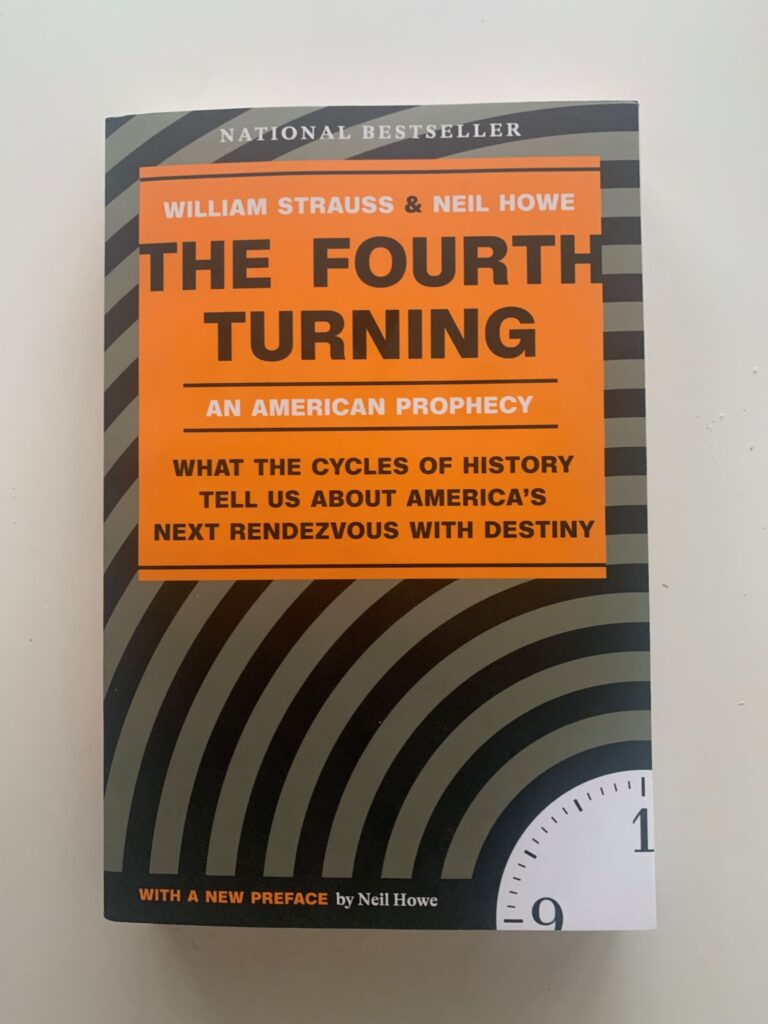
January 10, 2025 – The Fourth Turning, Chapter 1

Finally, it seems like a book that I can get into. I have already read beyond the required chapter as I am writing this. This book seems like one of those that I could read a couple of times because it is pretty deep. Not only is it filled with history and facts but it is deep as well.

I will cover a little more than Chapter One today because the preface is relevant to the whole story of the book. The preface is an update on the span of things that have taken place since the book was written. Unfortunately Strauss has passed away but the book was published in 1997. For you math challenged, that is over 25 years ago. And if you follow the book, that is an entire generation.

I talk about the nineties a lot but it is helpful for perspective. 1997 was squarely in the heyday of Generation X. The oldest Xers were in their early thirties and the youngest were in their mid teens. Not only has twenty-five years of history past but so has the perspective of what those events meant. I will extend some grace to the book as result, but any good and valid theory should be able to stand the test of time.

The key concept in this chapter is the measurements of time. According to the authors, there are three measurements of time. They are described chaotic, linear and circular. Let me give a brief definition of each.

  • Chaotic – Random or unrelated
  • Linear – Continually evolving or not repeating
  • Circular – Repeating

Let me try to explain a little more behind these three from the perspective of Strauss and Howe. It is widely held that Chaotic time is pre-recorded history. What they are saying is that there was no record of events beyond the living. As a result, everything seemed random or unrelated. The hundred year flood probably occurred before the last living soul and therefore it seems cataclymic.

Linear time came into being largely as a result of religion. I am most familiar with Christianity so I can speak to that. When Christ was born, the Jewish belief of the coming of God was fulfilled. As we sit, we are waiting for the rapture or the second coming in 2025 Anno Domini. Once that occurs, life as we know it will no longer exist. Therefore, as far as Christian history is concerned this is a linear pattern.

Many ancient cultures actually believe in circular time. There is much more about this next chapter so I don’t really want to spoil next week. Regardless of religion, the earth has a cycle, seasons have a cycle so why not time? This belief was superseded after the fall of Rome and the heavy dominance of the church but was rediscovered in the Renaissance in the western world.

It should be no surprise that I think the truth is somewhere between the Vin diagram of the three. There has to be some random events, Those would have to lead to linear time but in turn, common existence is circular. Lets go back in time to a controversial or unproven history. What if the meteor had not hit the earth and created a global cloud that killed the dinosaurs? That is random and linear. While the earth’s celestial travel is circular, the chances of a collision again have not been mathematically determined. The odds of it happening again are not known but it at least seems chaotic.

I don’t think that it is foreshadowing or even a spoiler to say that Strauss and Howe believe in circular time. For that matter, I believe I do as well. It is their contention that cycles have highs and lows but that means that we as a society are bound to experience both. When you look at their perspective and timing of the book, they were in the midst of a huge economic boom and the fall of the Soviet Union. The US was unstoppable in the late 1990s. Uh Oh, trouble is bound to follow, but where? Hence the name of the chapter “Winter Comes Again”.

End Your Programming Routine: OK, so we are off to a good start. Next week is going to be all about the origin and particulars of circular time. This is the setup for the whole premise theory so we have to restrain ourselves just a little bit. Let us enjoy the journey a little bit since last year was a difficult one on Friday.

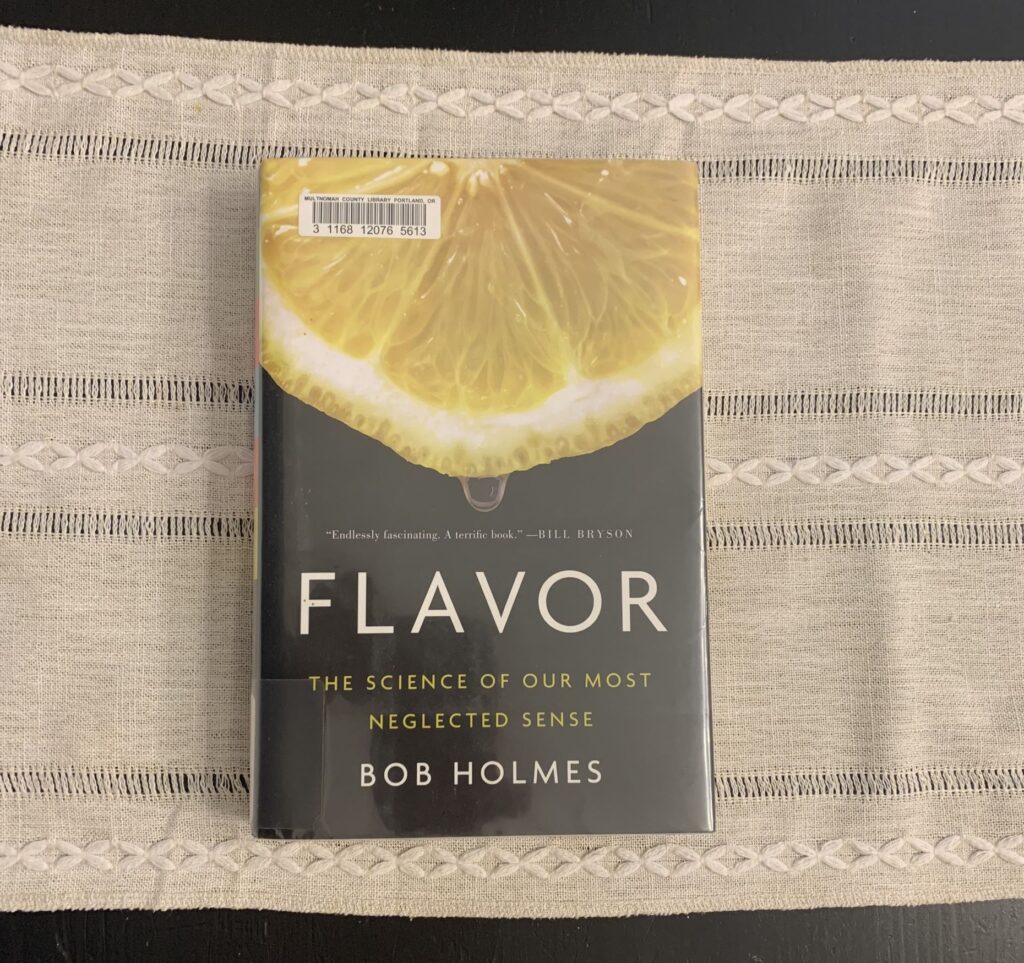
January 8, 2025 – Flavor: The Science of Our Most Forgotten Sense

Flavor was going to be an LCCBC selection for November. That is until circumstances changed but I had bought the book already. It is not a terribly long book. Even so, it took me quite a while to read with all of the interruptions of the holidays. I started it over the Thanksgiving week but finished it only a couple days ago.

The book is a combination of the fascination and the mundane. For instance, flavor is the combination of taste and scent and memory. I had never considered it before, I thought flavor and taste were actually the same thing. Memory had nothing to do with it. How fascinating.

On the contrary, some of the stories and anecdotes are repetitive in certain chapters. About two thirds of the way through the book, I was ready to give it a thumbs down due to just not enough content. But, I kept going and was rewarded with theories on developing flavor in meat and steaks.

What I learned about flavor was definitely interesting. First of all, a lot of flavor is scent. People that lose scent for whatever reason also tend to lose the ability to taste. From that point, eating is only a matter of survival and that can be a push. The author also proclaims that humans ability to detect scent is just as good as other animals (including dogs). The difference is that because we are upright, we are much farther away from most scents on the ground.

Taste is much more of a mystery. Apparently, there are 400 some taste receptors. They are specifically oriented toward specific compounds. Because there are millions of compounds, receptors have to do multiple duty or work in some sort of combination. In addition, some receptors commonly die as we age. For that reason, our preference/tolerance for certain compounds change over time. All of this work is incredibly speculative given the sensitive location of the receptors.

Flavor is the money. We all at least know somebody that cannot stand tequila or gin. The memory of the experience is a survival mechanism to keep us from accidentally poisoning ourselves. Extremely positive and negative memories from certain foods are built into our genetic responses.

It took me years to be able to smell let alone eat the Olive Garden salad dressing. When we arrived from our honeymoon in Mexico we went out to Olive Garden for dinner. I picked up a bug in Mexico that led to 105 degree temperatures amongst the polite symptoms. It was that strong vinegar component. I still loved all other high acid, vinegar forward foods but it was that particular combination (and probably setting). That memory has waned into a laugh now, but the flavor was real.

The other thing this book gets into is artificial flavoring. I am always into learning the dirty little secrets of the food industry. The biggest takeaway I got was that most real foods are way more complicated than what can be duplicated. It is not price competitive. The more a company wants to pay for flavor, the more things that can be put in to get closer to a natural flavor.

Since artificial flavoring is a compromise (even using the real chemicals we taste) there are also doppelgangers. Some flavors mimic or are similar too the real ones. This is the reason artificial grape tastes like artificial grape. The real compounds oxidize instantly and cannot be used realistically.

The most interesting and now defunct element of the book is that IBM developed artificial intelligence for food called Chef Watson. You could add an ingredient and get a suggested pairing or a couple of ingredients and get some recipes. IBM shut down Watson in 2021 but I suspect that newer technologies like Chat GPT has the same capabilities. This opens a whole new world to AI skeptics such as myself.

End Your Programming Routine: Let’s bottom line this. If you accept that there is going to be some repetition it is definitely worth the rest. As a chemist that has spent a large percentage of my career working with the food industry, I didn’t find the science overwhelming. I did find myself trying to visualize the chemical structure rather than accepting the name and moving on. Given my distance from chemical structures, I sometimes wandered off in the weeds. I don’t think a typical reader would have the same problem.

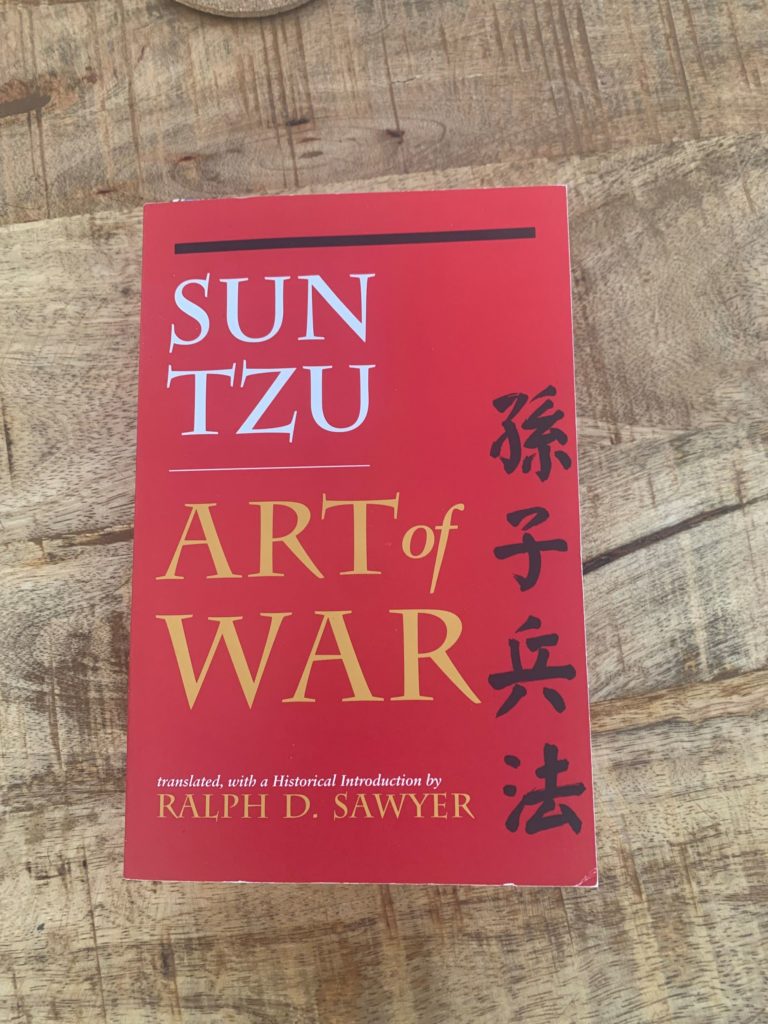
December 6, 2024 – The Art of War, Conclusion

If you were reading along with me, then you as well have now read another ‘classic’. This is definitely the first time for me reading the Art of War. I have heard a whole lot of references to the book over the years. Now I can contribute my own opinion on it is worth to the average person.

I am kind of a funny guy. I have extreme reverence for some old things. Architecture is an example of that. But when it comes to books and media, it turns out that I am a skeptic.

Throughout my academic life, I can remember reading things like The Iliad, Shakespeare and Moby Dick. I would say that they have an important role in literature because of their existence. As far as being great works, that is definitely debatable in my opinion. Each surviving work provided a framework and story lines to supplement new work.

Sticking closer to the subject, I see Art of War as a similar comparison. If you were studying military history then this is a very important work. It has shaped military tactics and thoughts for thousands of years. But, aside from that I really don’t see a lot of value to the non-military, non-historian, modern man.

I read that there have been attempts to turn the study of Art of War into some sort of business philosophy. I fail to see the connection unless you are going to make metaphors for terrain and feudal leadership to other situations. Certain authors like Ayn Rand and George Orwell clearly are using innuendo to make a point. I really don’t believe that Sun Tzu was using military terms for guiding the modern business man, especially because this incarnation did not really exist.

Was the book worth reading? From a standpoint of checking a classic off of the list, yes. From the standpoint of getting a lot of insight from the book, no. This book is for military historians and the Sinophile. It doesn’t hurt to read these short chapters and try to rationalize what is written as a thought exercise. I wouldn’t expect it to change your life in any meaningful way however.

I know that when I started this, I talked about how this was a book of several. I heard a conflicting version that Art of War was an amalgamation of different authors. This was pieced together from oral legend and ancient text fragments. Sawyer goes through a lot of effort to justify credit of Sun Tzu to the work. You can make similar claims about the Bible whereas the difference is the application. It is the subject and not the author that makes the book valuable.

End Your Programming Routine: I was listening to the Art of Manliness podcast and I heard this statement “negative people are perceived as smarter”. I don’t think of myself as negative. But, if you are skeptical and open minded then you are much more likely to keep searching for the truth. Whereas if you just accept something at face value then you are susceptible to any rumor that you run across. Read Art of War and decide for yourself. You got my opinion.

November 29, 2024 – The Art of War, Employing Spies

We have reached the end of another classic tome. You will get my full opinion on the overall book next week. If you have been following along, then you probably can guess where I am going to go with this. But for now, we have one more chapter to get through.

I get the sense that what Sun Tzu is implying is that the use of spies will help shorten the war. But it is the beginning of the chapter that caught my eye. Continuous fighting is extremely costly. First and foremost, it effects the men that are fighting. That is obvious. But, then it effects the families and the economy and the morale and the country overall.

Let us just look at things for a minute. Who benefits from twenty years of war? Was it the soldiers? No. Was it the families? No. Was it society? No. So I ask again, who benefits from the twenty years of war in Afghanistan? Was it freedom? No, we have less than ever. Was it the Afghans/Iraqis? No, they are right back where they started.

Remember when I talked about right for the wrong reasons? Here we are. This is not hindsight. It was less than four years ago that the US withdrew from Afghanistan and the writing was on the wall years before that. Sun Tzu wants spies to shorten war. For some reason, others do not want the war to end.

Who might that be? If it is not good for the people or society then who could possibly want it to continue? The only answer is the people that profit from war. That would be first and foremost the military industrial complex enabled and sustained by politicians. Such an insidious relationship where they wrap themselves in an American flag. They are there for the soldier and freedom.

The politicians use their Newspeak to point fingers at the other political side and the fictitious enemy. You know that it cannot be true when all the news stories cover children following soldiers around asking for candy and the people are so warm and welcoming. The perception given is that people are liberated and happy when inexplicitly the war continues.

There is certainly a time to fight. The very best reason is when you are invaded and you definitely don’t want it. So Poland in 1939 is a pretty good reason. Sometimes getting provoked is a pretty good reason. But like I was taught in Sunday school, do unto others that you would have done onto you. Or how about grade school? Two wrongs don’t make a right.

What amazes me is the approval rating of congress has been perennially less than 30%. And yet the re-election rate of incumbents is over 80% for all positions (house and senate). So let us say that I disapprove of the job the senate has done but yet I have sent my same senator for six straight terms. Is it always someone else’s fault? Logic would have to say no. Maybe, just maybe I shouldn’t keep re-electing the problem.

Unfortunately, when military actions are taken without a declaration of war, the system is broken. And when the system is broken, nothing can be trusted. You cant actually expect someone to change a system when all involved ignore the rules.

I am not going argue that intelligence is key to making the best decisions. It is really hard to say that Sun Tzu includes that vast topic under the umbrella of spies or not. It doesn’t really seem written that way. So again, if we stay myopically under spies, I cant think of relevance in the civilian world.

End Your Programming Routine: I should talk that that I am advocating for power to the people. I don’t even believe that we can vote our way out of this. At the same time, I cannot agree with Sun Tzu more that war is costly. It is why it should not be entered lightly and should end as quickly as possible. We absolutely get caught up in taking sides on a conflict where we are always the losers.

November 22, 2024 – The Art of War, Incendiary Attacks

This is chapter twelve and after today, one more to go. If you wanted to learn how to attack with fire, today is your day. This chapter is all about when and how to do so. Once again, good leaders will use this tactic prudently and appropriately.

To tell you the truth, I cannot think of anything relevant about the philosophy of attacking with fire outside of a military realm. I remember in the early 1990s the movie Backdraft when sometimes fighting a fire requires setting another fire to deplete the oxygen out of the main fire. So, I guess there is a counter tactic to using fire as a weapon. But that is not what this chapter is about.

If we look at fire as a weapon and its effective use requires specific tactics then maybe we can look at things in a different light. Said more generally, use certain techniques to get the results you want with a particular tool or weapon. OK, what does that really mean.

I remember that as a kid, I used to love to go to the used bookstore. It was one of the few places that my mom would let us spend money and sometimes she would pay for books too. Sometimes I would go to the military non-fiction section. I was looking for encyclopedia like references of equipment and other things to dream about being deadly awesome.

I remember one time I found the Army Survival Guide. I read that thing cover to cover. I learned that I could take a parachute and make a shelter as well as weave twigs together to make a fish trap. There was lots of information about snares and traps included.

Around the same time, I was taking the Wilderness Survival merit badge in Boy Scouts. I built a survival kit and spent the night in a shelter that I built in the woods. I thought that I knew a whole lot about wilderness survival. But, the truth is I had a lot of resources for a short duration (overnight) and a lot of useless knowledge.

The army survival guide was helpful from a stimulant standpoint. But, lets be honest I wont have a parachute with me. This was long before shows like Dual Survival came along. Have you seen how effective their traps and snares are? These are essentially professional survivalists barely surviving. Clearly, man evolved from living entirely off of the land so I know that it is possible but there is a huge disconnect from that civilization to ours.

My whole point of this is that it is helpful to have a reference as a starting point. That is The Art of War or FM 21-76 Army Survival Guide. But practice and living it are the only way to become proficient. We can read all we want about the best fire to beat our enemies but it oversimplifies things tremendously. Good luck starting a fire outside today in my neck of the woods, we have the bomb cyclone going on.

End Your Programming Routine: Each week I am trying to find a way to say the same thing over and over again. The right tactics used properly will yield better results. As I stated in the beginning, I honestly don’t know what the value of this chapter is. I could think of some things that I want to burn down, but that is not really appropriate. Why don’t we leave it at that.

November 15, 2024 – The Art of War, Nine Terrains

Another chapter on terrain. This leaves us with two more reading chapters until we are done with this book. I will wrap it up with one more opinion on the whole book and then moving on to something else. I am thinking that I might give book reviews a rest until the new year since we are so close to the end of the year. Don’t worry I will announce what it is to give you a chance to start.

The thing that makes this different the last chapter is that this one talks about the tactics on the different types of terrain. I am not going to rehash the types and responses, you can read that for yourselves. But the general idea is the deeper the army goes into enemy territory the different name it has. As a result, the different strategy and tactics to put to use.

I have to say that I am struggling with relating this outside of war again. I mean, I suppose that you can change tactics on any campaign when the situation dictates it. There is a time in a business when even though things seem like they are going well, trouble is just around the corner despite things look rosy right now.

There was a time that I was working at a small company. The company was making money hand over fist. We, the workers were killing ourselves working 80 hour work weeks. I am not begrudging the owners by any means, this is a story about tactics. The company scored a huge job and they pulled out all the stops to make it worth the effort.

But, something was not quite right underneath. Even though the owners were buying boats and vacation homes, deep down they were worried that this couldn’t be repeated or sustained. It was part that they had gotten what they wanted from the business, but they also knew that there were responsible for thirty some mouths now. So we ended up merging with a larger company.

The point is that things never looked better from a financial standpoint but a change of tactics was called for. I will never know if that was the right decision but I think this falls right into Sun Tzu’s advice. We need to keep our eyes open in all situations despite what it seems like.

There is more jibber jabber about leaders and treating the group as one. If the group is one then they will work with predictive results and in a more cohesive fashion. I say it in that tone because I think we have had some of this beat in chapter after chapter. There is nothing like repetition to emphasize the point.

End Your Programming Routine: If I was going to summarize this chapter, I would have to say that tactics are situational. Do different things depending on the situation for the best chance for success. I can’t say that is a revolutionary idea, it seems like a common sense one. The real trick is knowing accurately what part of the situation you are actually in.

November 8, 2024 – The Art of War, Configurations of Terrain

I am trying to keep it short today. This is partially because I don’t have a whole lot to add, but also because while I think that this is solid advice, it is not universally true. You will see why as you read on.

This is one of those chapters that while might be good advice and good tactics, is probably outdated. The first part of the chapter is about the different types of terrain.

  • Accessible – equal advantage either side, take the high ground
  • Entangling – can move forward but not back
  • Deadlock – no advantage either side
  • Enclosed – can move back but not forward
  • Precipitous – take the high ground

The reason that I believe that this is out of date advice is that when we look at modern warfare, it is way more complicated. Adhering to this advice strictly, there would have never been invasions of the Pacific Islands during WWII. Modern weapons such as airplanes have drastically changed the strategy for assaults.

With Veteran’s Day coming up, my most familiar conventional war was World War II. I think about those ‘kids’ putting out temporary bridges for the invading force to use. I heard a story about US Seabees bulldozing a landing strip while being shot at. I think by Sun Tzu’s definition, these were probably bad tactics.

On the other hand, the US could have used some Sun Tzu wisdom in Vietnam. I think that we thought based on what we did in WWII that we could bulldoze our way through that war. Certainly, we didn’t heed the advice to get out of the swamp as soon as possible. Bombers, artillery, gunships etc could not clear out the jungle. We haven’t got to or I don’t know if Sun Tzu addresses the will of the opposition.

I want to relate this to the election badly or at least something not military related, but it is hard. I suppose if we say the terrain is something like the economy then you might say stepping into the battlefield with weapons like it is ‘your fault’ and you ‘just don’t get it’ were inadequate. The democrats stayed way too long in terrain that was not advantageous.

Even stalwart supporters like minority groups thumbed their noses at Democrats. This is now in the territory of moving forward without the ability to move back. I have no idea why the party of Lincoln ultimately got the no questions asked approval of the party of slavery in the 20th century. The Democrats were the party of segregation in the 1960s. And yet they didn’t blink an eye to support the Democrats.

A short diatribe. When my wife and I moved to South Carolina in 2001, my wife’s aunt was disturbed. She said ‘how could you move to a state that Strum Thurmond was a Senator’? Strom was a famous racist Democrat in the 1960s and my wife’s aunt was the Democrat that I spoke of in my podcast Monday. How those two could be in the same party is beyond me but Strom was now a Republican for twenty years.

I don’t care what party is after your name people are who people are. That being said, those people an change. I am not going to give them a current inch but when you start moving in the right direction, it is tie to let the past be the past. I think Trump started with advantage to move forward, but not back. It turns out that was the result of the election.

End Your Programming Routine: I had to try to find some relevance outside of military tactics because I don’t find this chapter super relevant. As such, I had to make some stretching to try and make this pertinent. While I don’t trust either side, clearly the tactic to denigrate the common man failed, this time. Don’t be surprised if either party brings it back. I am just happy that the group that was perpetrating it got it shoved in their face. That is picking a battle in the wrong terrain.

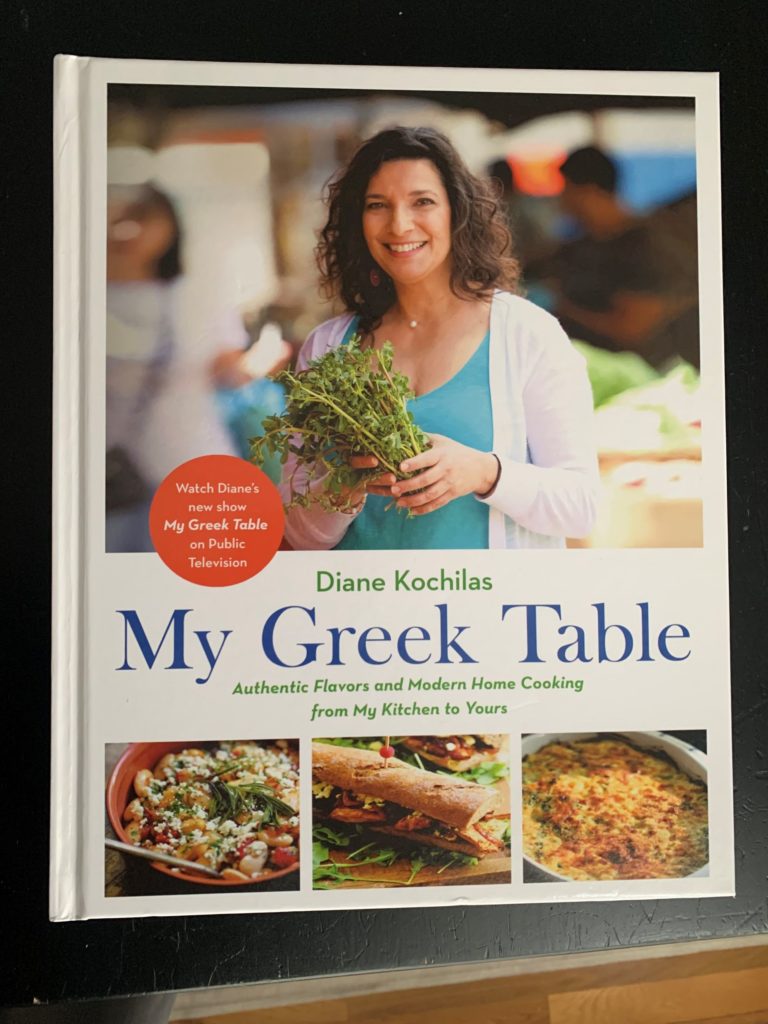
November 6, 2024 – My Greek Table: Authentic Flavors and Modern Home Cooking From My Kitchen To Yours

Welcome to the November selection for the Left Coast Culinary Book Club. This is once again a cookbook with the focus on Greek food. Of course I have heard of Greek food, but I never realized that there was a show on PBS focused on it.

When a cookbook is a monthly selection, I usually read the text but not all of the instructions. I read the recipe header and scan through the ingredients list. This one is no different. I try to pick a few recipes that I might want to try as well as keep an eye on what I might want to make to share at the monthly meeting.

Truthfully, I haven’t quite finished reading all of it, I will but I have read enough to get the gist of what is going on. This cookbook is self described as not specifically authentic but ‘in the spirit of’ Greek food. It is meant as more of a framework to get started. This isn’t an exhaustive list but I have determined that the common thread is tomato, artichoke, cucumber, olive oil, oregano as the primary flavors. It does appear that most recipes have one or more of these ingredients.

I suppose I can blame my heritage and upbringing that is northern European. As a result, I definitely don’t groove on Mediterranean food. I don’t find my tastes to be universally one deminsional however. Mexican, Indian and Korean are cuisines that I find myself drawn to. I suspect that Mediterranean is close enough but not quite what I expect or want.

That being said, I can always find a few things to try. I haven’t totally decided but I think that I am going to make either meatballs or a Greek sloppy joe. Reading the book, I learned that there is a concept called Meze which is like sharing small plates. This is like the more familiar Spanish tapas with a group. It is small bites with a lot of variety. Sounds perfect for a group setting.

We have some frozen pastry that I would desperately like to get rid of but I haven’t found the right recipe yet. Maybe by the time I get to the end of the book, I will find something. By the way, this technique ends up driving a lot of my cooking decisions. ‘What do we have that I would like to get rid of before it goes bad or I am tired of it in my way.’

What do I think of the book? Given that it is not my first choice of cuisine, I have to say that it is not my favorite. There are a lot of recipes that are all variations of the same kind of ingredients. I guess to me, it doesn’t seem given so many recipes (400+ pages), the variation is not very different or novel.

It’s nice to have choices. It sure beats not having any. Like most cultural cookbooks, there is an emphasis on good ingredients. Using tomatoes in mid winter kind of degrades the overall quality of the recipe. In my climate, there is probably only a couple of months where ‘good’ tomatoes are possible. That kind of narrows down the window to make a lot of these recipes as they are intended and likely best.

I’m sorry, the book just wasn’t for me. The truth is, a helpful review would have something to compare and contrast. If I didn’t like this one then what would I recommend? This is my problem with a lot of Amazon style reviews. The evaluation is only made on limited experience with one product. Powder puff reviews just talk about what you would find in the book and real vague language. I will let you do that.

End Your Programming Routine: This review is only my opinion, so don’t get hurt. If you like Greek food or if you are a fan of Diane Kochilas then by all means check this book out. We make gyros from time to time (I have no idea if these are officially Greek) and I like them. I have said this before, I usually find two or three recipes out of a particular cookbook. That shouldn’t be offensive, but a fact. I have stacks of cookbooks now. Some of them, I barely open.

November 1, 2024 – The Art of War, Maneuvering the Army

There is no mystery here, the title of the chapter is actually what it is about. Some translations call it Army on the March or something of the like. At least in my translation, I would say that it is a little more than marching but what to do on the encountered terrain is included. At least this chapter is not a complete mystery.

Once again, I would say that the advice is pretty common sense (at least I thing so). It is such things like, if you are in swamp do whatever you can to get out of the swamp or try to pick the higher ground for encampment. It also offers some intuitive advice like if you end up fighting in a swamp, move to end it quickly or get out of the swamp. Or in other words ‘don’t get bogged down’ do what you can to stay in strategic advantage.

There is also some tactical tips in this chapter. Some examples include frothy stream water means that it is raining upstream. Certain dust cloud formations indicate chariot direction and army composition. I would say that this kind of advice is not terribly practical at this point in history. We don’t have too many chariot armies to deal with. It is possible that tanks make different clouds than trucks, I just don’t know. Reading Sun Tzu, I can only comment on what is written.

It doesn’t mean that this line of thinking is totally devoid of value, we just have sift through the non-applicable to the applicable. For instance when I am in the woods, it is often the case that when we humans (me) blunder into the area, animals are disturbed. As long as you sit very still, things will start coming back to normal (before blundering in the woods). I take from it that humans interact with the environment. Knowing the impact of our interaction gives us a strategic advantage over those that do not.

Since playing army and tactics are not super relevant to most of us, there is probably something else that we can get out of this chapter. It reminds me of a saying that is common in self defense circles. ‘Don’t go to stupid places with stupid people and do stupid things’. What that means is that if we knew the future, smart people would not get into trouble.

Said another way, if you knew that going to a certain location was going to get you mugged, a smart person wouldn’t go. We can have all the bravado about concealed carry and BS but wouldn’t it just be better to not be there in the first place? I think so. So, if you are getting the sense that a situation might be trouble, this is your first indication to avoid it. Speaking of which, I would avoid downtown of major cities just after the election Tuesday night.

Using an example from the recent news, Kyle Whittingham. He went to a riot with a rifle under the auspices of protecting a friend’s property. Stuff went sideways and fortunately for him, he got out unharmed physically. But, it sure doesn’t mean that he didn’t have consequences. After having to stand trial and being exonerated, he is now somewhat of a social pariah. When you have to stand and fight, I get it. But that is going to stupid places. I suspect that he wishes he would have just stayed home.

What I think Sun Tzu is saying is that he willingly went into the swamp. Then a fight started. Whittingham fortunately followed Sun Tzu’s advice and got out of the swamp quickly, hence he is still with us. March through the swamp as fast as possible, if absolutely necessary.

End Your Programming Routine: I have to say that it is refreshing to not have to read a lot of other’s interpretations to understand what is the point of the chapter. That is giving me flashbacks to Dante. It is just that I am not versed in eastern philosophy so I don’t recognize what is happening even when it is hitting me in the face. Machismo of the past might call my advice cowardly. But, you never know who is bringing a gun to a fist fight. There is a pretty good chance that I will.

October 25, 2024 – The Art of War, Nine Changes

As luck would have it this week, I was listening to a podcast called The Essential Framework to Understanding the Art of War. After listening to it, then reading the transcripts I am sure that I didn’t get a lot out of it. I would say that there are two sort of contradictory things. One is that you cant just read a little bit and get the whole concept. On the other hand, while reading pick one thing that resonates and pursue it (kind of what I tend to do).

To begin to understand it, we really need to have a grasp of the Chinese philosophy and its foundations (see Chapter One). Really though, I should be talking about Chapter eight, not some podcast. I just thought that maybe this tip might be helpful if you are struggling through this like I am.

I feel like it is a little disingenuous to take a two page chapter and copy a two lists out of it, so I wont. But, I do have to talk about them. The first list is the nine items that a leader must act upon (or potentially change). This is the namesake of the chapter. The second list are five items that can cause a leader to fail. It could also be construed as weaknesses or vulnerabilities of a leader.

An excerpt from list one

  1. There are roads that are not followed
  2. There are armies that are not attacked
  3. There are fortified cities that are not assaulted
  4. There are commands from the ruler that are not accepted.

You would think that as book smart as the US military is, they would have read and studied Sun Tzu. That being said, the first problem is accepting all commands from the ruler. As a result, they will go down any road, attack any army and siege any fortress.

I wholeheartedly believe that the US military is the best trained, the best equipped and willing to do anything. We can subjugate any population as long as we are actively involved. The problem being is that I don’t believe that our moral values permit this type of ‘victory’. We want to go in, kick butt and then have them thank us for the pleasure.

Obviously, you can tell from my tone that there is more to this than what I am saying. I agree with Sun Tzu that some wars are not winnable. This is the very reason that Israel is going to spend all this blood and treasure to be in the same position when it is finally over that it is when it starts. I am not being over dramatic about my hope that this battle will be over and the world is still intact.

Vietnam, the Middle East, Afghanistan these are all unwinnable because when the people don’t want intervention, it is futile. We just cant seem to understand that. I completely get the desire for vengeance for 9/11 but twenty years of war for what? The official statistics are 2448 US casualties from 2001 to 2021 to their 243,000. But, what the conflict did to the ones that came home. I personally have observed more than one veteran that took their own lives as a result. I kind of think this is a nod to Sun Tzu and his teachings. Some battles should not be fought.

End Your Programming Routine: I am not a pacifist nor am I a conscientious objector. I am fully in agreement with defending life, liberty and property. This is where I differ philosophically from our current view of freedom. You don’t find threats to that in Afghanistan or Vietnam. All you really find is a war machine, death and destruction of both guilty and innocent parties. Don’t we believe in letting ten guilty people go at the expense of convicting one innocent person?