A couple of years ago, I did what I always do. I waited around until the last minute to start Christmas shopping. My dad is not too hard to shop for, he is pretty predictable in that he is using the same fishing rod and reel that he had when I was born. That being said I still need to feel like I need to put out some effort. I was browsing through the fishing isles and I saw these woven rod covers. I had never seen anything like this before.
As I often do, I will go back to my childhood again. I would say that we probably took at least one fishing trip a year. Some years it was four or five and some later years none. But, I will never forget the sound of clinking willow leaf spinning lures as the poles are propped up in the boat as my dad is pulling the boat out of the water. In all those years, I will never say that I remember any rod damage but these things are inexpensive and they couldn’t hurt.
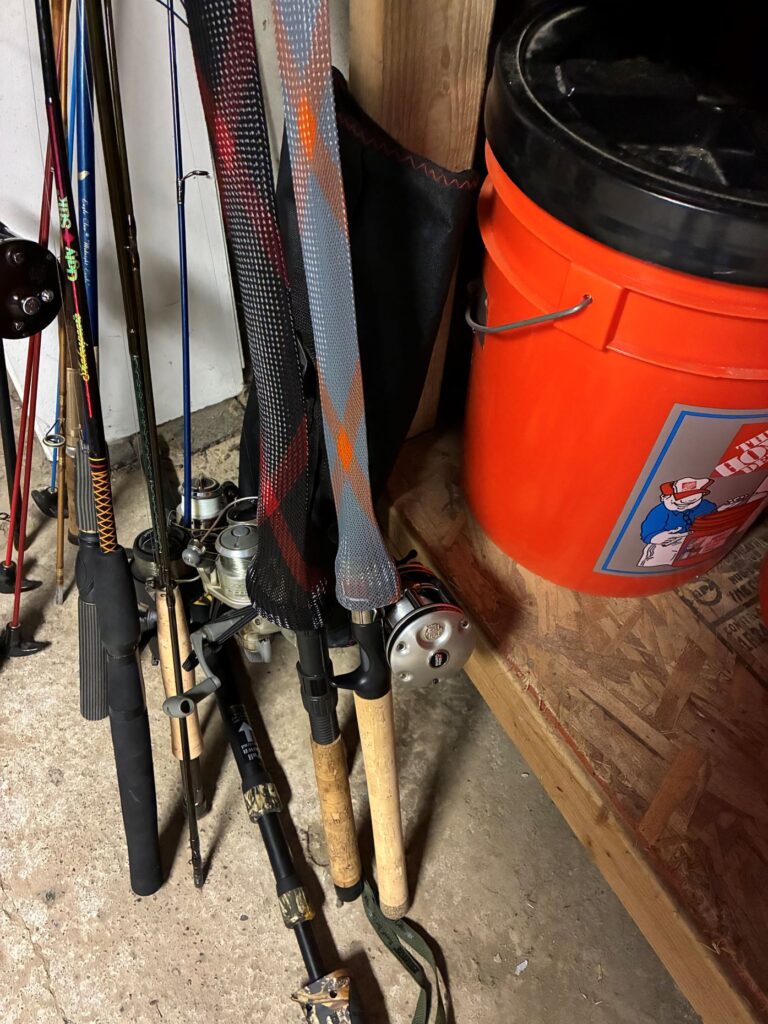
I had kind of forgotten about those rod covers until I was pricing out heavier weights for my ocean going gear and I saw the display. I remembered that I had bought some of those for my dad and that I was interested in how they worked. Now that we spend a couple of days a week at the lake house, I am routinely taking different rods back and forth. I don’t make a habit of leaving my more expensive setup at the house considering the owners still have the right to show and sell until we actually close the deal.
I don’t feel like I need a cover for every rod that I own. Really, I only want a cover for rods that I am taking back and forth. So, I got a couple of the to try out myself. One thing that I learned is to buy them on Amazon. At Sportsman’s Warehouse, one cover costs $12 whereas on Amazon I paid $7 for two. They also come as six and twelve packs (or something like that) at even more of a discount. I just didn’t want that many.
What is the criteria for success? Clearly that is the lack of broken poles and to a lesser degree scratches. They also advertise that you can leave your pole rigged up so the lack of hooks and closures snagging on anything else could be a perceived benefit. As I stated earlier, I have never had a broken pole as a result of transportation. These are items that are mostly about making you feel better about using.
When I started researching the options, I soon discovered that while the combinations seemed vast, actually there really were not that many choices besides color and package quantity. The primary choice is between casting rod or spinning rod. Then, most of them are for rods that are between 6 1/2’ and 7 1/2’. Those are common, safe choices.
When I look at my fleet of rods, I have a 4 1/2’ and a 9’ rod as well as sizes in-between. I would say that the majority of my inexpensive rods fall in the 6’ category making them too short for these cover technically. The other thing I would say is that all of my spinning rods are two pieces. I nearly always break them down for transport. The only time that I don’t is when I am being lazy.
The verdict? I think that if you have a one piece rod that fits the length criteria, this is a good idea. I do worry about the load shifting and breaking the tip off with a well placed force. But, if I had a two piece rod, I would break it down and not worry about it. The only other caveat would be if I left my two piece rod assembled all the time like when rods are stored in pole holders on a boat. That doesn’t match my scenario.
End Your Programming Routine: It’s good to try things out that are inexpensive. Since I am going to use two for sure, this really only cost me an additional $7. I won’t say that I will never use the others, I simply don’t see the value. That being said, I will keep them for some potential use in the future. I have other rods on the wish list.
Recent Comments