Tag: recycling

March 10, 2026 – Austerity Measures In Place

You could probably say that this is a companion to yesterday’s podcast. This is also part of my moving fatigue. Because we are renting the new house as well as addressing all of the existing house concerns, we are on a severely restricted budget. One of the consequences of that is my recycling bin, pictured below.
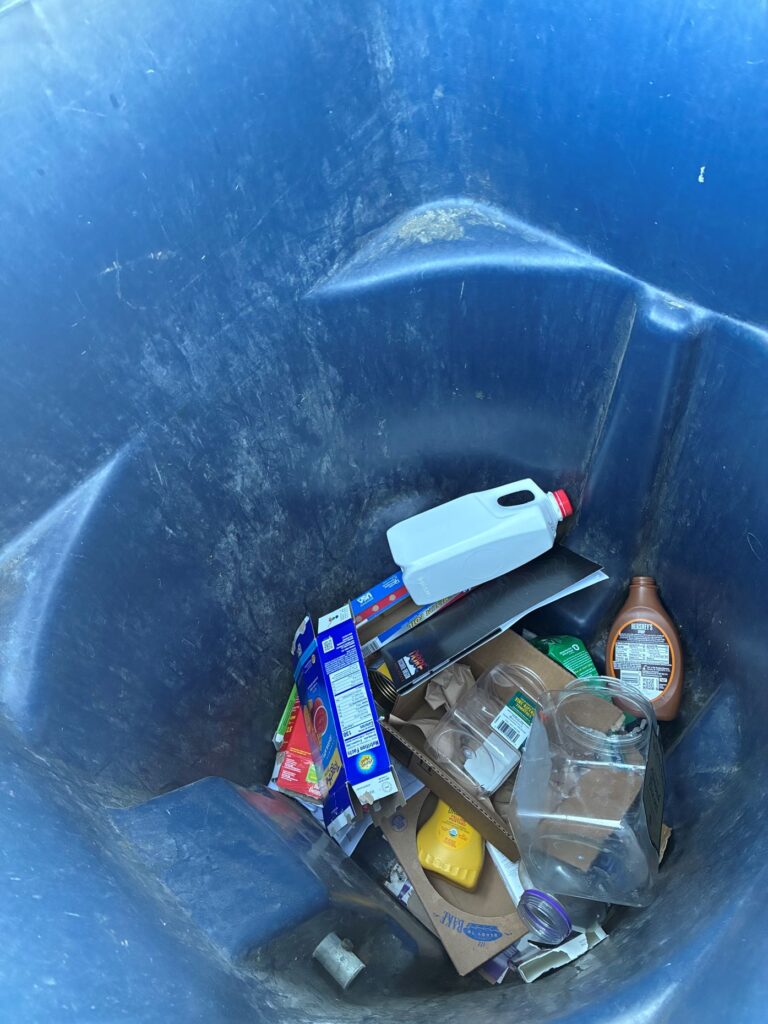
I value the recycling service. I consider it an equal partner to my garbage service. If we didn’t have recycling, all of that stuff would end up in the trash can. They pick up our bin every other week and when they do, it is almost always fuller than our trash can. In fact, there have been times that the recycling bin was full the next day after pick-up and we would have to wait another two weeks.

Fortunately, we live very close to the recycling center which is open 24 hours a day. It was not uncommon for me to make multiple trips to the recycling center per cycle. That means that our bin was too full and we had to wait until it was picked up but in the meantime, I was getting rid of the excess.

I have made it a habit of managing the recycling. This means breaking down everything into it’s smallest and basest form. When I go to the recycling center, I often see the bins full of boxes that just had the contents removed. This is a very inefficient use of space. I say all of this to mean that I am not filling up my bin with two or three items. it is lots and lots of things.

I took a picture of this bin on trash night. This is the amount of recycling that we have generated in two weeks. I know that it is a little out of context but this is a 96 gallon container with about a foot of recyclable items. In fact, I think that this is the very first time in over 20 years that I did not take the bin to the curb. I didn’t see the point.

In full transparency, we are paying for garbage service at the new house. A small percentage of our needs are left there. But again remember, we are only at the new house one or two days a week. Anything that is getting ordered is coming to the current house. We are primarily buying and leaving condiments and such at the new house. To go from needing to take cardboard to the recycling center mid cycle versus opting to not put the recycling out at all is a huge change.

I am taking advantage of the trash service however. I try to make a habit of taking stuff over whenever we go so that we can utilize what we are paying for. At some point the need is going to overtake our capacity but it makes sense right now to utilize what we pay for. Overall, I would say that it has not been a good value to pay for trash service at both houses, they both have recycling as well.

I do make an effort to follow the rules so that I can keep having recycling service. This is not just a granola theology but a practical one as well. That being said, we should all do our part. In years past, I have read stories about people who experimentally reduce waste to a shoebox for a year. Talk about difficult. I don’t think that recycling counts against them either.

As I was boxing up my shop, I ran into several empty tool cases. Because our recycling is limited to #1 and #2 plastics, I think they are probably trash. I am never going to keep tools in them, it is just too impractical. I strongly wish that toolmakers would stop offering cases for tools in the first place. Sure, waste is generated by throwing away unwanted items, but in my experience more waste is generated by purchasing new things.

This is the real reason that our recycling is empty. We have stopped buying new things because we cannot afford them. When I was cleaning up after my last range trip, I really could have used a brush style called a tornado brush. They are much more rigid than a traditional bronze, bore brush. Because I have sworn to only purchase needed and necessary items, I made due.

End Your Programming Routine: It really does bother me how much waste we generate. I feel pretty good when it is cardboard, steel or aluminum as the process to convert is simple and effective. But when it comes to all the plastics, it is tremendously wasteful. Not to mention, if it isn’t a bottle or jar greater than 12oz my service won’t even accept the plastic even if it has the right number on it. Just because something has a recycling emblem doesn’t mean it can go in the bin.
September 17, 2024 – Wiping Your Data

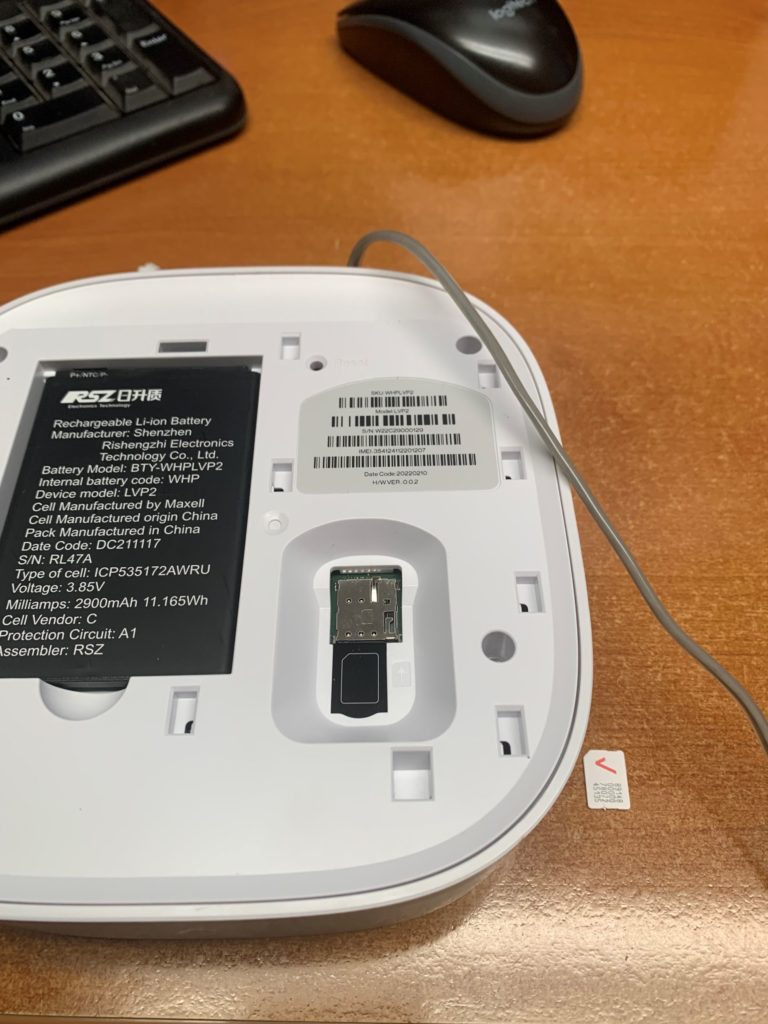
I am a connoisseur of techno junk. All of that comes off of the secondary market. As a result, you never know what procedures are put in place to protect the former owner. I suspect that companies do some things, but really why would I as a former owner want to put chance out to the universe.

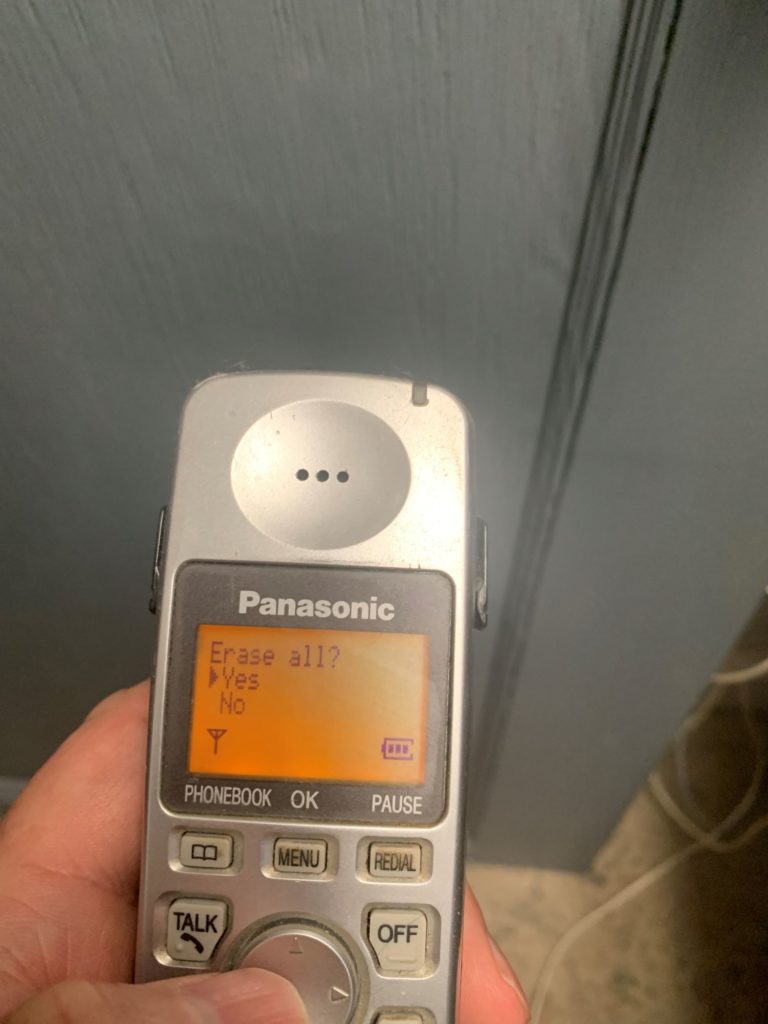
I had our old phone system sitting around for a few months. The reason is because I wanted to clean them before I got rid of them. I will acknowledge that getting any real, usable data and having that fall into unscrupulous hands is a very small possibility. That being said, who would want to buy something with other’s junk on it either? We as consumers need to do our due diligence to protect ourselves as best possible.

I will admit that when I get something second hand that has data on it, I take a look at it. I never intend to do anything with it, but more as a curiosity. Who were these people, what did they do with this, what did they replace it with and those kinds of questions. I never invest much before I start over, I suppose it is that due diligence look.

I don’t have anything to hide, but people don’t need to know that I received calls from a household in Germany in 2023. I feel like it is more protecting them, not so much me. The main unit is a cell phone that has a wired connection. So, this is as good as handing over a cell phone to a stranger. I took the SIM card out. Probably, information could be obtained through the provider but at that point, it is out of my hands.

I have sitting in my shop a robotic vacuum. The reason it has not gone to the recycler is that it is still configured to run. This is a device that has a map of my house, down to how the furniture is arranged. It also has a connection to my internet, albeit it is a guest connection. But still, there is no reason just to hand that stuff over to parts unknown.

This is a related scenario but I am becoming aware of old devices and vulnerabilities. The rough outline is old applications that are no longer supported by manufacturers offer a potential home for malware. This could be inadvertently installed and get access to a network. I am a little on the fence on what to do here. Probably the best thing is disconnect old devices from the network or segregate to a guest network an protect active data.

That seems like a subject for another day. But in this day and age of everything can connect, everything wants an account and everything is collecting data, it is a good idea be thinking longer term in security strategy. It is not so much the money but the time to deal with all of these things that could be the real killer. My advice is to clean everything you can before disposing of it, no matter the mechanism.

End Your Programming Routine: I used to believe that I have nothing to hide. I still think that is true, but I also think that no doing due diligence with electronics disposal is like leaving a stack of 100 euros laying at a park bench. It may not be immediately useable, but somebody could figure out how to convert it into something that they want. Don’t just surrender potentially valuable information, think about what you are doing and the consequences.

October 22, 2021 – Is This a Rant or is This Satire?

I am toying around with the idea of the Friday subject being humorous. Unfortunately, I felt last week wasn’t that funny and I cant decide if I want to go angry or satire here today. So, I am going to write and then we will see what happens.

In 1971, Oregon passed a statute where retailers would collect a $0.05 deposit per container sold. Consumers would return the empty containers back to the store for a refund on the deposit. It was colloquially called the Bottle Bill. At the time, it was unique and became part of the state’s identity. This was the state with no sales tax, you can’t pump your own gas, all beaches are public and containers were worth $0.05 a piece. You can read the article if you like for all of the history on the bill, but it was amended in 2011 such that if the total rate of redemption fell below 80% for two consecutive years, then the deposit would be raised by $0.05. In 2017, the deposit was raised to $0.10.

Having grown up in Oregon and being born after the bill was passed, this all seemed pretty normal. I lived a few years in South Carolina which didn’t have a bottle bill and my opinion started to change. Before I go too much farther, I am not anti recycling, It makes complete sense to reuse resources when so much sunk cost is already invested. I do what I can to make sure the materials are sorted properly and clean at my own home. But, if you have never dealt with the system, then what I am saying probably doesn’t make a lot of sense.

First, I will start with some constraints. When redeeming containers, there is a limit to how many can be redeemed at a retailer. That limit is 144 per day and traditionally, retailers would only accept containers that originated from the retailer. That meant that store brand A could not be redeemed at store B. So, containers had to be sorted by potential acceptance or redeemed at multiple stops. There is however no limit on how much deposit a consumer can pay in one transaction.

Most people, myself included put empties into a bag until you got tired of looking at it or you thought it was worth redeeming. So, that was a big hassle. Oregon created ‘redemption centers’ where people could return all containers. There, the limit was raised to 300 containers a day and in theory was brand agnostic. However, I have seen on numerous occasions that off brand or seasonal containers could not be read by the machine and would have to incur another step of hand counting.

With that, they also created a bulk return where people could simply drop of bags to be counted at convenience of the facility and put into an account. What most people don’t realize with this part of the system is that there is a limit of 15 bags per quarter and that bags may contain no more than 120 containers.

I happen to know that depending on the container, more than 120 can fit into a bag. What happens to the overage? It goes into a ‘store account’ or some sort of war chest for the redemption center. I found this out from someone that worked there. Me, as the one who paid the deposit, held onto the containers, made the logistical arrangements to return them and waited in line to leave them only get credit for less than I left. By the way, all containers must be in readable condition, meaning the label must be intact and visible.

Now, fast forward to March 2020. Part of the Oregon government response to Covid was to temporarily suspend bottle redemption (not the collection of the deposit). The only way to now return them was to use the bulk return option. This was in effect for most of 2020, things have slowly opened up this year. However, there is no doubt the retailers have gained the upper hand on redemptions as they have started limiting hours and further pushing the return limits lower.

The state thought that this program worked so well that they instituted another type program for paint. This time, there is a $1/gallon fee charged so that if you end up with leftover paint, the remainder can be returned back to certain paint stores for ‘recycling’. Now, they don’t really recycle. They mix compatible colors and types and resell the paint at a discount.

The problem with this program is that the transportation crunch has led the recyclers to stack up to the point that there is no room left to accept any more paint. Now, I cant even get rid of the paint. I have become particularly sore as I have been cleaning up the in-laws property as there was way too many extra gallons around.

End Your Programming Routine: As I stated in the beginning, I am not anti-recycling. What I am against is forcing consumers to pay for programs that don’t deliver. In 1971, curbside recycling was 20 years in the future. The bill was envisioned as a litter prevention program not a virtue provider. I don’t even blame the retailers for there reluctance, this is a mandate that has little value at this point. What I am saying is that it is time to end the feel good programs because in the end, the only people that feel good about it are the ones that are making the money.

Ok, we are at the end… I guess it was a rant. Still looking to end the week on a high note in the future. Have a good weekend.