Page 64 of 136

April 20, 2023 – Reviewing Decisions

This is a tribute to the old ‘Tacticool’ Thursday with a new way of looking at things. I was thinking about some decisions I made years ago and how that actually faired through my testing of it. I don’t want to be too obtuse, so let’s just get into it.

When I got into reloading was about the time I started thinking heavily about preparedness. It also happened to coincide with the last big run up on firearms and ammunition. The decisions that I made during that period probably didn’t fair as well through this period and I am going to talk about what and why I have changed my thinking.

It occurred to me as I started writing that I probably need to stop trying to name generic periods of ammunition surplus versus shortage. It feels like it is more el nino versus la nina. It seems to be a cycle where we are more in drought than we are in normal years. For context and clarity, I will use specific years in my following assessment.

When Obama was elected in 2008 there was a run on firearms and ammunition. That lasted until late 2010 and then things were in surplus until Sandy Hook occurred in 2012. That period lasted until Trump was elected and then there was surplus from 2017 to the pandemic emergence in April 2020.

We are still in this cycle of disruption. For instance, certain calibers like 9mm are highly prevalent and affordable on the store shelves. But then there are other calibers such as .357 magnum that I have not seen in the store since 2020. It was for that reason that I wanted to start reloading. If I can’t buy it, I can make it.

My dad is a reloader so I have been saving cartridge cases my whole life. So, while I didn’t have the reloading equipment, I had all of my brass all the way from when I was a youth and knew that someday I would start doing it. I purchased my first set of equipment in 2012 so I started watching the component market. In every drought, primers are the first reloading component to disappear.

I decided to make sure that I had primers in surplus. In previous droughts, gun powder and bullets were available. As it turns out in this current shortage, primers are still absent on store shelves, some bullets are available and powder is very hit and miss. What this means is that while I can probably assemble some kind of formula that will go bang, it is highly likely that I cannot put together the exact components that I want.

In addition to this I also decided that I wanted to have some new brass in storage. This is the portion of the decision that I wonder the most about. Reloading is by it’s definition loading brass that has been fired. So, if I have fired it once, I should have most of it to reload. During my recent batch of range trips I made some brass (by shooting at targets) but didn’t have or couldn’t get powder and bullets.

What is the lesson here? I am not talking about specifically ammunition here. I am talking about holistic decisions. If I don’t have the components to load the entire cartridge then I really have nothing. In addition to that, I have stuff taking up space that I really don’t need and stuff I need that I don’t have.

Yesterday, I talked about having three drills. In fact, I have well more than three drills but I have three drills that are essentially the same. I don’t even really want three drills but I hope to save them and give them away to someone that might appreciate it. If we are hanging on to stuff for a potential purpose, I can understand. But, if we are hanging on to stuff because of a false premise, that is wrong.

Another false premise I had to change in the last five years were my college textbooks. I went to school in the emergence of the internet. Books were the only resource that we had and so I saved my subject specific textbooks in Chemistry. Five years ago, I realized that I haven’t been a chemist in 15 years but I still couldn’t part with them. My sunk cost fallacy was that was thousands of dollars worth of books that still had value. My problem was that there was no market value for them. Ultimately, I ended up dumping them in the recycling bin.

I can truthfully say that I hadn’t looked at the textbooks in 20 years and I haven’t even missed them in the five years since. Ten years ago, I went through purging of music, books and movies it was the same thing. I think sometimes we like the idea of having things more than actually using them. I have a whole box of miscellaneous cables that need to go, you get the point.

At least in America, I think that we are all used to having more than we need, including space. It is easier to give up space than to deal with our emotions and true need. I am sure that it is human nature to optimize the activities that are in our interest zone. I am simply encouraging you to evaluate stuff and the whole process for a happier and healthier future.

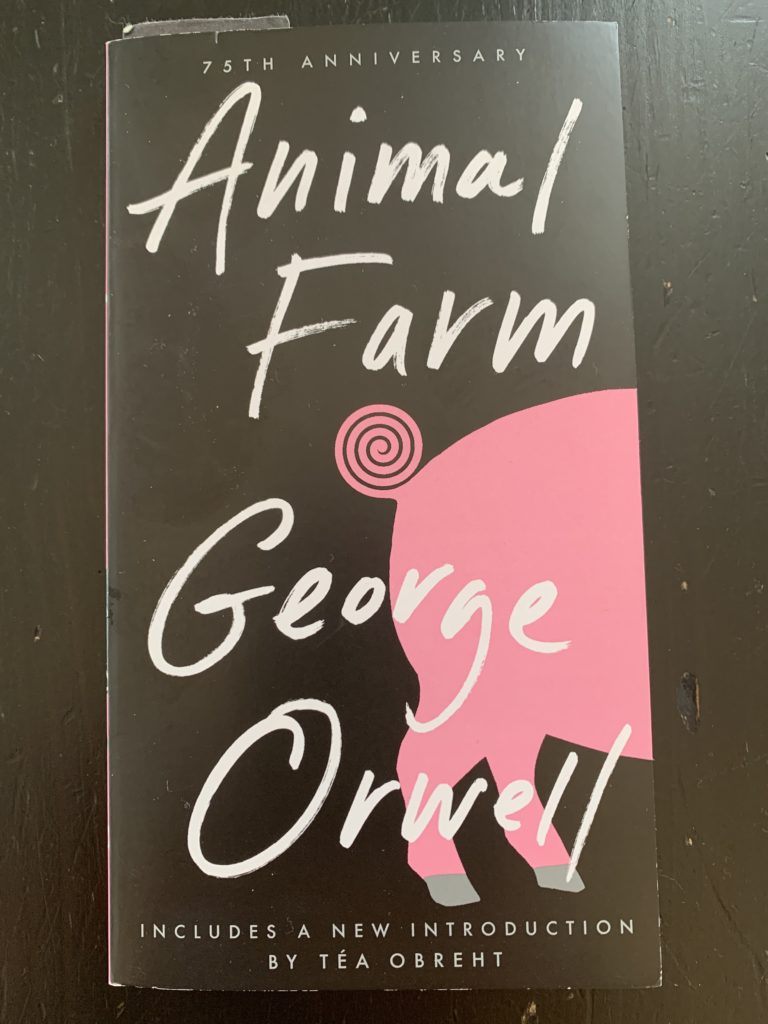
End Your Programming Routine: Just like Animal Farm, my story here is an allegory on an error made on a false premise. If I want to retire I need a plan, if I want to become a doctor I need a plan, if I want to shoot in an ammunition blackout, I need a plan. I am guilty of holding off on decisions many times, I live it. I also know that there is no one else to blame but myself for that habit. If and when you make a plan, you need to stop and evaluate whether you are on the right path or not.

April 19, 2023 – Makita 6303H Repair

Good tools are good tools. I have a certain affinity for the Makita brand that goes all the way back to the early 1990s. Both my uncle and my grandfather were users of the Makita brand dating back to the 1980s after the decline of the Craftsman brand as the tool standard of Americans. My uncle told me a story that when he started as a contractor in 1985, he went through two new Craftsman sanders in a week before switching to Makita and never looking back.

When going through my father-in-law’s shed, I donated a lot of items to Habitat for Humanity. I saved a couple of the Makita tools that I thought were not ‘use off the shelf’ ready, like this drill. Sure, ultimately I think it probably cost more to repair than to purchase used. I suspect that they were ‘gifts’ from a friend as he was a retired cabinet maker that had a habit of giving tools away that he no longer saw a use. And my father-in-law was always gracious.

The amazing thing is that I think you can purchase every single part for this drill still. This includes all the plastic cowlings. My original plan was to just replace the cord, but looking at it more closely, I figured I could get away with shortening the cord. That is what freed my mind to replace the missing auxiliary handle which was the most expensive part of the whole project.

End Your Programming Routine: I now have three, corded electric 1/2″ drills, only one that I actually purchased. My ultimate thought was to repair this drill and give it to someone that might feel more of an emotional connection to it, like my son rather than risking it getting thrown away. For that reason, I didn’t mind spending some money on it as long as it was a quality item. It probably won’t ever get a lot of use now that cordless tools are so convenient. But, what would you pay to do a project with Grandpa again?

April 18, 2023 – Milk Street: The World In a Skillet

The World In a Skillet by Christopher Kimball is the April 2023 is the Left Coast Culinary Book Club selection for April. We find ourselves back from fiction last month to a cookbook. Not that there is anything wrong with that, I find a it difficult to evaluate a book without using it. That certainly is the case here. That being said, there are some unique elements to this particular cookbook.

You may be familiar with Christopher Kimball as he was a host of America’s Test Kitchen for many years. I did notice that he was gone from the show about eight years ago. In fact, his fixture was so long and his transition abrupt that I thought that maybe there was a health problem or something. This is actually the first time I had seen anything publicly and learning that he changed directions.

My supposition about his whereabouts were not without merit. I ran across some allegations and apparently there was a lawsuit between America’s Test Kitchen and Kimball accusing theft of intellectual property and damages in his new endeavor Milk Street. If you ever watched any of his previous work then you will know it was highly technical. Fortunately, it appears this new direction is simpler and more approachable.

It is interesting to see different approaches, dare I say novel approaches to cookbook and I would say this is one of them. Let’s talk about the title first. Kimball’s premise is that there are a lot of specific apparatus involved in ethnic cooking. Or said another way, each culture uses a proprietary piece of cookware and he surmises that this could all be substituted with a skillet.

That was the approach, but it wasn’t the only innovation. The cookbook is organized by time to cook. So, the user can go to the section and look at the 20 recipes that require less than 45 minutes to make. I think that this is a brilliant because skillet meals are often one dish meals. One dish meals are often those made in time constrained periods (weeknights, after work).

I do have a varied palate and I like the idea of Asian one night, Mexican another, soul food on another and comfort food on Friday. I think that it is pretty interesting that the recipes go from Vietnamese, to Italian to African to Chinese on page by page basis. So, it does seem to me that this approach fits my cooking instincts and preferences.

But wait… there’s more. It is not just single dish recipes but also sides and deserts and all things skillet. Now, maybe that is a step too far from what we need in a cookbook. But, if it is anything it is all in on skillets. So, I will give props for wringing the most out of the one-trick pony.

Out of 300 or so pages, nearly half of them are pictures. It does make you stimulated to page through the book. So, barring the fact that I haven’t cooked anything yet, it is a beautiful book. However in my kitchen, books are starting to clog up spaces so I am moving to the point that they need to earn their place. I do plan on trying a few things in the next month to see if it is worthy.

End Your Programming Routine: The book club is emerging out of our Covid hangover. Starting in 2020, we cut our interactions from about 10 a year to 4 (including March that was already scheduled) with outside summer gatherings. We have more books and meetings in the pipeline again as the composition of the group has changed to the new reality. I love reading and cooking but I warm up to people over time. I also love that being part of this group is a leap of faith for the interests of others. More books to come.

April 17, 2023 – What Your Beer Says About You

My points here are that brands have some reflection of the consumers and that it is difficult to tell what brands are cloaked in conglomerates. This is some of the issues that I tackle today. Maybe I will talk about beer again, the research was kind of fun and informative.

End Your Programming Routine: Pepsi Clear didn’t kill Pepsi, New Coke didn’t kill Coca-Cola. OJ Simpson didn’t damage Hertz. But, all of these companies recognized the damage that was done to the brand and did something about it. Will InBev do the same or is this the signs of change? I guess time will tell but I think we have seen the end of Bud Light.

April 14, 2023- Animal Farm, Chapter 6

Happy Friday. Maybe this is how parables are written or maybe it is just this one that is packed full of little things. This chapter is no exception. But, it could also be that it is just the way things go and not just a story. I don’t know, all I can say is that this story just seems to be giving truths.

I will keep it short because the chapter is only ten pages or so. It does seem to get a little old saying every other sentence is a validation of the world the way that it is too. I guess I would be remised if I didn’t acknowledge the significant number of truths and parallels that are in the chapter. So, let’s get into it.

Now that the animals have all been unified under Napoleon and the project focus is building the windmill, it seems like that takes all the focus at the expense of everything else in the world. We might not all remember or were around after 9/11 but I am pretty sure everyone reading this were around during Covid. So, let’s use that example even thought I want to eventually evolve away from that period.

We as a society did everything we could possibly do to focus on Covid. Never mind that people were still getting the flu let alone cancer or having their own personal disasters (and to be fair triumphs too) that happened in the midst of this. In our effort to combat the common cold, we destroyed our economy and nearly ourselves because we couldn’t see the forest from the trees. This is animal farm. Every bit of effort went to build the windmill and so the harvest suffered along with the people.

Spoiler alert: If you haven’t read this book a storm ruins the work. Wouldn’t you know it we have to find someone to blame. In the case of the book it was Snowball. But, we can find plenty of other patsies in our recent history. It was Osama bin Laden, well actually it was Saddam Hussein, no I think it was Muhammar Khadhafi. I don’t know, kill ’em all. Whatever we can do to transplant anger from our own administration and questionable decisions keeps the heat of our own problems.

Regardless of our problems with the boogie man, a modern society has a desire to trade outside of the internal economy. Even North Korean and Iran have limited trade partners. I think that it is arguable that an actual animal farm would need to go outside the farm, but when members want more than what is offered they need to look outside. Because animals are now building a windmill, they need supplies to finish the project and increase the overall comfort.

Finally, when the leaders find it advantageous, they are willing to change principal for their own gain. In this chapter, the pigs are living in the house and sleeping in the beds. If you remember, that violates the forth rule. Because the animals aren’t very literate they cant read the actual rule and can’t remember the actual rule. They are easily manipulated into what was wrong is now right.

This is the problem that we have today. We are actually moving the needle from what was wrong to now there is no longer a wrong and right. We are doing this by denying actual biology by men can be women and women can be men. It only matters if we feel like being called or acting however we feel. Don’t you dare question the should or shouldn’t of the situation.

Actually I misstated the above. What is actually wrong is not acknowledging that people can be whatever gender they want. We no longer read the rules (of morality) and we no longer remember the rules. The more absurd statements that are made, the more when you retract halfway between where we are and what was said becomes reasonable.

End Your Programming Routine: You know that I don’t really care if people feel strongly about becoming another gender. What I can’t really believe is all the mindless dolt’s who don’t see this happening. But then again, I suppose that these are the same people that thought that once we get Hussein or wear masks for the rest of our lives, things will be alright. I am not for condemnation, just stop getting hoodwinked.

April 13, 2023 – Storing Fuel: Accessing Electricity

Whether you have a generator or are running an inverter from your car, the power needs to get from the point of generation to the device that needs the power. It is imperative for safety and proper operation that you have a collection of appropriate extension cords.

Imagine for a minute that you were smart enough to have a generator and you needed it because of an expected, days long power outage. Because you were so smart, you also know that your refrigerator is probably good for a day or so if you do not open the doors. But what isn’t smart is running the generator inside. You need to get the power from the point of generation to the device safely.

To get further into the nuance, you not only need to get the power safely but also appropriately. Some number of years ago, we hired some painters. They were trying to run the paint sprayer on a household extension cord (these are the two wire, flat cords meant to plug in Christmas lights or something like that). Because there was so much power draw, it was tripping the circuit every ten minutes until I gave them an appropriate diameter extension cord.

The farther you need to go or the more power you need, the thicker the extension cord you need to have. The very common orange outdoor power cords are typically 16gauge wire. These are great for running drills or work lights but when it comes to heavy draw, not so much. They might work, but if something is running on a dedicated circuit, you might want to do more of a calculation to see if this is going to be adequate.

In the old days when I had more time than money, I used to read instruction manuals for power tools. It was pretty common for them to recommend different sized cords depending on the distance you are running. If you know anything about electricity, then you will know that it is code to have a minimum 14 gauge wire for a 15 amp circuit and 12 gauge wire for 20 amp circuit. So, this should be your rough guide on extension cords. And this is why you should be OK with a 16 gauge cord with devices pulling less than 10 amps of continuous use.

If you start getting tricky and adding surge protectors or other devices, they are good for some things like tripping an internal breakers to protect the device. I have some extension cords with built in breakers. They will trip if the tool load gets too high so be aware of the set and forget mentality. I use them when I want to have multiple things plugged in but not necessarily running at the same time. The more frequently a circuit breaker trips, the weaker that breaker becomes and trips much easier.

If your cord is ever hot, it is not sized for the load. It might be OK in an emergency situation or monitored use, but leaving it as a semi-permanent installation is a recipe for a potential fire. Fortunately, most devices that the home user is going to use with a generator will likely be lower draw items. But watch out for power tools and appliances for this problem.

I think that everyone knows that electricity and water do no mix. There are specific cords made for this use but they are expensive. I think a better strategy would be to not have any connections made in a wet environment (have a long enough cord). But if you have to, it is probably much more cost effective to build an enclosure. Drill some holes in a Rubbermaid style container to keep connections dry.

The cable of the extension cord is part of the system. If your cords have damage, repair or do not use. What I do if I have cords that have nicks in the insulation, I will shorten them with repair ends. If the nick is in the middle make two short ones if you can find a use for these. Electrical tape is a field repair. It will probably keep you from getting shocked, but if the conductor is damaged, it is effectively reducing the overall wire gauge and therefore decreasing the overall wattage capacity.

There is also the theory that sometimes it is better to have tool extensions rather than have longer power cords. The common adage in air compressors is add more air lines rather than extension cords. That is a high draw tool at 13-15 amps. If you had a 12 gauge cord, I wouldn’t hesitate to use it. But, most people haven’t invested $100 into an extension cord and more air hoses are always useful. For ultimate longevity, consider other options that just extension cords.

End Your Programming Routine: I didn’t realize that I was going to have so much to say about extension cords so easily. But, if we are going to generate power, it makes no sense not to be able to use it. Having sufficient lengths and quantities available when we need them so that we can do so safely and effectively is really the only thing that makes sense. Not only that, we can use them for the same reasons when the power is not off. It’s a no brainer.

April 12, 2023 – Menudo’s Cousin: Meet Pozole

I think more people may be familiar with Pozole. It is a pork, hominy and chile soup. I think that it is more approachable in that the main meat portion of the dish is not tripe. As a preparer of menudo lately, I think it might be cheaper too.

My wife has generally refused to host pozole when making menudo is possible. But, I convinced her that this was something I wanted to do. It turns out that there are two types, red and green. I had never seen any other than red but it seems as though she didn’t know red existed.

We made pozole for Easter. I thought that probably the time economics of one big pot of soup beat putting some kind of meal together that included sides as well. I had one thing to shop for, one thing to prep and one thing to watch as it cooks.

I didn’t really read the instructions too carefully because once I saw the ingredients I knew how to make it. In fact, it is nearly exactly like making menudo with a few different ingredients. On Saturday afternoon, I put 7 lbs of pork hocks into the pot with 3 lbs dice pork tenderloin, two whole heads of garlic, 8 tablespoons of oregano and 6 quarts of water.

I very likely would have used half to no water if it were not for the fact that we were leaving for the evening. I didn’t want the meat to burn before the liquid was rendered out. When I make menudo, I don’t even add water to it. I turned the burner on to very low simmer. My goal would be to have the garlic dissolve, the meat fall off the bone but still have substance in the morning.

In the morning I added 3 lbs of cubed pork, 1 drained #10 can of hominy and the chiles. The original recipe called for 16 ancho chile (dried poblano chile). I felt that was a little light so I added the remainder of a bag of California chilis as well, about 20. Normally, if I wanted more flavor, I would add more of the same chile rather than mix them but ancho can have some spice to them and I was really trying to keep this spiceless.

There is a lot of mass here, the recipe was scaled to 16 quarts so salt to taste. It is going to take quite a bit of it but keep tasting, over salted soup is ruined. I know because I have done it multiple times and I sure don’t want to do it for Easter dinner.

After seasoning, let it all come together and prepare the garnish. Traditional garnish are tostadas, shredded cabbage, lime wedges, chopped white onion and sliced radish. In my house, we have to have both lime and lemon because some people prefer one over the other. I find lemon too bright and the sweeter lime is the right flavor as well as the authentic choice.

The way I made this, it was very mild. Many people like to spice it up a bit and so salsa or sliced chili peppers to add some heat could also be made. I skipped this preparation this time. I would have substituted menudo mix for some of the oregano if I had it on hand because it has chile pequin in it and it rather spicy. But, I didn’t want any leftover spices I wasn’t going to use for a while.

End Your Programming Routine: Who doesn’t like ham. We had it most Easter dinners throughout my life. I thought this twist was fun and delicious. I think it was a win on the effort front and I think that I convinced my wife that pozole is not the weaker cousin of menudo. It looks a lot the same and even tastes a lot the same, it just comes from a different family (of ingredients).

April 11, 2023 – The Kitchen Front

The Kitchen Front by Jennifer Ryan is the March selection of the Left Coast Culinary Book Club. This is a fictional book set in World War II Great Britain with a story about for women. The story is about a cooking contest and the women’s role in it where each person has their own reasons for entering and winning.

I think that this is the first work of fiction that we have actually read. It is definitely a genre and subject matter that I would have never considered if I would not have been part of the book club. Despite the format, it is not a long read at a little over 400 pages.

The contest that the book is about is a cooking contest that uses war rations effectively. As things go along, we also learn that it is not simply rationed items but also non-rationed items and wildcrafting is also permitted. So, said another way it is making recipes with what is available when certain items are strictly limited.

For context, the book starts out with what is included in rationing for one week for one person.

  • 4oz bacon or ham
  • meat to value of 1 schilling (2lbs mincemeat or 1 steak)
  • 2oz cheese
  • 8tbls butter
  • 3 pints milk
  • 1 cup sugar
  • 4tbls jam
  • 2oz tea (15-20 cups)
  • 1 egg (plus powdered eggs equal to 12 once a month)
  • 3oz sweets or candy

I think that you will agree with me that the above is not a lot of food. Notice too that it is largely meat, fats and sweets. Apparently things like fish or flour were not actually rationed. These would be items that could be obtained locally or not used in the war effort and not have to be imported due to the German blockade.

What is super cool about the book is that there is frequently a recipe at the end of the chapter. These would be the creations that were entered into competition or something based on the context of what was happening in the story. I didn’t do this but you could eat along with the story if you chose to do so.

I’m not going to give away the story but it ends like a Hallmark movie. Which by my book is better than a Lifetime movie. It’s ok to sometimes get lost in the feelgood story.

End Your Programming Routine: I think that you can tell that I liked the book by how I was writing. Honestly, I didn’t make any of the recipes. Not for any reason other than I mostly read a lot of on the plane or away from home. Of course the subject of thrift, survival and resourcefulness are the subjects that speak to me. Other than a bit of a campy ending, I enjoyed the journey.

April 10, 2023 – Family Road Trip

Join me on our road trip recap. I talk about our trip as well as some of the trips that we have done. We had a great trip and there are so many things that we could have done you have to pick and choose because of limited time. This is tips and tricks for inspiration of your own trip.

End Your Programming Routine: This was likely our last full family vacation. So, we did it with gusto. I wouldn’t say that we spared any expense. Someone on our trip that once you start to see some red rocks, they all start to look the same. I don’t disagree, so I would advise to make some variety in your trip, not just looking at red rocks. I have been thinking about a small RV for my wife and I to travel. Maybe that is in our future?

April 7, 2023 – Animal Farm, Chapter 5

It has been a long time since I actually read this chapter. My plan was to stub out concepts weeks ago but as you know I have been a little busy. So, I skimmed through it a couple of days ago to refresh my memory on what happened. Doing so, my inference was confirmed that this is a powerful chapter.

When you read this chapter you get a lesson in how to manipulate a population. It makes me wonder how many people have read this book and yet either forgot or ignore what happened. One headline I read said 11 million copies sold. Surely a portion of those went to libraries or schools where they were read over and over again. The reality is that 11 million over 75 years is not really that many in a country that has 300 million people. Maybe people have just not read it?

Nuance is subtle. I was reading one opinion on Animal Farm and I came across this quote. “Every line of serious work I have written since 1936 has been, directly or indirectly, against totalitarianism and for democratic Socialism.” I suppose that democratic socialism works in Sweden where they never had the same expectations of freedom as the United States. Yet, I look at what we are doing as a country and I just cannot get clarity that we are not moving toward totalitarianism.

There are at least three main things that happen in this chapter. The first one happens when Napoleon sick’s the dogs on Snowball. This is the one that is the most covert and significant. It is mentioned earlier in the book that the puppies were removed from the rest of the animals and educated. It is this act that we need to learn our lesson. Isolation and indoctrination is the tactic.

Do you want to know what Drag Queen Story Hour and gender fluidity have to do with Animal Farm? That would be isolation and indoctrination. Create laws that ensure kids are in school, then start pushing doctrine to move the status quo. It won’t be long until the entire population is numb to insanity and we can no longer say A is A. My kids are within a presidential election of being full fledged adults. They are already a product of this environment because it has been normalized within their lifetime.

The second concept is repeat a lie long enough and it will become the truth. How many people believe that if you put a frog in boiling water and slowly turn up the heat that it will eventually boil to death? We have heard it our whole lives, but it simply is not true. That is a small and innocuous example but there are others.

This is a common tactic in politics today. For instance, elect Republicans and they will repeal the healthcare mandate or lower taxes. No they are not, no they are not, no they are not; repeat after me. My tax bill has gone up by tens of thousands of dollars a year since the Trump tax cuts. I have heard from others that theirs actually went down. But that is a segment of business owners and that is who got the benefit of the tax cuts. By twisting the facts, there were tax cuts implemented but it was for a certain segment of voters at the expense of the rest.

This plays out in the book by Napoleon campaigning against Snowball with plans to build the windmill. Napoleon was dead set against the project, even peeing on the plans. But as soon as Snowball was chased off the premises Napoleon immediately adopted the project. What is the truth here? What side can you really trust? I think this leads into the next concept.

There is something called The Iron Law of Bureaucracy. There are individuals committed to the mission (Snowball) and those that are committed to the institution (Napoleon). Eventually, those committed to the institution will take over running it, forever. This is the reason why I cannot get behind democratic socialism because it just keeps moving to totalitarianism. It is just a matter of the speed.

End Your Programming Routine: I suppose that this last concept is where I struggle the most. I am always a mission oriented guy and it seems like it frustrates me when I can’t change the organization. Intellectually I have been aware of the Iron Law of Bureaucracy but it is so difficult for me to internalize and accept. I feel like it is unjust and just grates me the wrong way. I suppose that just accentuates my need to work outside of systems.