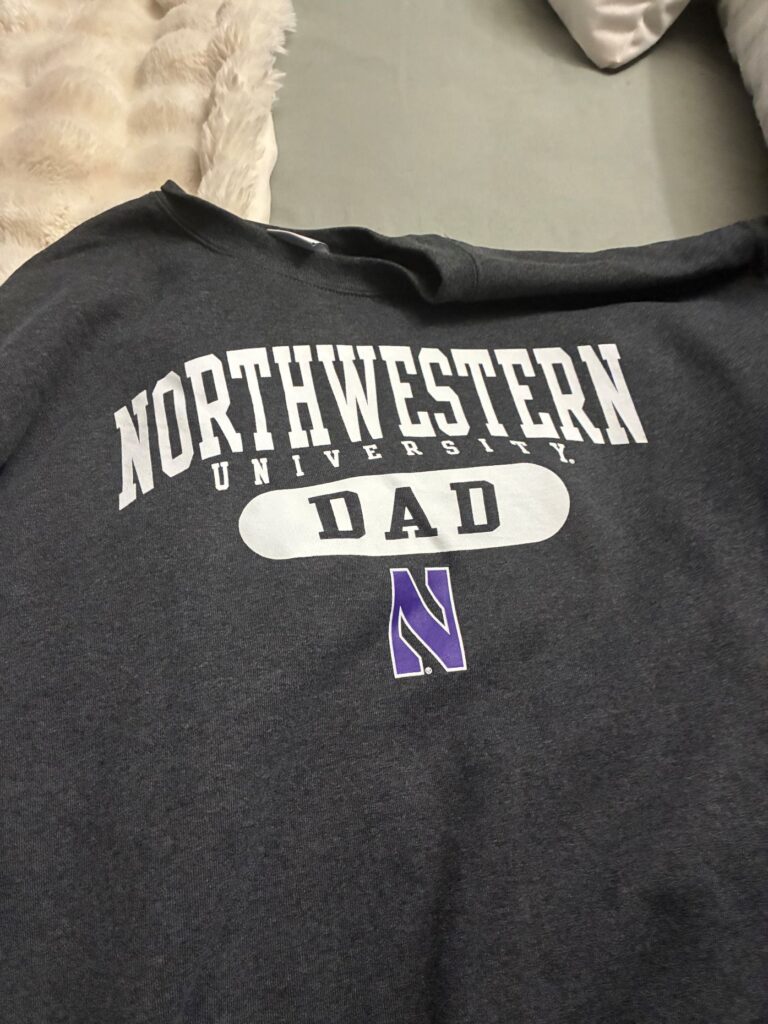
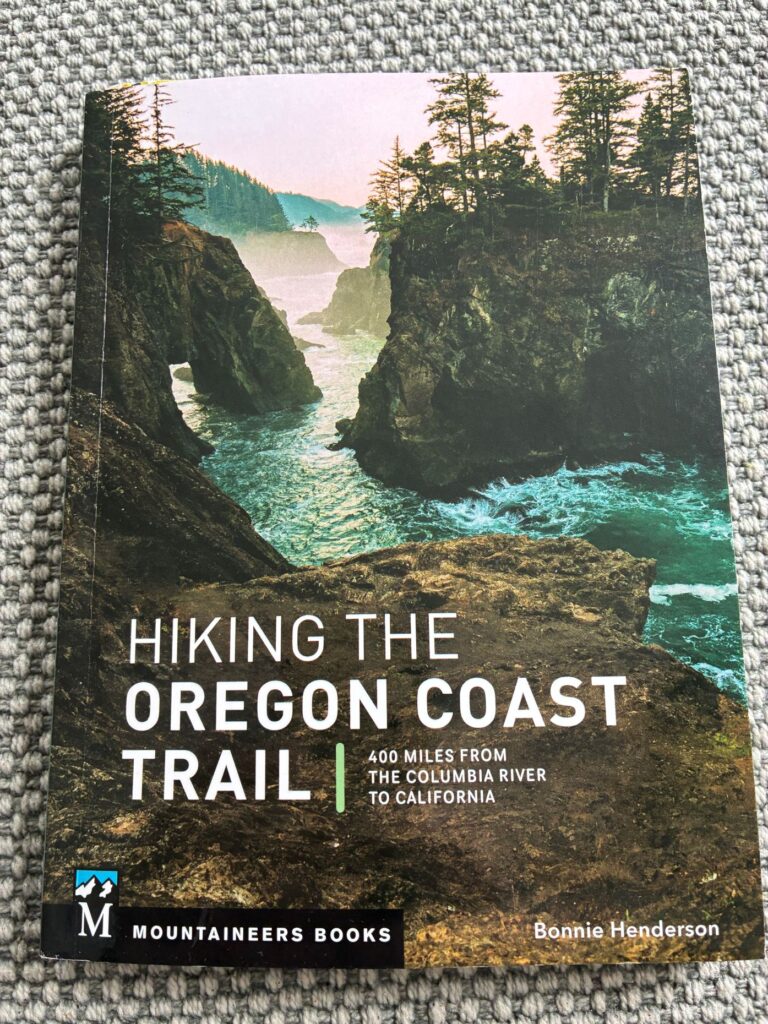
Parenting can feel like a bull ride sometimes. If you draw the easy one then you might hang on but miss the style points. If you get the hard one, it might kill you. Hang on and do the best you can. My family dynamic is about to to change with graduation coming up in less than a month. As such, I talk about things that occur on that journey and analyze options.
Page 16 of 137
May 9, 2025 – In the Gravest Extreme: The Role of the Firearm in Personal Protection, Chapter 2
Chapter two is among the longest of the book which is why it gets it’s own week. Did you know that that there is a legal principal that force response has to be equal or lessor? Most of us would slap our foreheads when someone says you can’t just shoot somebody that simply insulted us. That seems like an obvious inappropriate response but there are more nuanced scenarios that you probably never considered or at least don’t know.

I am going to quickly cover some of the legal definitions in this chapter. To play in any world, you must learn the vocabulary. Otherwise, we cannot have any meaningful communication because it is likely two people would not understand what each is saying.
Lethal Force – This is a particular type of assault that has an expected outcome of death. This should not be confused with Deadly Force where the outcome is actually death. Depending on your skills and stature, simply punching someone may be deadly force but not lethal force. A man punching a baby is lethal force, an average man in a bar fight that ends in busted knuckles is neither.
Disparity of Force – This has multiple implications. Generally speaking in a one on one scenario, the person with the firearm has a disparity of force. But what if there are four people unarmed versus one armed? It is not favored in court to apply unequal force in the case of self-defense, particularly when it is deadly.
Equal Force – Unless you are in a Castle Doctrine state, it is generally considered imperative that self defense is only justified under equal force (or less). This is why we need to understand the concept of disparity of force first.
Reasonableness – The reasonableness standard is of course subjective and possibly changes with time. I think about the incidents where there is some kind of traffic issue and then the ‘victim’ chases the offender for redemption (or whatever). Would a reasonable person feel victimized in the situation and all of the above response reasonable? If the offense or response is not reasonable for the jury, then neither is self-defense.
Premises – The location of deadly force makes a huge difference to the standard by which you are judged. Incidents that happen at home have significantly different latitude that something that occurs at a public place.
Bare vs Reasonable Fear – Bare fear is fear that exists. It would be going to a certain part of town or someone wearing a motorcycle club vest. There must be more to the situation than bare fear like proximity and even more, belief of intent. You are on the same side of the street and they are aggressively moving toward you with agitation. Only reasonable fear is considerable for justifiable self-defense.
Innocence – The best legal defense is no protoorganism whatsoever. Remember that innocent is not the same as not guilty. If you knew there was going to be a gun-fight, it would be best to not go there in the first place.
Escalation – Escalation rarely is justified in self-defense. It get’s pretty muddy when you participate in some of the back and forth before deadly force. You possibly could have provoked the incident but met the other standards in the use of deadly force. For that reason leave the area/fight/confrontation before it starts.
This is a super quick run through of the key vocabulary terms. Many definitions have a significant amount of additional information, particularly reasonableness. So again, if you conceal carry and have not educated yourself with the intent for mastery in these subjects, you need training.
I find it untenable that someone can physically assault you and it still may not provide justification for deadly force. It all depends on what your grand jury neighbor’s feel is reasonable. As I keep saying, your particular jurisdiction may have broader interpretations of what is permissible, but if you stick to these definitions, it is much more likely that you stay in the clear.
End Your Programming Routine: In chapter one, Ayoob mentions that carrying a firearm is a privilege. I agree and disagree with that statement. It was certainly true that 1980 NYC (and today) it was a privilege because it is a very strict ‘may issue’ jurisdiction. Given more recent Supreme Court interpretations of the second amendment I disagree. Those are functions of changing opinions over time. One opinion that does not change is Ayoob is amongst the foremost experts in this topic. It would be wise to get these definitions down pat.
Next week, chapters 3-5.
May 8, 2025 – When Did Printers Start to Suck?
I am in a rare mood where I am pissed off. It starts with the high school moving graduation from the high school football field to the local college football field. Last fall, the school district tried to push a vague bond measure that would have included funding to replace the 13 year old turf. Of course, they wanted something like 50 million dollars to study replacing a grade school and some other things but more of it was just not specific. It went down in a ball of flames, as it should.
Miraculously, the district found the funding for the turf and it got installed at the beginning of the year. The district now claims that the surface is not ready to be used in time for graduation. Never mind the fact that they have been sticking javelins in it all track season. Fortunately, we have a NCAA Division II university in town and they graciously agreed to host graduation for a small fee of $5000.
It gets better. Graduation at the high school was open for all. I am hearing from teachers that it is going to be restricted to eight guests. I guess that they are going to spring this on us at the last minute. But there is a cherry on top. Those grad announcements that we paid a princely sum ($3 ea,) for in the fall are printed with all the details at the high school.
The announcements were black. My wife wanted to just cross out all of the details using a Sharpie. I tried one and it looked like crap. Since we were going to print inserts anyway for the graduation party details, I suggested that we print labels instead and cover the erroneous text. I took careful measurements to see what label available would be the perfect fit. I found one that was available at a local office supply store.

Time to print up some samples. I wanted the right font, the right words and it had to fit in the label space. I have done some label printing over the years. I used to run a lab where we would print shipping labels daily so I am aware of some of the finicky-ness of the process. I printed some samples on paper and life was fine.
Printing seems to be a constant problem in this house. Not with me but everyone else. Most of it has to do with being on the wrong network. You have to be on the same network as the printer to print. My wife who keeps her phone on the IOT network so that she can fiddle with the robot vacuum daily claims that she has lost the ability to print. No, you have to have your phone the right network. As a result, she e-mails me stuff to print all the time.
If it is not being on the wrong network, then the ink cartridges get crusted up. This means that the quality of print is poor. I have taken to buying generic cartridges mostly because they just do not remain viable and they cost so much relative to how much we actually print.
As soon as those elements are figured out, then somebody used all the paper. I have a smaller personal printer in the basement because my wife doesn’t want me or the kids randomly printing while she is working. But, it only holds twenty sheets of paper. Since we do so little printing, it is no big deal but the majority of the printing occurs on the smaller printer.
A new phenomenon has developed. For some reason, I have to reboot the computer each time I print because the spooler software gets stuck. I am more than sure it is a driver problem because this computer and printer have been paired for more than ten years and I never had this problem before. It has taken me several evenings to troubleshoot and figure this out.
I originally set this computer up as a user computer. So, my profile is not an administrator and I cannot reboot the print spooler. I have to log out and do those tasks as an administrator which is another pain in the butt. It makes me pan for the days that had the LPT1 connection.
Our first printer was a dot-matrix printer. We had to buy the paper from a computer store. A giant box pretty much lasted the life of the computer. Color is cool, print quality is much better, it is significantly faster than the old printer and we didn’t have phones that needed to print. But, I will tell you that it always printed.
End our Programming Routine: What has me stewing is that I am irritated at the school district and so anything that prolongs this process of getting these invitations completed just keeps rekindling my ire. When I get frustrated, sometimes I do a salty internet search to see what others are saying. I found lots of relatively recent forums commiserating my problems. It really does no good at all other than I feel better. I am going to give HP/Microsoft the benefit that they will get the driver situation figured out with time. Fortunately, we don’t print very much.
May 7, 2025 – Sometimes, You Just Have To Do the Work
It was Saturday morning and I was doing some extra clean-up from dinner the night before. Usually, we put foil down when melting cheese on nachos but forgot this time. As a result, my son did the after dinner dishes and filled this pan with water to ‘soak’.
When I cook, I hate to have a dirty and cluttered counter. So, I was going to make breakfast because I had a busy day planned but there were a few things on the counter from the night before. This pan being one of them.

We have a loose rule in the house that the cook doesn’t do the dishes. That typically means the kids are responsible for the dishes. Sometimes, the other non-cook spouse jumps in as well. When my boys do the dishes, one loads the dishwasher and the other does the hand wash dishes. They have a famous stalling tactic of letting stubborn, stuck on food residue soak overnight.
The most common cooking vessel that gets ‘the soak’ is the crock pot. In fact, there have been a number of times that the crock sits in the sink for several days because there is still stuff stuck on the surface. With the sun shining through the window I couldn’t shake the thought that soaking only takes you so far. Sometimes, the short cut has done all that it can do. You just have to put in the work to get that dish clean.
As I have recently mentioned, I discovered that Life Below Zero has all the seasons on Disney Plus. During my free time like while cooking, I have the show on in the background as I run through the recent seasons that I have not seen. A constant theme in the dialog is how much work needs to be done. Unlike clean dishes, their work is life dependent.
In today’s world of building science and modern building materials (as well as more moderate climate), people that heat with wood go through three to six cords of wood for a year. In some cases with crude cabins and primitive buildings, they are using a cord of wood a week. Let’s not forget that heating season is nine months a year and many are also cooking with a woodstove.
For those of you that don’t speak wood heating, a cord is 4′ x 4′ x 8′. A typical stove length log is sixteen inches. To paint a visual picture, a cord would be three rows that are eight feet long and four feet high. And, that is per week. With temperatures as low as fifty degrees below zero (F) you really cannot afford to not put in the work.
Even though I am writing this, I feel like I sometimes fall into this trap. That is avoiding the work because I don’t want to do it. I think about even things I love to do like deer hunting. One of the reasons that I go once per season and rarely get a deer is because I don’t put in the work. I have a freezer full of beef, a closet full of clothes and money to buy any tools that I might need (if I need any more tools).
I love it. I am excited at the thought of going deer hunting. But when it comes right down to busting brush, getting rained on, sweating profusely, etc. I really don’t want to do it. If I have that much trouble with activities that I purportedly love, think about the motivation to do something that I don’t.
We are all human and have our preferences and desires. I find that a lot of the time, if I decide that I am going to do something, then that is what happens. The psychological barrier of not wanting to do something is much, much stronger than the time it takes to do the task. While I don’t have concrete evidence, I suspect that those of us that are willing bust through those barriers rather than being stopped are more successful in life.
I have found that through the years some things are best tackled first or at least early. For instance, the cheese grater washes infinitely easier if it goes from use to the sink. Even if you do not scrub it but keep it wet, it makes a huge difference in effort as well. If it sits on the counter until after dinner, it is significantly more difficult and time consuming to wash.
If I get a chance, I will wash the grater while I am making dinner. This is not because I want credit for less mess but I consider it a service to whomever is washing the dishes. If I can do it in a third of the time because cheese is not stuck onto a difficult to clean surface, I should do that as a courteous person in the kitchen. It is a variation of the golden rule.
End Your Programming Routine: I think that it is A-OK to let the pan soak. But, the next morning it is time to put in the work and get it clean. We can’t be so work adverse that we don’t put our firewood up or that metal rusts into pieces sitting in the sink waiting to get loosened up. Hard things can be character building as well. At the very least it helps to gauge when we have gotten all that we can from the shortcut or helper technique. Hard work often gives us the motivation to try and invent a better or easier way for next time.
May 6, 2025 – Kids…
“I don’t know what happened, it just stopped working”. Huh, I have no idea. I guess that I will take a look and see if I can see anything. Oh, I see there is a bunch of sand in here that does not belong.

In years past, I have replaced a few RAM DIMMs, hard drives, disk drives, and the like. That doesn’t make me and expert in PC repair, it makes me a part swapper that has a little knowledge of what things are inside of the cover. Years ago, the motherboard would sometimes have some diagnostic LEDs as well as speaker beeps. The combination of those two tools would help steer you in the right direction.
I haven’t seen this problem in years but every so often, the motherboard battery would die and the PC would act like a failed hard drive. It seems like those batteries never die today, at least I haven’t dealt with it in my batch of ancient PCs. Once again, the onboard diagnostics were very helpful in resolving quickly.
When my son said that his computer makes a constant crackling noise and doesn’t stay connected to Wi-Fi, my first thought was that he dropped the thing and there was a loose connection. Dropping electronics is a very common occurrence that never happens with kids either.
Where to start with these things? I just turned it on. I noticed that there were a lot of updates that needed to be applied. That got me thinking about drivers. Sometimes not having the right driver installed can even have wildly erratic behavior. I didn’t see any driver updates that needed to be made. That did not make any sense.
First, this PC had not been on my network since before I made all of the upgrades in March. The location of his room was notoriously spotty because I fought with doorbell many times and his room is directly above that. I signed the computer into the network with new credentials and things seemed pretty stable. I think the Wi-Fi stability was just a phantom problem of a weak network signal.
Now to the crackling noise. It sounded like a static-y AM radio station at times. Although my son said it was happening constantly, I only heard it about five times in fifteen minutes for a couple of seconds. He said that it was much improved. I figured I would just let all the updates install and see what happened from there.
Meanwhile, I did some research into the internet. It seems like this problem is not unique. In all of my years as IT manager, I have never heard of it. Despite all of the claims of high dollar sound cards and meticulous checking of connections and power, most of the claims were resolved by disabling sound components in device management. I still think I need to get under the covers of this machine. I was still under the impression that it might have been dropped and has loose speaker connections.
When I took the back cover off, viola. Sand contains conductive material and at the very least, it doesn’t belong inside of a computer case. I took the compressed air to the motherboard and speakers and everywhere I can reach to blow it out. In hindsight, I think a vacuum is probably the best first approach because blowing the sand around risks jamming the particles deeper in the machine. When I turned it on, the crackling was gone.
End Your Programming Routine: When approaching a problem that is new or unusual, the first step is to take a look. Whether it is automobiles or CBs, it is amazing what the human can recognize as ‘not quite right’ even if you do not know how to fix the problem. In this case anybody other than a blind person should be able to recognize that sand doesn’t belong in a computer. In the future, I will be more insistent on making sure that my son performs basic troubleshooting steps before I get involved. This is how we combat a culture of ‘call a guy’ from completely taking over.
May 5, 2025 – Impromptu Staycation
Today, I will talk about what I did last week. It was not really scheduled but I got a lot done by making the most of time. There were some honey-dos as well as some purely self-indulgent things that I chose to do. As a result, I feel good and I do feel rested unlike some of the amazing trips I have taken as vacation over the years.
May 2, 2025 – In the Gravest Extreme: The Role of the Firearm in Personal Protection, Introduction (Chapter 1)
If you own a firearm with the thought that you could possibly use it for self defense and you have never heard of Massad Ayoob, stop right now and go find this book. Unfortunately, it is out of print but I bought it reasonable priced/used on Amazon. So, it is still available. While the book is dated for reasons I will talk about a little later, the fundamentals of this book are rock solid.
Ayoob started as a police office and morphed his career into expert witness for criminal trials. His information is based on real life situations and trial information. I would say that he is recognized as the preeminent subject matter expert in the legal aspects of self defense. He offers some of the most well respected and sought after firearms training in the country through his company Massad Ayoob Group (MAG) as well.

There is a reason that this book is out of print. It was published in 1980 and a lot, I do mean a lot has changed in 45 years. The extremely affordable, polymer framed, striker fired, double stack magazine Glock had not yet been invented. The FBI had not yet had the Miami shootout the lead to the creation of the 10mm cartridge followed by the 40 S&W that spawned the resurgence of the 9mm that killed all of them using better bullet design.
In 1980, Indiana became the first state to change their approach to concealed carry. At that point, only Vermont had no concealed carry regulations or restrictions. They adopted a ‘shall issue’ stance meaning applicants no longer had to justify a need for concealed carry permit (known as may issue). By the late 1990s, 30 states were shall issue and by 2006, 39 had shall issue or no restrictions. A second wave of concealed carry changes started in 2003 with Alaska no longer requiring a permit to carry (known as constitutional carry). As of time of this writing 29 states have a form of permit less carry.
For those of you that have not gone through the licensing process, every state is different and the laws vary quite widely. Some require a shooting test but at the core of all is a very basic overview of the law. For example, some states do not recognize other states permits. A very convoluted affair.
One of the most significant tactical changes since 1980 has been the prevalence of adoption of Stand Your Ground laws (now 30 states). In all states, stand your ground removes the requirement of retreat until deadly force can be employed. A more extreme version of this is called the Castle Doctrine which exempts the fear from imminent harm as a requirement for deadly force.
I say all of these things not to necessarily give you a history lesson but to highlight how much has changed since the book was written. You cannot just read something and take it as gospel. That being said, if you take the more conservative advice, you are likely going to be the safest under the circumstances. You absolutely need to be up to speed on the laws of your jurisdiction if you are considering self defense.
Chapter One is three pages long, so there isn’t a ton that I can distill from there. The one thing that I can pick out that I agree with is that self defense has two key components, knowledge and skill. This book can help fill in the knowledge gap. Books can point in a starting point direction for skill but you also have to get out there and practice.
Fundamentals for hitting the target are necessary. But can you do it under stress? What about if it is dark? Maybe flipping on the light switch is not the smartest idea, but maybe it is. You can probably spend your whole life working on this. I say this, starting somewhere is a good idea, even if you decide this is not your life’s work or passion. It is not going to be mine, but I know that I need to do a little more than what I have done.
End Your Programming Routine: This is a short book. I am going to group this study into similar concepts as I cover the book. That means next week will be Chapter two which is all about the different definitions of lethal force. I will certainly point out where things have changed since its publishing because that is also important to know where the gotchas are.
May 1, 2025 – Putting the Pieces Together
It is time for my first multi-day trip. I cajoled my son to go with my with my plan. I was going to pick out a camp site. Then I would drive the car to the starting point. From there, we would hike back to the campground and spend the night. The next day I would pack up camp and hike back to the car. The plan was 10 miles there and 10 miles back.

This is a relatively new trail called Corvallis to Sea. Part of it we ran in a relay race called Barrel to Keg back in my half marathon days (2016). It is close to me, so it a perfect place to test things out. There are actually two routes, one is for bicycles and the other is for hikers.

This trip tested my limits. And if I am to be honest, I am not ready physically for the PCT. The first day we clocked 10.5 miles with the last 2.5 on the road (bike route). We got a late start and we were running out of daylight. I was worried that we would run out of daylight on the trail. I wanted to be in camp so I could setup my tent for the first time.
It didn’t help that the first five miles were uphill. I was out of gas by the time we reached the summit. By the time we got to camp, I could barely walk. Since my son changed his plans and was going to leave the next morning, I changed my plans. There was no way I could do this again. After we ate, we went back up to the car and brought it to the campsite for a new plan tomorrow.
I slept terribly because I was so tired and sore. When I woke up the next day it was difficult to move but I resolved to do something. I decided to go back up the road and finish what we didn’t do the night before. That was about a 5.5 mile loop. And by the time I got back to the car, I had enough. Saturday was a day of moving for survival and Sunday, I have a lot of soreness.
My tent was great and so was my pad and my sleeping bag. The tent wasn’t too difficult to setup and there was plenty of space for one person. I don’t know about two, it would be pretty tight. My pack worked great and I never ran out of water. The fundamentals are solid. We had a some freeze dried meals out of my stash for dinner and breakfast. That was fun and my stove worked perfectly.
There wasn’t anything that I thought, I wish that I had brought… There were things that I brought that I didn’t use. Granted, this was only an overnight so I didn’t use a change of clothing, I didn’t use my stainless steel cup, I didn’t use that celebratory flask filled with Pendleton whisky or that roll of TP. I also didn’t use my spare water bladder or my pouring attachment because we had water at the camp site.
Part of why I was gasping for air on the uphill was because I was carrying extra weight. Trust me, I can still feel it. But, there are storage sacks and things that are adding a pound here and there that need to go. This is why I tested these things. More so than the weight, I am very worried about volume.
I carried water and both of our food for overnight on this trip (on purpose). But, that bulk equated to a completely full pack. Even with only one complete change of clothes, I don’t think that I have the space to carry what I need. Because I was so bushed, I didn’t eat replacement calories in food. I declined the extras out of exhaustion. Not to say I am going to starve as my weight has remained the same over this process but at some point if my weight, metabolism and hunger ever intersect, I am going to have problems with the volume I can carry. More testing is necessary.
I really wanted to drive home Saturday morning. But, I knew that I needed to push myself. Truthfully, it wasn’t as bad as I was expecting even though my body was at it’s end by the time 5.5 miles were logged. It told me that despite being sore, exhausted and low motivation, I could push into the ‘have to’ zone (to some degree). I think that future me needs to do this kind of trip multiple times and probably a two night trip included to feel confident that a week is survivable.
End Your Programming Routine: This is what we call fun. Despite the suck, I am proud of what I did. I enjoyed the one on one time with my son, something we rarely have done. I loved seeing elk on the trail and it gets me excited that this is excellent training for the hunting season. My gear worked great, my body not as much. With so little time before my planned trip, I don’t feel shame in saying that I am not ready. What I am now thinking is that this will be another year of training. Remember, what I believe is that achieving the goal is not the joy, it is the journey that is the true prize.
April 30, 2025 – The Mushroom Hunters: A Hidden World of Food, Money and (Mostly Legal) Adventure
The Mushroom Hunters by Langdon Cook is the Left Coast Culinary Book Club selection for May 2025. I got a head start compared to my normal pace due to last month being a cookbook and setting our club schedule a little bit in advanced. I started reading this at the beginning of the month and got a good way through it on our back and forth to the east coast.

This is one of those rare books that our club reads that is not fiction, not a memoir and not a cookbook. It is culinary non-fiction. It reminds me a lot of the book Cork Dork by Bianca Bosker that we read in some of our earliest days of the club. It was so early that I didn’t have AltF4.co running yet and I never reviewed it here. But, essentially it is a story about Bianca’s quest to become a sommelier.
I cannot say what the exact motivation for writing this book was but it sure appears that the author Cook is very into mushrooms. The number of miles driven and time spent over the span of the story is significant. I suppose that is a mark of a good journalist to really get into the story, to get it right and not just phone it in.
Cook is from Seattle and most of the story takes place in the Pacific Northwest with a couple main characters. One is a mushroom picker and the other is a buyer/broker. They run up and down from Canada to California and from the ocean to Missoula as the parameters of their picking seemingly on an instant.
I would love to know more about personal mushroom picking. But, to tell you the truth I am scared to death of eating the wrong mushroom. I have have heard too many stories of mistaking the variety and either puking all night or even dying. I had no idea that there were so many varieties of edible mushrooms that grew wild here. According to the book, they happen most of the year.
The thing that I liked the most about the book is that the action was all around me. I kept reading and saying to myself ‘I know that place’ or ‘I had no idea this was going on around me’. In particular, there is a tiny town near the place that we have been deer hunting that turned into an Asian shanty town at the same time deer hunting was going on. The impromptu camp had a popup karaoke bar and pho restaurant. All this and I never even noticed.
Reading the book took me back to my youth. As the primary picker was a former logger, I got to thinking about the impact of the timber drought that began in the early 1990s. Once those mills stopped operating, loggers were out of work too. There was a whole genre of forest literate men but lacking transferable job skills. This in turn gave way to government assistance, poverty and drugs.
There is a 20 mile stretch between the town I grew up in and a reservoir that we water skied. There were at least four mills on that stretch. Now, there is one and it is a Weyerhaeuser mill. The biggest survived. It wasn’t totally an environmental situation as much as it was all the old growth was logged. Combine that with a US policy of conservation rather than production and only the companies that owned vast tracks of their own land survive. The good news for mushrooms is that second growth opened the door for a lot more production.
If you ask me, I would say a lot more of the mushroom harvest (written about) was more gray market. There was a lot of situational ethics in play such as ‘they don’t care about the mushrooms, only the timber’. Or, that No Trespassing sign is the result of equipment damage, sabotage and environmental damage. It doesn’t actually mean me who is not hurting anything. There is a lot of truth to that sentiment.
When timber comprised a significant portion of the economy, companies made a much greater effort to have a symbiotic relationship with the public. It seems like in today’s world that attitude has changed. I don’t remember a single locked gate growing up and now most private timber is access by recreational lease holder only. When you couple that with the vast amount of land owned and the semi-dubious methods by which it was acquired, it does seem like situational ethics are appropriate to a point.
I loved this book and thought it was fantastic. But the reason I did was because I could picture probably a quarter of the book. If you don’t live here, it may not hold some of the same romance. It doesn’t really tell you where to go specifically or how to identify mushrooms but that there is a whole cash based, gray market subculture feeding the finest and trendiest restaurants in New York as well as the Pacific Northwest.
End Your Programming Routine: Cookbooks are fine. The truth for me is that most of them I don’t get a lot out of. I am grateful that we step away and read something else, particularly something as fascinating as this. This late in the game, I won’t get into the storyline but the broker is still in business. I thought about e-mailing him and thanking him for participating even if it left his situation a little vulnerable. Part of me thinks that he won’t reciprocate or care. I don’t know but I sure admire his passion.
April 29, 2025 – He Who Smelt It, Didn’t Fix It
Bathroom fans are a dubious proposition. We want industrial hood suction with a consumer level price and engineering. I for one am somewhat skeptical on their effectiveness as it seems like fan off/on seem to have the same results. This particular fixture has always had weak lighting and now the fan has stopped working. It may be worth trying to diagnose but an upgrade in lighting is certainly in order.
I am amazed at the number of options today. When I was last looking at fans a couple of years ago there were a handful of choices. I didn’t buy one because the volume I wanted was on backorder. Those choices were largely based on fan volume. Today, there is a whole isle of bathroom fans. Later I learned that there was nothing wrong with the fan at all and what I thought was a bearing was a loose cover connection.
I have replaced this fan once before, so I am confident that this job is easier than it could be. If your fan is original to the house, your job is going to be much tougher as it is likely attached to the structure in a way that is not accessible from the finished space. This means that you will have to come up with a way to cut and chop your way through the fan body to get it removed.

I suspect that this fan overheated due to dust (or see below). The easiest fix would be to simply replace the fan motor. In our case, the light is so poor that we are going to upgrade the fixture. Replacing the motor is about an hour job, replacing the whole fan, box and all is probably an eight hour job including multiple days of finish work.
I did find out when I took the box out that a squirrel had made it’s way down the vent pipe and stashed a walnut in-between the flapper vent. For all I know, maybe that is what caused the fan to burn out. At the very least, this should help with heat loss and better ventilation for that matter.
Make sure the power is off. If you are confident that your wiring is conventional, then you should be able to leave it off at the switch. But, if you are not, then you will need to find the breaker. Next, remove the electrical connections. In this fan they are made underneath the plate that you see. That means that you will have to figure out how to disconnect the fan from the box. Detach the box from the framing so that it is only connected to the duct work. Finally, disconnect the duct and install in the reverse order.


Now is time for the pro tips. I did have to cut out my old fan box to remove it. I was not expecting that but it had to do with the wiring clamped outside the box. Second, I did have to modify the new fan. The first modification was that I cut the new work tabs off of the box so it would fit in the hole. The second modification I had to make was I had to disassemble the entire fan to make the electrical connections. There is no way to use a wire clamp (middle picture) when the box is in place. None of that is in the instructions. Finally, the new fan box is quite a bit smaller than the one that it replaced. That means that there is drywall repair to be done. I am still working on that as I type this.
End Your Programming Routine: I have to be honest, this job requires a lot of different skills such as electrical, HVAC and drywall finishing. If you could find someone to do the work at a fixed rate, you would probably time ahead unless you are pretty darn good. Since I had done this a number of times, I thought it would go quicker than it did. And even though I can handle it I found myself frustrated at points and sweating a lot.
Recent Comments