Category: Review

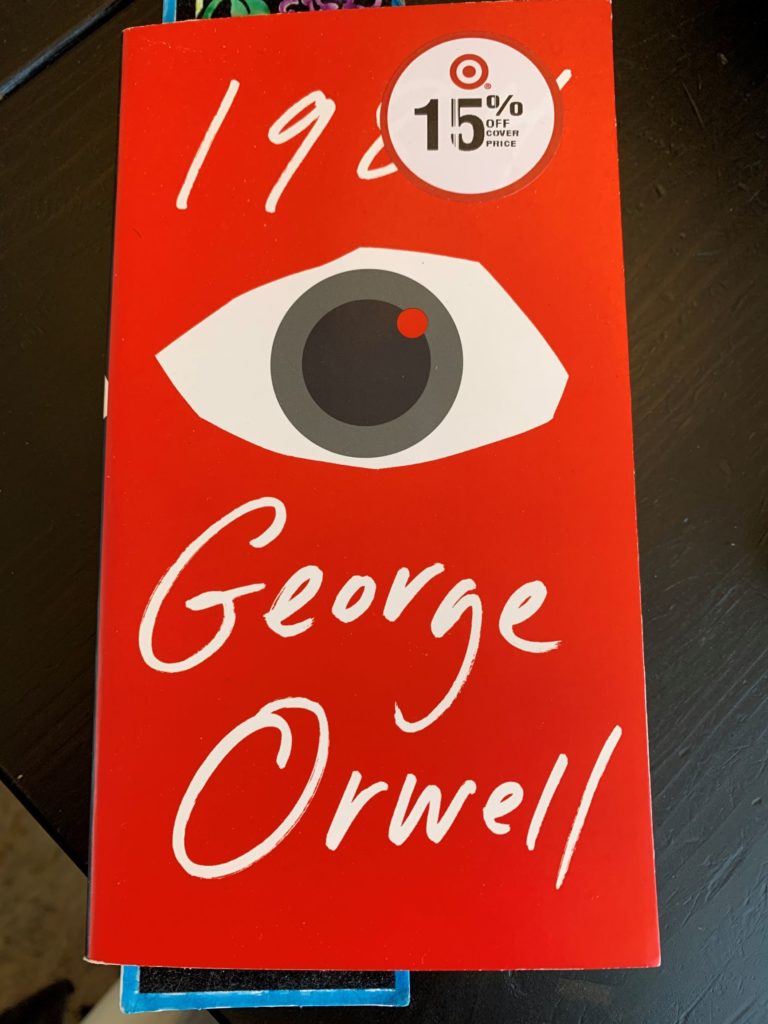
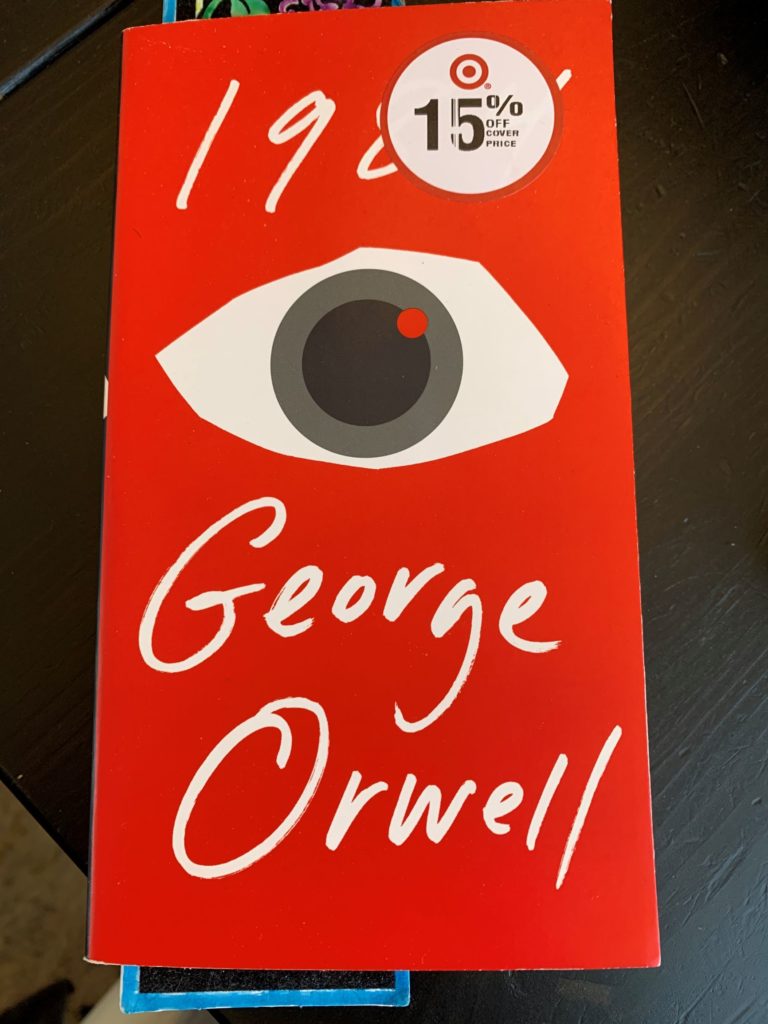
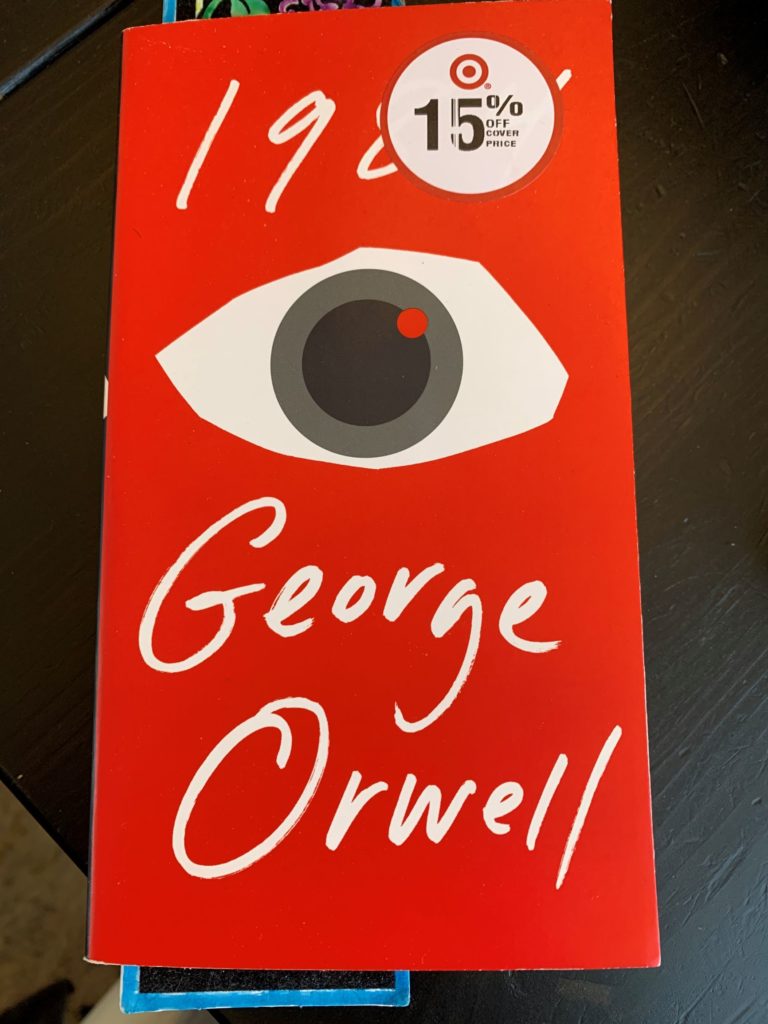
May 21, 2021 – 1984 2:3

Alright, so I tried it the other way and now I don’t know. What am I talking about? I read this chapter last night and while the details are fresh, I have really had time to analyze and think about what I read. But what the heck, let’s give it a whirl.
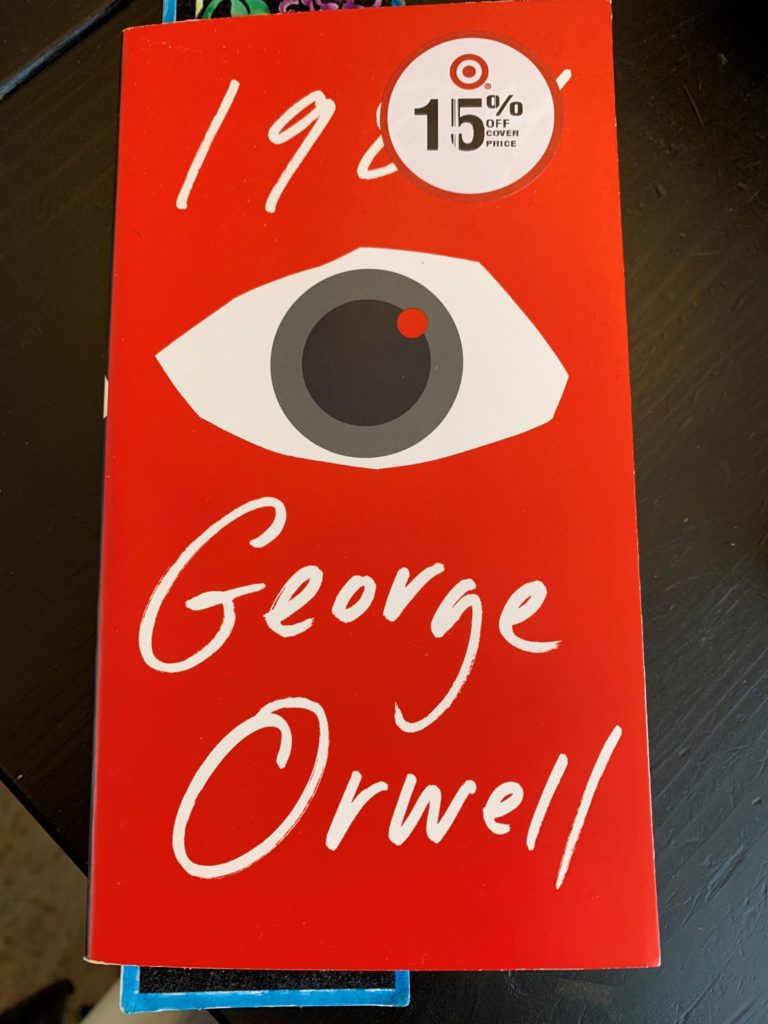
In this chapter, we get more of the details about how Winston’s relationship is working. I would call it the honeymoon phase as everything seems to be new and exciting. It talks about strategies to avoid detection and how they interracted.

It would seem like this chapter is light if you are just following along with the story. However, within the dialog some of the more hard-hitting points of the book are addressed. Certainly, I agree with the early ideas like without freedom, there is no real happiness. Those were just distractions to what Orwell is really getting to.

Motivation is Driven by Absence: Within the context of the dialog, Julia is talking about how a contented population is much less likely to want to rally to politics and aggression. I think that we have all heard the concept that hunger drives action. It is the same reason why the political dichotomy works.

Victory Without Clear Moral Justification is Empty: This was an interesting one. Winston talks about his opportunity to push his wife off a cliff. But as much as the idea appeals to him, he would never do it because there was nothing that circumstantially would have changed. Within Winston’s speculation, he would have been in the same position that he was in now.

These two things really strike a chord with me. This is what I was trying to write about on Monday, As much as I had what I wanted and proved that my ideas worked, it didn’t change my situation. My passion to prove what I was trying to do kept me going until it was complete. The emptiness of achieving what I set out to do and my situation not changing was too demoralizing. .

I suppose that it was in my deep subconscious, because I really didn’t put these things together fully until I started analyzing it a couple of weeks ago. I knew in my conscious brain that things were not going to change. I knew that I couldn’t gain anything with a victory lap and that it was only for personal satisfaction. But, I wanted the validation that my methods were viable.

Not being educated in psychology, it only seems intuitive that this is a process. Once we have achieved, we can now move on in our mental frame to the next idea or challenge. In my case, I felt trapped and dismayed. I didn’t want to expend the energy to look for a new job while I was working this time.

It is not yet clear to me how this information will drive my future goals. I will say that I can learn from it and try to be aware and not fall into the same traps. I guess that is a wonder in life is that our experiences make us who we are. Those that really analyze these waterfall events probably gain substantially from a personal standpoint.

Change Your Programming Routine: It is strange because I had no idea that this was going to be the result when I started writing this today. I guess that is the power of journaling. It organizes thoughts and forces connections to seemingly unrelated topics. I don’t think that I am trying to draw a relationship that doesn’t exist, it seems clear to me. I hope that I translated it adequately. Have a good weekend.
May 14, 2021 – 1984 2:2

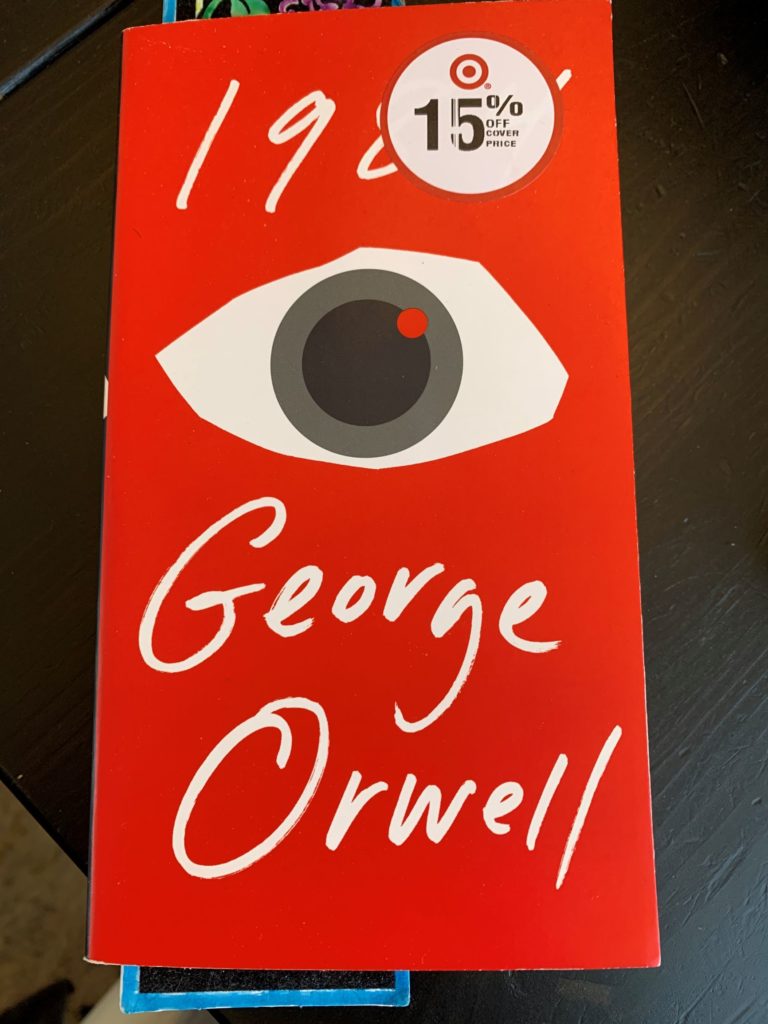
We have definitely made the transition from doom and gloom to a new world. I feel like it is echoing what is happening in my own life, but maybe that is a matter of perspective. I kind of gave up on independence and self employment to move to security and the known of employment, at least for now. Everything is new and exciting and tolerable at least for a period of time.

That doesn’t mean that the insidious is still not in the background, it is just veneered for now by the new surroundings and and experience. I keep telling myself that life is about perspective and that you have to want the situation to be good so that you can have the right attitude about the situation. The truth is that I believe that to be true, but where is that line between lying to yourself and and settling in to accepting your reality? I guess that we will have to stay tuned to see the end.

In this chapter, We see Winston rendezvous with the mystery woman that we now know is Julia. It seems like there is a lot of double entendre. Was Julia really interested in Winston? Did she represent her outward appearance and visible interests and commitments. According to her, participation in the Junior Anti-sex league was the best cover for destroying it from the inside.

Seeing is believing, or is it? I guess that you will have to stay tuned to see how it ends, unless you have already read the book. But, everything that we see from Julia is that she is pro-establishment, but everything that we hear from her is that is her cover for being anti-establishment. What basis is there to believer her other than Winston wants to? Sometimes when you want something, it doesn’t matter what the truth is.

I still think that discretion is important. From what I have seen, there is little reason to actually trust Julia, especially given the overall environment. But, I suppose loneliness is a strong motivator especially if you want to believe. The End You Programming Routine today is If you think it is too good to be true, it might be.

Have a great weekend, I am looking to kick Corona and make some more progress on the office.

May 7, 2021 – 1984 2:1

Happy Friday. I am hoping that you are heading to a restful and fulfilling weekend. I have a lot of irons in the fire myself, not to mention that we are in Covid quarantine which actually may help me keep working on my projects. I got my first wall framed up last night and I am hoping to frame up the second one today or at least this weekend.

Section 2 marks a distinct change in the book. We move from the setup and into the story. Winston gets a surprise interaction of a very non-permissible nature. He is going to meet a mysterious woman on a very different premise than he anticipated.

Jumping into the concepts of the chapter, I would say that they are fairly simple and sort of intuitive. It doesn’t take a lot of digging or interpretation of the chapter to dig these out.

Risk versus reward: For whatever reason, we as humans all have desires. Sometimes the desire is so tempting that it consumes your thoughts. The prudent person would weigh the cost benefit of the decision and assess the risk. In this black and white world of 1984, there is a lot more gray than might meet the eye.

Another way of putting it is that rules are known and clear, but the enforcement or ability to enforce them are not as straight forward. That leaves a crack for the thought to skirt the rules and that is the risk reward calculation in this scenario. Some people of course just do things anyway. I guess that they don’t have the ability to comprehend the penalties for the risks.

Always use discretion: One of the reasons the characters are able to operate in the gray is that there is not as much technology and infrastructure in place as there is today. The ability of a few to monitor the many is limited by the capability of the age. Of course, just like ‘Newspeak’ it is very difficult to know the truth.

In this type of environment, it is best to always act as if you are always monitored. It is a little more difficult to treat people and relationships that way. A constant state of unknown/fear/suspicion can have an effect on the psyche. It is not really a world that I want to be a part of, but that is the state of affairs here.

End Your Programming Routine: My approach to analyzing 1984 lends to making this application fairly easy. You should do the best you can to always make a risk versus reward analysis in new, big or difficult decisions. I think often people don’t really realize the situation until it is too late and a little thing becomes something large. Likewise, I think it is always prudent to use discretion. I guess that is the kind of guy that I am.

April 30, 2021 -1984 1:8

The road to hell is paved with good intentions… is that how the saying goes? Anyway, I read this chapter three weeks ago with the intent on writing about it immediately. Unfortunately, things didn’t quite work out that way.

This was one of the longer chapters in the book to date. Despite the length, it is also one of the lighter chapters in terms of heavy hitting content. This chapter has Winston out and about in the ‘forbidden’ world. The sights are the everyday life of the Proles; from the constant danger of errant explosions to the daily routine of the pub. As Winston said, it is not expressly prohibited to walk amongst the Proles, but highly suspicious.

History is Grounding- Let it be said that history is an interpretation of the facts from the perspective of the person writing it. It is no different than today’s news or this blog. That means that there is an inherent bias but that is not really important. Just like adopted people search for their real parents or siblings, there is something to knowing where you came from. It gives us perspective on why we are who we are, why we look and act the way that we do. Once we can reconcile our history to our current position, there is a certain inner peace.

Tokens Complete Our Picture- Trinkets sometimes bridge the gap between our history and the present. In the case of Winston, he become infatuated with a glass ball. His speculation was that it was paper weight but regardless, Winston was infatuated with it. So much so, that he would risk his safety to buy it and take it home. We all have those items that usually have sentimental value or for some reason we are drawn to it. Fortunately, in most cases we are not risking our lives to hold on to such things.

This is the final setup into Winston’s life changing decisions. Using the English term it is foreshadowing. The urgency to discover the historical truth has been growing in frequency and importance over the last couple of chapters. I tried to relate the role of history to our understanding above. The fundamental questions of Who are we, How did we get here, What are we supposed to be doing require context to satisfactorily answer.

I am developing a different opinion of this book than I had after the first time I read it. My plan is cover that more in-depth at the end when I summarize all of these entries in the final closure. When you look at the book from different perspectives, it may be this chapter is more important depending on the lense the reader is viewing the story.

March 10, 2021 – 1984 1:5

Back to the grind here, today we are taking another look at George Orwell’s ‘1984’. Chapter 5 is an interaction between Winston and some co-workers at lunchtime in the cafeteria. The significance of this chapter reveals Winston’s opinions about some of his closer relationships and the constitution of his character.

The best description that I would give is that Winston tolerates his co-workers by circumstance. Meaning, he begrudgingly accepts the company of others even though it seems like he cant stand being around them. Not only does Winston have difficulty empathizing with their opinions but also it seems that the general scarcity has caused some self-protectionist behaviors. There are several questions about the availability of razor blades for instance where Winston denies having a few.

As we dive a little deeper into the subtext of this chapter, we see the betrayal of human emotion on the goals of Big Brother eradicating descent and non-conformity. I will talk a little more about those things when I analyze the chapter concepts below.

Chesnut Tree Cafe- It seems like there is a place in the allowable world that decenters are permitted to gather. Of course, there is risk in associating with such a place. I find it a little strange that such a place is allowed even though in all totalitarian societies venues are underground. My speculation is that it is easier to monitor the activity by permitting it.

Face Crime- Just as it says, the face implicates a person for a crime. The truth is, you don’t even have to be guilty but facial expression is probable cause for a crime. It would seem that guilt or innocent is irrelevant to the act, but rather suspicion. Even worse than that, anyone can report a person for suspicion based on appearance.

Newspeak Dictionary 11th ed- Another reference to changing the language. A sort of silly, sort of make sense discussion takes place about the elimination of idioms and the peculiarities of the English. The stated goal is to simplify the syntax but the reality reinforces language as a tool of freedom and self expression.

Our New Happy Life- This is the current propaganda campaign. With this slogan, it signifies everyone’s struggle together to achieve a higher plane and stated goals. Once again, propaganda is used to simplify and summarize Big Brother’s goals.

As we get to the end of the chapter we see some foreshadowing. This woman with the dark hair seems to be appearing frequently. Not only does it seem like she will play a bigger role in the future, but I cant help but think these are references to loneliness, sexuality and repression. I guess that we will have to keep reading to see.

October 1, 2020 – Review: My Life in France

“My Life in France” by Julia Child with Alex Prud’homme was the August book club selection for the Left Coast Cellars Culinary Food and Wine Book Club. That’s right I said August and I just finished reading it last night. I think I have been upfront with how busy I have been so now I am at least one month behind.

This is a biography written in first person style (by Alex). He did all of the interviews and arranging of the narrative directly from and with the consent of Julia. The book chronicles her life through her formidable years as an writer and TV personality. It is weighted pretty heavily toward her pre-cookbook days and the amount of content and details thin out as book goes on.

As a relatively young member to this culinary club, this was another personality in the food world that I have little exposure to. Not being around when the ‘Frenchiphile’ food craze dominated that scene, it all seems so integrated and second hand to me. But, of course she was instrumental in painting the landscape of today’s food scene. I have enjoyed learning the history and perspective of these early media pioneers. There is also a movie, I haven’t seen it yet, but I am going to watch it with my wife this month.

The most interesting aspect of this book to me was just what a labor of love and effort ‘Mastering the Art of French Cooking’ was. I took years to develop and was a huge tome, over seven hundred pages. This was all largely done manually and over international correspondence. I have observed that many times in life it is not the final outcome that designates success but the process in which that task is done. Julia discovered a fervent delight in testing and perfecting recipes and techniques that could be achieved in the United States using imperial measurements, different tools and a culture that was more aligned with TV dinners than centuries of tradition.

It wasn’t always an easy read for me, as evident on how long it took me. The story lines were filled with names of people that breezed in and out. As seems to be customary to that generation, many of them got nicknames which added more names and I got kind of lost at times. The other criticism I had was there were a lot of French phrases in the book which made me tune out at times because I didn’t understand what I was reading.

All that being said, it definitely made me appreciate what she had accomplished in her life. I can certainly understand the technical challenges and appreciate people’s passion. Unfortunately, I wasn’t able to attend the August dinner, so I am not totally sure what the menu was. From skimming through the menu it was beef burgionon, garlic mashed potatoes, formage blanc (fresh cheese) and gougeres (pastry). There are some vague descriptions of preparations in the book, but definitely no recipes.

As for wine, there is mention of many French varietals, none that I really recognized other than Dom Perignon which champagne seemed to be very common. Pop a cork, I would recommend Pinot Noir unless you have access to a good French burgundy and build your culinary history foundation.

September 22, 2020 – Review: Rigid 12/3, 50 foot extension cord

How many people actually read the little instruction manual provided with electrical powered tools? Probably not many people, but if you did, often there is a chart that lists the minimum size cord per distance of run. It would follow something like 25′ needs 16 gauge, 50′ needs 14 gauge, 100′ needs 12 gauge.

Why is that? The thinner the wire in the cord, the hotter the cord gets with more amperage draw because the resistance over distance reduces the amount of delivered amperage. That is why they heat up, the lost current is turned into heat. Reduced power chokes the motor, or said in other words not enough amperage to properly drive the motor.

Generally, this is not a big problem because most tools draw way less current than a circuit (or cord) can provide. Typically, I use any old extension cord to get the right length (and I don’t consult the chart ever). However, there are certain machines that really is not the case. And a good hint is how long and how big the cord on the tool is. For instance, the wisdom with an air compressor is that it is better to get more hose than plug it into an extension cord because they draw near 15A when running.

I once watched painting contractors try to use an 18 gauge household extension cord on an airless sprayer and it tripped the breaker about every two minutes until I gave them an appropriate extension cord. Talk about not having the proper tools for the job. I recently decided to add a 12 gauge extension cord to my stable because I was borrowing someone’s paint sprayer and I wanted to have enough distance and not burn out their tool.

One of the first things to appreciate is how supple the cord is despite it’s diameter. Cheaper cords are stiff and when rolling often have a mind of their own. Not this one. It also has a lighted plug so that you can see the power is on the cord, kind-of nice.

ScorePositivesNegatives
Value4/5Spending on extension cords protect a much more expensive tool or prevent a fireThe worst thing that I can say is that these thicker cords are expensive. $80 for fifty feet or $120 for 100 feet
Quality5/5Fit and finish, everything as expected
Performance5/5Rolls and bends nicelyVery heavy. But all cords of this size are.
Lit plug indicates power to the cord

What else can you say, extension cords are not sexy or fun. They can be pricey and bulky. At best, a necessary evil. But it pays for your job and your tools to have the right cords when you need them.

September 9, 2020 – Review: HingeMate 350

I have been saving this one for a while. I have been waiting for a day where I needed a topic quickly, today isn’t that day but I have been sitting on this for over a month. I am going to discuss the finer points of the HingeMate 350 today.

What is the HingeMate anyway? It is a template set that is used to create mortises for doors and hinges. It has pretty much everything you need to do that job, except the router. I purchased it at Lowes for $38.50.

There are plastic templates for the router to use from 2 1/2″ to 4 1/2″ hinges. It can accommodate three different styles of hinges in those widths, 5/8″ radius, 1/4″ radius and square. In addition, you can also mortise strike plate mortises as well as lock plate mortises.

This was a job that was traditionally done with a mallet and chisel. And it can be done, it is not too hard. But it is tedious and takes quite a while (at least for me). I recently replaced doors on my project after spending hours truing up the frame and opening, so I wasn’t too excited about ripping out the frame along with the finished trim, I thought that I would give this a try.

When would you replace a door only? I would say that if you are happy with the swing operation and the trim detail, it is a perfect scenario to only replace the door. The trick is that this is kind of a precise operation, hinge placements need to be exact in order for the door to work. It is easiest to transfer measurements from the old door to the new door for the best results.

The way that this product works is that you select the template that you want to use and place it in the template holder. The template holder is adjusted for the door thickness and placed in the precise spot that you want to work on the door. The whole apparatus is screwed to the door. The bit is put into the router (not included) and then you adjust the depth of cut for the hinge thickness.

Rout the hinge mortise, remove the template and test hinge fit. If you are satisfied, drill the holes for the hinge screws and mount the hinge. Here is a tip, for best door operation, the top of the hinge face should be completely flush to the door edge, not proud and not inset. Otherwise you get into all kinds of binding and geometry problems.

How did it work? Well, it worked perfectly on my first door. It fit on the first test. My second door I had to make modifications to the door in order to make it fit, but I dont believe that it was a problem with the HingeMate but rather the opening was still a half an inch out of plumb.

So, what is the verdict for the HingeMate?

AdvantagesDisadvantages
Value4/5You cant argue with the price. The professional Porter-Cable version is over $250You need to supply your own router. That is another $100 if you do not already own a 1/4″ collet router
I bought this to cut hours of chiseling, I felt that I could do an entire door in the time it would take to do one hinge by hand.If you are only cutting one hinge size (or hinges only) you get a lot of extra pieces that aren’t necessary
Would like to have a storage case for all the parts. You have to cut the packaging open to get them out and there are a lot of loose parts around.
Quality3/5Followed the included instructions and got acceptable results. No flex, no wanderI noticed that the compression fit of the templates tended to loosen with repeated installation into the fixture. I fear over time, the fit would become too loose. That is not substantiated at this time
It was fairly persnickety to accurately place the fixture, the marks are not very precise and required a lot of verification measurements.
Performance3/5Hinges fit tight and flush. I was very happy with the mortises and the speed of the job.The precision of this jig depends on how good you are at measuring and setup. 1/8″ will be extremely difficult to set the door (or repair). I measured four times before cutting.
The only real thing I didn’t like was the screw holes that remained after the fixture was removed. Those had to be filled. It is a cheap and effective way of holding the fixture in place.
The trim router that I used was too small for the template and wanted to fall through in the middle of the cut so I had to freehand. Use a full sized router or an extended base plate to eliminate this problem.

The bottom line is that price for performance is there. I wonder about the durability of this product, but for me I am don’t really see using it much more. Again, my main motivator was saving time on installing the new doors, check that box. If you have a need, I can recommend this product. If you are a finish carpenter, go for the Porter-Cable.

May 27, 2020 – Review: Makita Cordless Circular Saw (XSS02)

I have been using this tool for the last couple of months. I have got to say that it has become the go-to circular saw in my inventory. I am going to give some ins and outs of my experience.

A cordless circular saw should not be your only circular saw, but probably your first one. Once a certain level of efficacy is achieved with the engineering of the tool, all the additional drawbacks are secondary. What I mean is that a smaller overall blade means less cutting capacity and a battery means limited runtime. But, for the ‘one’ cut or the awkward cuts you cannot beat a small, lightweight and cordless tool.

I am going to compare and contrast some of the other saws in my line-up to try and build a case for this one. My first saw was a traditional home-owner grade Skil. Nothing really wrong with that, I have done a lot of projects and it is serviceable. The number one thing that improves accuracy (for a right hander) is having a blade to the left so you can see the blade cutting the line as you push the saw.

I upgraded to a Porter-Cable about fifteen years ago. This is a much beefier, contractor oriented saw. It has the blade on the left, a really wide base. This saw is ear splitting loud and I have some trouble with the blade wandering, could be me but it doesnt seem to be an issue with other saws. However, the first thing that broke was the ‘tool less’ nut to hold the blade on. This happened mid-project so I ended up buying the Skil worm drive saw while I waited on a replacement nut.

The Skil is a beast. If I am cutting framing lumber all day long or concrete block, this is the saw that I want. It is quiet and powerful (and really heavy). Now, I am going to review the roles that each of these saws’ play. The regular Skil is now attached to my Kreg track. The worm drive is for heavy duty cutting and the Porter-Cable I use largely for demolition. That leaves the Makita for everything else.

I think most people in this realm know that once a brand is chosen, you are smart to buy other tools in the same brand because you can share batteries between them. Hence I have the Makita tool system and a number of tools that are in the family. In true disclosure, I dont have a lot of recent experience with other brands. But after fretting for several months on what brand to buy, I think that you probably cant go wrong with any of them. I will say that DeWalt is available at both major home centers whereas Makita is not. The same is true for Rigid, Milwaukee, Ryobi, Bosch and Craftsman, being store specific.

Now, I only have 3 aHr batteries, so to get more run time, an upgraded battery would be an improvement. However, on a full charge I was able to work on siding all day long without changing batteries. The light an compact nature of the saw is extremely useful in tight situations.

On the more downside of things, this saw does not have a ton of torque so it needs a runway to get started with cutting. It can bind relatively easy so you need to pay attention to the cut. Because of the light weight, kick back is much more real because it doesn’t have the mass behind it to counter act the forces of binding. If you add to it more risky support because of the light weight of the saw you need to be careful not to get injured.

ScoreProsCons
Value3/5Uses batteries for my existing 18V toolsCosts as much as a high output electric saw
Batteries requires brand loyalty
Quality5/5Good ergonomic fit
Performance4/5Very happy about the performance of a lightweight, cordless sawHigh battery draw, the brushless saw (for 50% more) would be more efficient and powerful

It should be noted that this was a tool only purchase. At $129 that is fairly steep for convenience. There are options to buy kits where the most common is drill, driver, reciprocating saw and circular saw that would come with batteries and a charger. The saw can be purchased with battery and charger as well, but you are now getting up to the $250 range. At that price I don’t think this is worth the money.

To sum it up, I am very happy. Despite the many drawbacks not having a cord is sure convenient.

May 12, 2020 – Review: Hunt, Gather, Cook

Hunt, Gather, Cook: Finding the Forgotten Feast by Hank Shaw was the April book selection in the Left Coast Cellars Culinary Book Club. Unfortunately, the club has been on hiatus since mid-March but that doesn’t mean that the reading doesn’t go on.

Hank Shaw is an author, blogger, podcaster and general media person. His focus is about cooking with wild sourced ingredients. He tends to collaborate with others in this space like Steven Rinella. If you are into this sort of genre, then you probably already know about him and his contemporaries.

The book is organized into three sections. Section one is about foraging, section two is about fishing and section three is about hunting. Each chapter in the section is grouped by a theme such as wild berries. At the end of each chapter there are five or so recipes focusing on the type of ingredients the chapter is about.

This is one of those books that I would consider a gateway into the subject. There is no possible way that a person can safely learn everything about foraging by reading this. Every microclimate and region in the country could support it’s own botanist/mycologist/herbologist from the vast diversity that is present. There is no mention of mushrooms, which is probably a good thing. Instead the focus is on high value, low risk choices like seaweed and day lilies.

Another potential roadblock to successfully implementing ideas in this book are access, equipment and knowledge. For example, in my state there is no ‘season’ for rabbit hunting. It does require a license to do so. There is public land about ten miles away, but I have rarely seen a rabbit. I think that to really do this successfully, having a flushing dog would be the only viable option. Dogs are not allowed in the public land without a leash.

Instead of focusing all of my energy into why any of these ideas can’t be done I think the best use of this book is to read through it and look for things that can be done. Almost everything has a season to when it is available and or legal (including a lot of plants). Plan times to obtain these items as family activities. A family charter for bottom fish and crab is something I can do in my area. Then be prepared to feast when the trip is complete.

I enjoyed reading this book because it is about 25% technique, 25% cookbook and 50% inspiration. So, it is not a page turner but it does get the mind stimulated about the possibilities. Over the years, I have learned that it is much more enjoyable to pursue the activities rather than read about them. But I find that I can more easily find the time to learn and think than I can do. For that reason, it is exciting to think about that next fishing trip or making blackberry wine.