Category: Review

April 26, 2022 – Post Myki Era

On March 3, 2022 I wrote about how I hated technology. My password manager was being discontinued April 10. I have been ‘Riding Dirty’ as they say. It has been working for the last couple of weeks but I have been dearly hoping that I find a new option before my time runs out. I am happy to say that I am trying out BitWarden and I like it so far.

Let us refresh on my requirements for a minute

  • Multi-device support, Windows and Apple IOs definitely, Linux a plus
  • Inexpensive, preferably free
  • Preferred – Browser plug-ins to support auto population
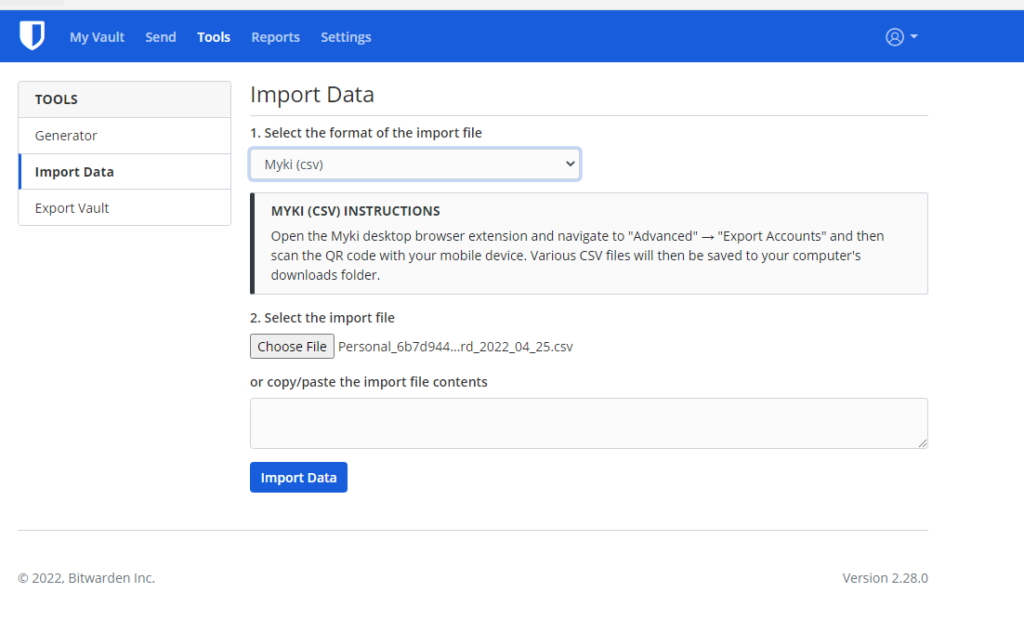
  • New – Ability to import from Myki

I am only into this a couple of days. The import was impeccably easy some of the other functions are more complicated (and more secure). For instance, I am logged out of the password manager each time I close the browser. That is inconvenient but it does have the option to never log out. So, I am going to try it for now and see.

The browser interactions are much better than Myki. If I had one complaint, it was adding new accounts. The interaction was klugey and ineffective. Myki would recognize the account didn’t exist but getting it to work during the first interaction required a mixture of automated and manual efforts to make sure it worked right. Most of the times, I had to log in multiple times to make sure that it was working the way that I wanted.

Myki would often get confused if there were multiple accounts on the same website. With BitWarden, you select the account that you want to auto-populate rather than the software trying to get it. Myki could do it, but you had to manually separate the accounts and set everything up, then you could select the right account.

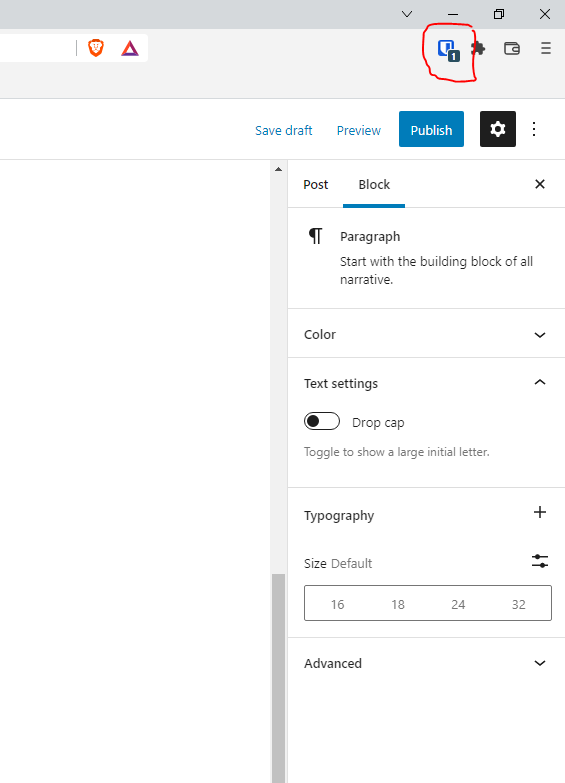
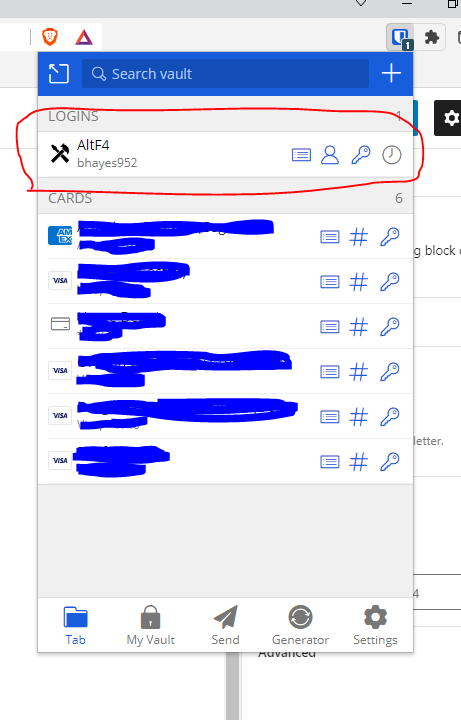
The browser extensions are like having access to the full program. It makes it convenient to edit and copy while being on the page. The extension is context sensitive an alerts the user that there is an applicable password for the site that is in focus.

I have so far tried it on Windows and IOS and it does seem to work. Syncing seems to be done quickly and I haven’t seen any hiccups. I would say that it is a bit premature to declare everything wonderful. For instance, I have not tried to create a new account yet. Additionally, there are some sites where additional data is required, like a PIN. I don’t know if that will autofill or you will need to have some notes. I will find out.

The one other thing worth pointing out is that this is an open source project. It does concern me a little bit about how it seems so slick and yet it is free. There are some pay options but they really don’t get you that much more. If you have some encryption keys or something, you can store them in BitWarden or you can share passwords within a specific group.

I am saying is free is great, but keep an eye out for how the storage space is paid for. Apparently, there is some tracking of use and the question is what is that used for and where does it go? Yes, all your passwords are encrypted, I feel like that is safe but your movements are not and they are tied to an e-mail account. You might want to have a browser that is not running the extension as your primary browser, just saying.

End Your Programming Routine: I hate to say this and doubts aside, but this might be a blessing in disguise. I really appreciate the smoothness of how the transition has gone and how this seems to just work. I didn’t realize how the nuances of Myki were annoying me but it was better than just having a cloud sheet or a static locker. If this turns out to be a total dud then I will probably let you know. As of right now, it is a recommend for me.

February 8, 2022 – Review: Arteck Bluetooth Keyboard For iPad

A few months ago, I made this purchase. It was $30 and works in conjunction with my iPad. For my job, I am a contractor. That means that I logged my time worked in two systems. It also happens that my primary assignment computer is not allowed to connect to my actual employer.

All that is to say that I need two devices when I travel. Normally, when at home, it is not a problem. I also have the ability to put in time on my phone. It is a little problematic when I want to continue to write daily. So, I thought that I would give this a shot.

Since all of AltF4 is cloud based, all I need to access is an internet connection. I also need access to OneDrive to retrieve photos and video for pasting purposes. Typing on a screen is OK for small edits but it does not work well for lots of writing. This thing almost makes my iPad a real laptop when doing cloud based work.

On my trip in November to the midwest, I carried two laptops and that was heavy. It was so heavy, I decided to look for a better solution. I used this keyboard for the first time for my Thanksgiving trip and I was very pleased. The tablet simply snaps into the overall keyboard case and then folds like a laptop. It is definitely a smaller form factor but not unpleasant to use.

In fact, TSA said that it was a computer when I sent my bag across the scanner. The biggest thing that I miss is not having a trackpad. I find my fingers reaching for the typical location to move the cursor, then I remember that this is an iPad and I have to touch the screen. It is instinctive muscle memory.

I made my selection the way any typical Amazon shopper would. What can I get that is reasonably inexpensive because I wan’t sure how I would like it and can I get it before I leave? Yes, I did read some reviews but I don’t trust reviews with off-brands (like Arteck). I figured $30 was a reasonable gamble.

The keyboard is charged with a micro-usb cable and I haven’t run out of batteries yet, with my usage.

ScoreAdvantagesDisadvantages
Quality4Runs as advertisedPlastic-y feeling
Value5-Price to productivityNone
Performance5Huge productivity increase for iPad-No mouse or trackpad
-No battery life indicator

Needless to say, I am very pleased with it. I am happy not to have a second laptop on a business trip. It has allowed me to use my free time to keep writing on my trip, rather than doing it before I left. It has made my underutilized iPad a much more valuable device.

End Your Programming Routine: There have been a number of items that I have purchased since I started writing routinely. Most don’t warrant my time to write a review. I could probably write at least a review a week but I don’t necessarily want reviews to play such a major role. This keyboard is something that I have found helpful and valuable. I thought I would share.

January 25, 2022 – I’m a Gulper, Not a Sipper

It’s probably a bad habit, but when I drink out of an aluminum can, it tends to be with a meal or out of a sense of thirst. I am not a same can all day person, I want to get it done and move on.

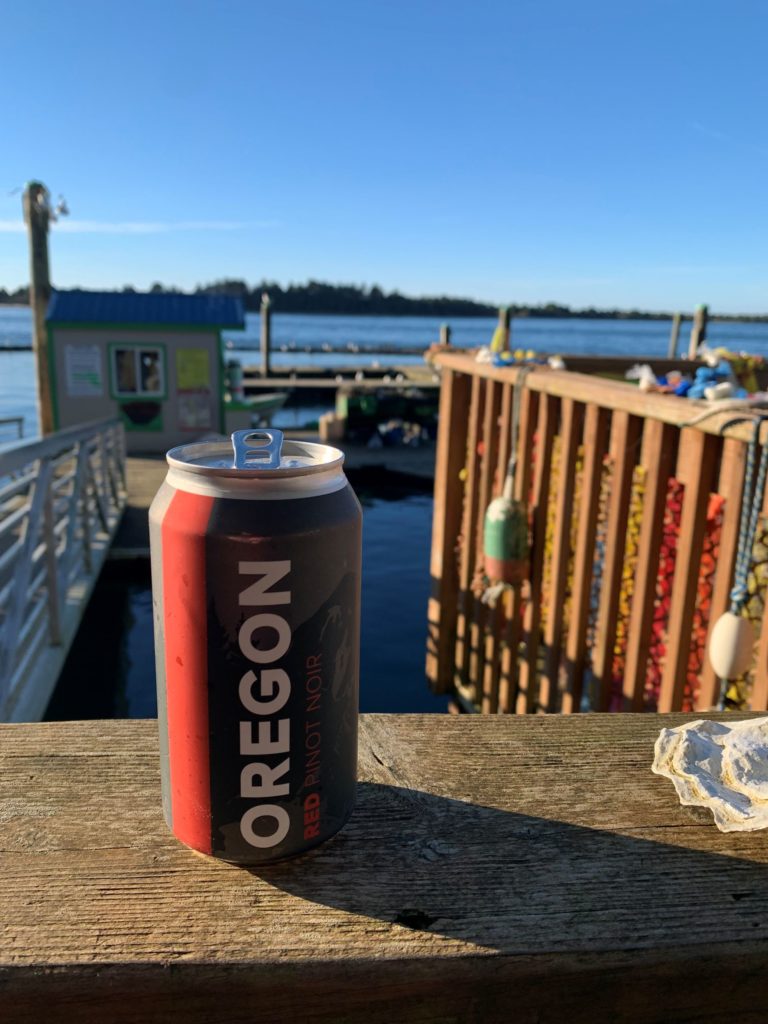
Over the course of the last ten years or so, wine has started coming in a can. While my wife and I were visiting the coast over the weekend, we picked up a couple of cans of wine along with some snacks to enjoy the day.

I did some quick calculations. A bottle of wine is 750 ml or roughly 24 ounces. That means that one can equals about half a bottle. So, at $8 a can I suspect that cost is about par with a bottle. The truth is, I don’t really know who made the wine in the picture, however most of the cans I see are labelled Underwood or 14 Hands which would be on the mass market (cheaper) end of the wine industry. I am pretty sure that it cost more per bottle when all the variables are compared apples to apples.

There is no doubt that this is a convenient format. The can is more compact, it is light and looks a lot better than drinking out of the bottle (meaning, a glass is not required). Aluminum blocks the light, so there would be no photo degradation like glass and chills quickly. However, there are some drawbacks, especially if you are a gulper.

What I learned from reading ‘Cork Dork’ a couple of years ago is that with sommelier training, the glass is important. I won’t rehash the book but how the residual liquid slides down the glass is an indication of the wine’s composition. And of course, the glass is designed to trap the nose and the aroma as you drink. Red wine glasses are bigger to expose more surface area to oxygen and provide more aroma, which is at least half of taste.

It was very difficult to drink directly out of a can and get the same experience. Add to that my propensity to take a slug rather than a proper sip and it was half gone in no time before I realized that I was doing it.

The wine itself was OK. In my opinion it was clean but unremarkable. That tends to be a characteristic of industrial wines. They tend to be more homogenous vintage over vintage due to blending and post fermentation alterations. So, here is the verdict.

End Your Programming Routine: I like the format, but I would still bring glasses if possible significantly reducing the convenience. I would also recommend red over white as they are not intended to stay as cold to drink. Maybe a Yeti or equivalent can coozi would be appropriate to drink directly out of a can so as not to feel the rush of beating the can warming up. I am not turned off enough to not try it again but I think that this is a situational use container.

January 21, 2022 – A Brave New World, Analysis

I eluded to this but I almost gave up on this book. It really wasn’t until chapter 17 that things started to make any sense. That was page 184 out of 220.  The interesting thing to this book was that Huxley wrote a forward to the 1946 edition of the book.  He unlike Orwell lived to see his work actually have some longevity and gain traction in the world.

I found it interesting that Huxley’s greatest regret was that he was unable to anticipate the coming of nuclear energy in 1932.  Therefore, his science fiction was ‘dated’.  For the twenty-first century reader, I think it is pretty forgivable considering all of the other technological changes we have seen since 1946. To his credit, he also admitted that if he were to redo it, he would have rewritten a lot of it (without getting to in depth to precisely what he would change).

From Huxley’s own words, this was intended to imagine a society five hundred years in the future.  Also, by observation the trend toward comfort over freedom was beginning.  I am not totally sure of his influences but I do think it was a stroke of genius to imagine totalitarianism as a gentle blanket, a much more likely scenario than the failures of the iron curtain or China.  Only North Korea seems to embrace the iron fist type totalitarian regime and even then I think it only kind of works because of it’s small size and population.

As I said at the beginning, the influences to the book were  supposed to be 1) the industrial revolution, figure headed by Henry Ford 2) Jazz and 3) Frued.  I could certainly see many references to Ford.  In fact, there is a quote late in the book ‘…Industrial civilization is only possible when there is no self denial. Self-indulgence up to the very limits imposed by hygiene and economics. Otherwise the wheels stop turning.’  Everyone has a job and a place.  People need to keep consuming so that everyone keeps working.  Everyone needs to keep working so that they don’t have idle time.

Jazz is a curious one, maybe it was situational like the instrument named the sexophone (sounds like saxophone, it was never defined). There were many places where lyrics came from the characters mouths in song or rhythm.  I am far enough removed from Jazz that those lyrics may have been adaptations of popular songs, not quite sure.  Certainly music was part of the conditioning in civilization.  Like all entertainment, if it can be subverted to push a useful message, there is no doubt that can be leveraged for propaganda.

That leads us to Freud.  I think that you will all remember my analysis to Freud and 1984.  To me, that was clear and and easier link to make.  In this case, I have a harder time making the outright connection.   I think you could easily overlay Id, Ego and Super Ego to characters events and circumstances.  But I didn’t get the sense that the story was laid out to prove the theory.  Rather, it seems like Huxley was aware of the theory and said “that makes sense, that is how humans behave” and then wrote the story.  I think those looking to make Brave New World justify Freud would have an easier time than saying Freud’s influence drove the text.

Knowing the Orwell was a student of Huxley makes a lot of sense.  It does seem fairly  evident that Brave New World was highly influential in 1984.  I am sure that they shared some fairly poignant discussion and had similar thoughts.  In some ways I am glad I didn’t know that they had a connection before I read and analyzed 1984.  It was easier for me to be objective and follow my instincts. 

I think there are aspects of both that could be combined together.  For instance, I don’t know about ‘hatching’ civilization but I do think the kinder, gentler totalitarianism is the more likely play than Big Brother.  Society seemed more realistic in 1984 as well as the propaganda techniques but conditioning and chemical control also seems possible.  

I learned something during this process.  I don’t do well analyzing something until I have seen the whole picture, that is read the whole book.  I was struggling to even identify the concepts until I was done and then they seemed so clear and words began to flow.  I even cut out things that were more minor because I had so much to say about what I considered major concepts. 

End Your Programming Routine: If it wasn’t for chapters 16-18 being so outstanding, this book would have been a hard no from me.  If you are choosing between 1984 and Brave New World, I recommend 1984 any day and every day.  Not only does it seem more plausible, the storyline is generally more interesting.  Brave New World takes too many unnecessary detours for character development that simply don’t matter and don’t impact the story.  That being said, this is a good companion to 1984 and I would read them in that order.  As always, additional knowledge and perspective are helpful when preparing for the quiet revolution.  

January 14, 2022 – Brave New World, Chapters 13 – 18

Things change rapidly in the later part of the book.  Finally, we get into what is going on and more importantly the why of it.  
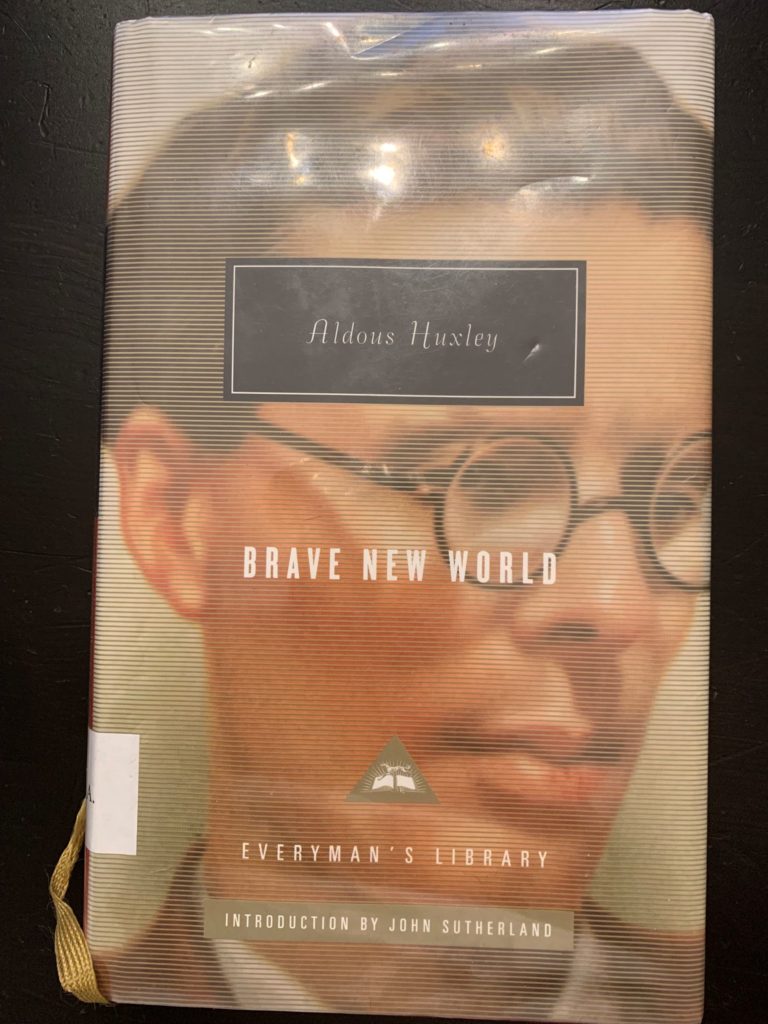
A lot happens in the latter part of the book.  John interacts with society, Bernard rises and falls as a celebrity, and of course, the finale.  I am not going to spoil what happens and how for you.  But, this is definitely where all the action is particularly chapters 16 and 17.

Science and Art vs Society  – To me this is the central theme of the book.  From a philosophical point of view, there can only be truth when there is also untruth and there can only be beauty when there is also not.  Science and art lead to truth and beauty which often times can be in contrast to happiness.  And when there is unhappiness, there is instability in society. 

The poignant conversation with Mustapha Mond reveals science has ceased advancing in AF632.  Without truth, there is also no beauty.  I used to believe the phrase that ‘beauty is in the eye of the beholder’.  And I am not saying that I have completely thrown that belief out however, I do think that the antithesis that there are standards that are universally recognized.   Those standards can change but only if truth changes.

Back when I was in high school, we had a days long debate with our Latin Teacher who was also trained in philosophy about this subject.  His stance was that there was an absolute definition of beauty.  That flew in the face of us young, doe eyed high schoolers.  I think it was us revolting to the idea that we all saw ourselves as “mommy and daddies’ little gems”.  The truth of it was that we had not seen enough of the world to understand that the full picture had not been revealed.  In that Latin class, most were successful in life but in the larger graduating class some became drug addicts and criminals, some died in car crashes and some got ‘knocked up’ shortly after leaving high school; hardly a beautiful ending.

In the eye of the beholder is a filter that we use to justify our choices and it is perfectly fine.  But, it doesn’t mean that it fits the definition of beauty.  I don’t know if this is true but Mustapha cited that only 1/9 can be Alpha.  The other 8/9 are not.  That is the science (or statistical analysis, a form of science) or truth.  When we are in the lower eight, we don’t want to believe it and that makes us unhappy.

Age and solidarity draw toward religion – The wildcard in the trinity above is religion.  Civilization in AF632 has edited out god, therefore it is handled in a separate conversation between John and Mustapha.  I suppose you could say that religion influences truth and beauty but it could have it’s on effect on happiness as well.

The claim is that as we age and get closer to death, we are looking for answers to the unknown in life.  In Brave New World no one ages, death has been normalized throughout all life and no one is solitary.  I suppose that is one technique to prevent looking for God in the first place. 

But I think in a larger sense, religion has a more powerful role than either truth or beauty.  It can cause us to do things and live life in contrast to societal norms or dare I say even laws.  For instance, despite religion being illegal in China there are still churches.  Religion has always survived persecution or even on the fringes of permission.  Clearly, a powerful motivator and society disrupter.

Nobility and Heroism = Political inefficiency – This is a minor point but a quote that I thought was interesting.  What it is saying is that when the population holds some individuals (or fictional characters) to a different level, then the current propaganda has failed.  I think that this is one to watch out for in the future actually.  

We see this all the time in the villainization of individuals in media circles.  It could be Trump or AOC and to a lessor extent Antonio Brown or John Gruden. One side pushing an agenda to discredit the other side.  The part that has yet to be perfected is when this doesn’t happen at all it means total control has been assumed.  The other thing to watch out for here is don’t get trapped on one side.

Humanity is the right to be Unhappy – Here is the punchline to what Huxley was delivering.  Again, this is the result of concept one today.  I think that it is interesting that even in the 1930s, Huxley recognized the trend to give up freedom for the sake of comfort.  

I will use a completely unrelated example to illustrate this.  Many companies are pushing this acronym SaaS.  That stands for Software as a Service.  The premise is that you sign up for a reoccurring payment to retain access to the service.  You don’t pay it every month (or period), you are charged automatically.  I have always bristled at this in that as it puts it on auto-pilot.   It stops becoming a subscription and become an everbearing revenue stream for the companies providing the service. No wonder it is popular.  The prevailing attitude of most people is that it is better to give up control than to have to deal with it.

What we lose here is the analysis of whether we want the service or not.  Is the payment market appropriate? Are we using the service enough to justify the cost? Do we even know that we are paying for the service?  We are abdicating choice for comfort in this case.  

My wrap-up next week will conclude this review.  I will do some comparisons with teacher and student to 1984.  I think Huxley provided some pretty strong conclusions late in the book.  The thing that I really appreciated with this section was the reminder that I don’t have to agree with what is happening in the world, the fact that it is happening and I know about it there is still hope that we have not been completely brainwashed or sanitized.

End Your Programming Routine:  Freedom requires maturity.  Maturity contains the ability to accept that there is truth that contrasts what we want in life or that we may not fit into every definition of beauty.  We do not have maturity if we put convenience over freedom in the long run.  The ability to make the decision in the first place is freedom. Without a continued questioning of whether we made the right decision or the results still fit is truth.   
January 7, 2022 – Brave New World, Chapters 7-12

We are now in the mid section of the book.  All of the newness has worn off and this section is largely about plot development.    Sticking with the idea concepts rather than revealing the story, I have compiled a more concise and less chapter by chapter analysis.

The truth is, as I am writing this I have already finished to book.  I suppose I am now able to stand back a little better and take a higher level look at things rather that trying to see everything as it is happening.   However, my notes I took before I finished the book so hopefully it is non-bias enough.

My book is 220 pages long.  In my opinion, the story really doesn’t start until Chapter 8 which begins on page 104.  While some of the preceding pages are interesting, it makes for a very slow beginning.  This is where John, aka The Savage tells Bernard his life story.  John was born to Linda who was abandoned on the reservation by her boyfriend (and father of John), the Director of Hatcheries and Conditioning, Tomakin.

If you haven’t read the book, then that is enough spoilers.  But suffice to say, the rest of the book is about John’s interaction with London’s civilized society and how the clash of his upbringing is irreconcilable to the rest of civilization.  Below are the concepts I observed in this chapter group.

Acceptance in Society – The Reservation is not succinctly described, however it seems to be a combination of Native, Latino, possibly Asian or Indian as well people.  They believe in God, perform Native American rituals and speak in a non-English language. They seem to eat southwestern or Mexican food, drink alcohol like mescal and live a life that we might recognize as compared to rocket travel and scent organ indulgence.

John being born to an English woman did not fit in to the reservation with blond hair and blue eyes.  Linda accepted her fate as there was nothing she could do to leave seemed to survive as a call girl.  I think this concept is perfectly understandable to us.  If you don’t look like us and are not from here, then you are an outsider.  John and Linda were outsiders at the reservation.  But they were also outsiders in civilization as well.  

Linda had grown old.  Despite being 44, she is described as someone of eighty,  Without access to the drugs and hormones, the natural aging process happened, apparently so did poor hygiene and lack of medical care.  John would never be accepted in civilization as he was born and not hatched as the rest of the people.  Living in society no matter how detached we may want to be is imperative survival.  It is the same reason why living out your days in a bunker is ultimately a failure.  We are meant to be some degree of social creatures.

Coping through medication – Despite Linda’s desire to be re-introduced into society, she would never be accepted.  Her looks and many years on the reservation had made it impossible for her to fit back in.  Supposedly, Soma was non-addictive but essentially Linda checked out with the drug as soon as she realized that this was not going to be the reunion fantasy that she had in her mind.  We will find out her fate later in the book but she is as good as gone at this point. 

Again, there is nothing too earth shattering about self-medication.  Both Bernard and John shunned the practice preferring to feel emotion and pain rather than push it away.  This is what makes this concept significant.  Humanness needs to feel both sides of emotion, not just the high side.  That was the whole point of providing the drug in the first place, to dehumanize civilization.

Division of the family unit – The book is written in a fashion that sort of portrays John as codependent.   He seems to simultaneously have love and rage for Linda.  The fact that all civilized humans are hatched and the words mother and father are titled pornographic.  I think that means shockingly vulgar, like a racial slur rather than our current definition.

Despite that, John clearly has love for Linda and he wanted to have the same with Tomakin.  That puts him at odds with society and of course has consequences to to the director.  There is extensive talk about this later in the book but this is where I first realized it was going to be a theme.  

Power of the State and Disobedience –  I would call this foreshadowing.  But there is strong indication that Bernard, Helmholtz and John are going to have a clash with the state before this book is over.  Helmholtz is some kind of English Professor and is having treasonous thoughts to borrow from 1984.  You can’t be alone, write about it or even talk about it.  

Good thing the book is short because I was starting to struggle.  I didn’t really get a sense of where things were going until we got there.  I will talk more about this in my wrap-up in a couple of weeks.  The first three concepts today are really very strong in dystopian fiction and are good tools of totalitarian governments.  Divide the society if you disobey, drug them if they don’t fit and weaken the family unit.

End Your Programming Routine:  I am going to take this back to masks for a minute.  Do you know what I never see when out and about?  I never see a child wearing a mask and a parent not or vice versa.  It is always parent and child acting in the same fashion. It isn’t until they get to the age of my children (teenagers) that you start to see a divergence.  My kids actually hassle me to the point that they don’t want to be seen with me not wearing a mask.  How does this happen?  They have been separated and socialized in a way that makes them shun if you are not fitting the social norm.  Think about that.

December 28, 2021 – Brave New World, Chapters 1-6

So, I miscounted the number of chapters, there are actually 18. Divide by three and that should be six chapters per week.  Today, I will be reviewing the first six chapters of “Brave New World”.

If we think about the world in 1931, when this book was written and apply our critical thinking and knowledge of history,  we know that the world is in the beginning of the Great Depression, there is the rise of Fascism with the election of Mussolini in 1922 and the writing of Mein Kampf in 1925 and with it came the pseudo-science of eugenics.  That is a good place to start since this is really how the book starts.  Eugenics is the manipulation of human reproduction to have more desired traits and less undesired traits.

The book begins with a tour of the factory where babies are created.  It follows through with raising after they are born and then character development begins.  Some good stuff happens while touring the factory, here are some concepts from Chapter 1.

  • Slogans – A unified population is an obedient population.  That is done by having people believe the same things.  To do that, they use a motto or slogan ‘Community, Identity, Stability’.
  • Classification of people –  The concept of Alpha, Beta, Delta, Epsilon and Gamma (including + and – of each) individuals is introduced.  Knowing and accepting your place in society helps maintain order and stability.
  • Matching mental and physical maturity and purpose – Huxley is proposing through the director’s character that when the body is physically mature but the mind is not it leaves more time for a person to think.  This is an undesirable gap in that it could lead to rebellion or acting or learning or believing out of class.

In chapter 2, the babies are in the world.  There is a aversion to using the word born because that implies a natural childbirth which is not how they came to be.  This chapter is all about how the children are trained into class.  Including what clothes they wear, what stories they hear and what propaganda they are continuously looped.  

  • Learning + Nature = Wild = Ungovernable – There is a distinct attempt to keep people away from nature and natural experiences.  Too many and they start to rebel because they start to understand that this life is not right (proper).
  • Science requires understanding, Morality is programming – This one jumped out at me because I didn’t realize how true it was.  The spirit is that morality can be trained/taught/programed whereas truth cannot.  

Chapter 3 gets a little fuzzy as it is a series of flashbacks and character introductions.  It is a little hard to follow when it is a series of short sentences and jumping back and forth between different character groups.  Nevertheless there are some good new concepts.

  • Eroticism – Whether it is culturally expected promiscuity or something called ‘erotic play’ it seems like there is an supernatural focus on sexuality that is missing in a culture of test tube babies.  I think that it is further emphasized with the next concept.
  • Drugs – It seems that women are taking hormones for regularity or ‘Soma’ for feeling more or Soma for feeling less.  They are even required contraceptives so that women don’t end up pregnant.  There is also reference to abortion clinics so it must not be completely effective, pregnancy is definitely not permitted.

Chapters 4-6 are character and plot line development.  We find that there are some doubts in to complete belief in utopia.  The main character Bernard Marx opens up with a friend Helmholtz Watson and girlfriend Lenina.  He might have an ally in Helmholtz but Lenina cannot overcome her programming to even indulge in the fact that there might be more to life.

End Your Programming Routine: I am trying to get through the concepts that make this work a great text to end your programming, not spoil the book.  So, I could write more about the later chapters but they require more setup in terms of explaining what is happening in the plot rather than in your face mechanisms of control.  I did find it interesting that technology such as helicopters, rockets and television was mentioned in the 1930s.  I didn’t know that such technology existed at the time.  Stay tuned to chapters 7-12.

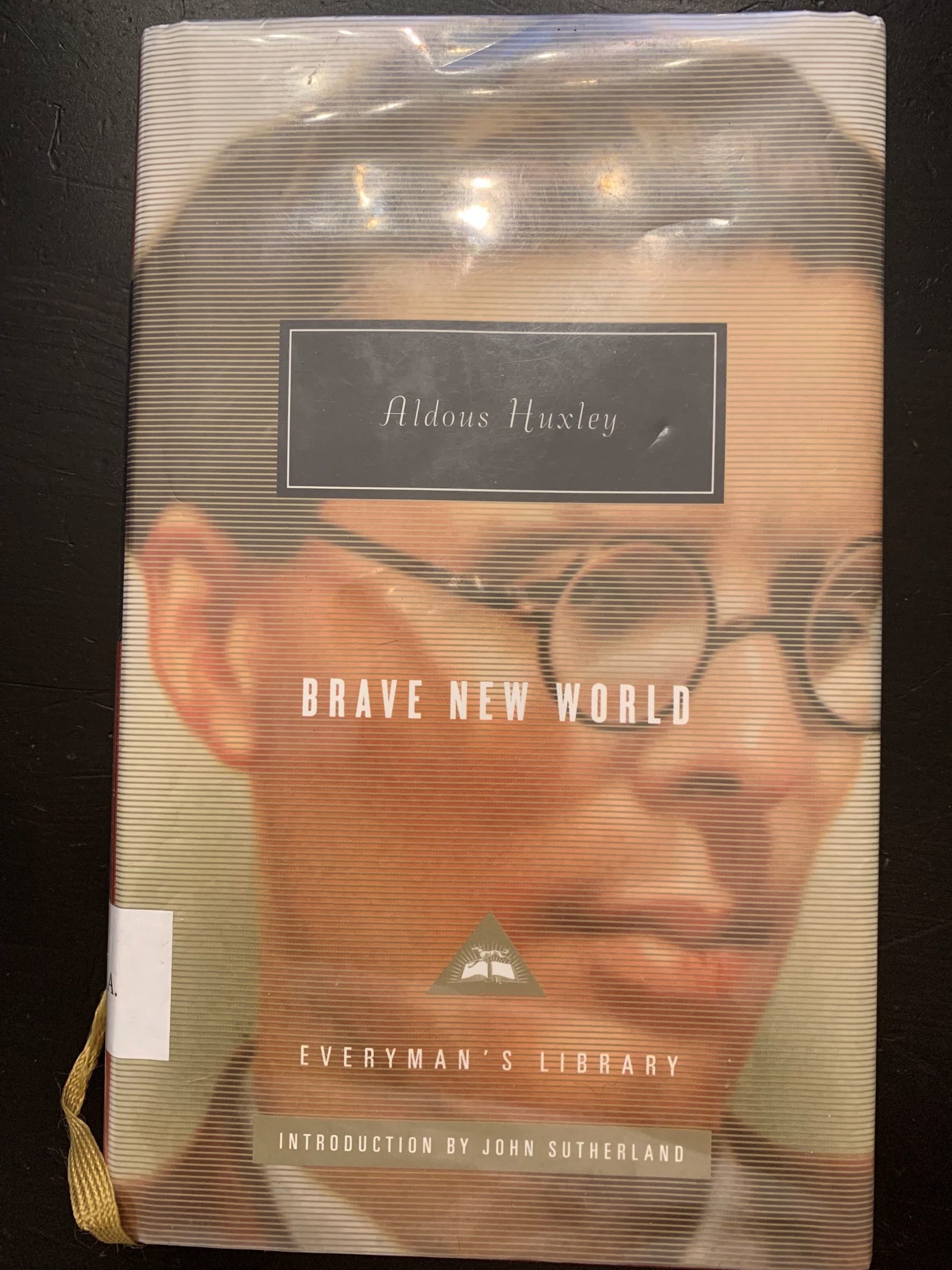
December 21, 2021 – A New Book Review: “Brave New World” by Aldous Huxley

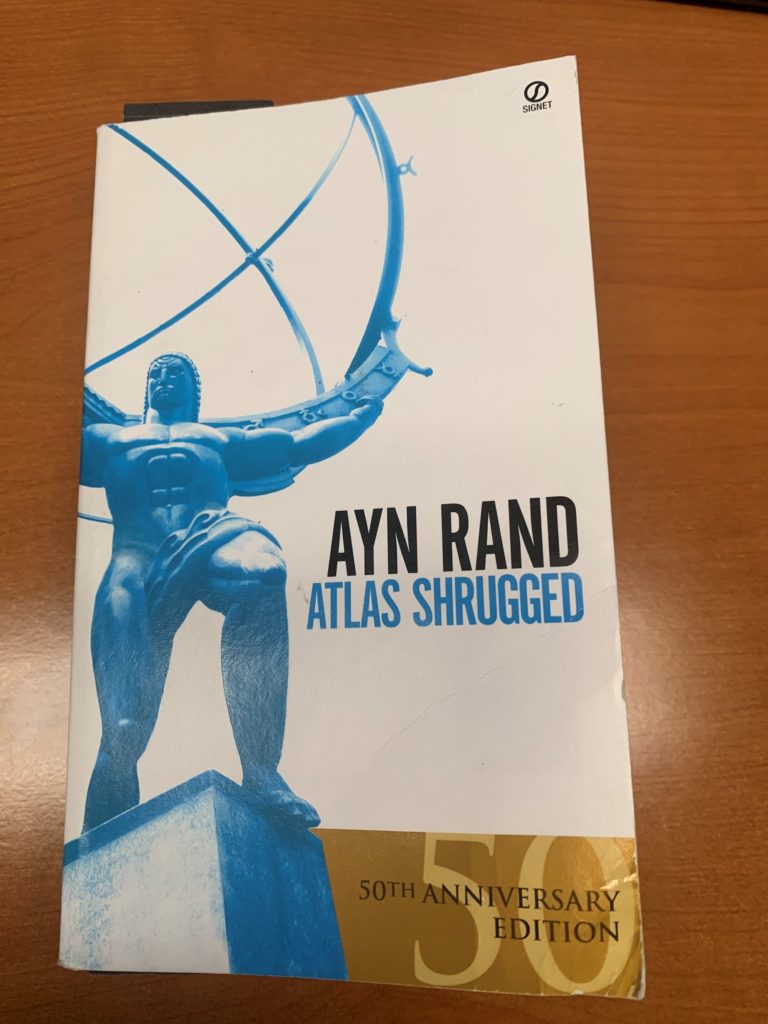
This is one of those books that often is paired with “1984” or “Atlas Shrugged”. I was toying around with doing “Fahrenheit 451” after Christmas but then I heard some information on “The Dangerous History podcast” the other day that brought this one up again. I highly recommend the whole thing, but in case you just want to listen to some Orwell interpretation, I clipped the relevant part here.

A Brave New World was published in 1932.  From the brief research that I have done, this work was an influence to both Orwell and Bradbury.  As it turns out, Orwell was actually a student of Huxley’s when he was a French teacher and it appears that they had a professional relationship. 

“Within the next generation I believe that the world’s leaders will discover that infant conditioning and narcohypnosis are more efficient, as instruments of government, than clubs and prisons, and that the lust for power can be just as completely satisfied by suggesting people into loving their servitude as by flogging them and kicking them into obedience.”

Aldous Huxley to George Orwell on publishing 1984.

What is going to make this review different than “1984” is that I plan to go through it quicker.  I technically have as much time as I need from the library but I am going to try and not take eight months to get through it. 

The plan is to review this book in five segments, this being one of them.  There are fifteen chapters, so five chapters at a time and then a summary.  This is also the first time I have read this, so my eye is not as tuned to the subplots and I am trying to follow the story line first.  That being said, I have already seen a bunch of good stuff in the first two chapters.  Of course with the holidays here, I don’t know if I will be able to keep this schedule, but let’s say that this will be compressed as compared to my previous review.

With the wide and quick swath through the book, I am going to again hit concepts.  This time, I am not going to spend  a bunch of time supporting the ideas to go along with them.  I will save that for the final wrap-up.  My ultimate idea is to build an AltF4 reading list for you to support the end your programming journey.  

I may have tainted my opinion a little, I read the introduction before actually reading the book.  So, I am not going in completely blind, I have some ideas about Huxley as an author, his influences and motivations when writing.  One interesting thing that this particular edition has is a timeline of Huxley’s life compared to world events.  Since I read it, I will introduce it here.  The three central influences are

  1. Henry Ford
  2. Sigmund Freud
  3. Jazz music

While I haven’t seen any biographical links to justify Huxley’s fixation on those particular topics, I will be keeping an eye out for them in the book.  I do have some working theories at the moment, but I will reserve those for the after I read the book.  One fact to keep in mind if you are reading along, Henry Ford was born in 1863 so the years referred to in the book AF630 would be 630 years after Henry Ford was born or the year 2493 AD to us.

As I develop this concept a little more, I will likely include more than just dystopian fiction although that is where we will start..  I am interested again taking another look at other titles like “Catcher in the Rye” and “Crime and Punishment” as well as non-fiction such as “Seven Habits of Highly effective People”.  Don’t fear, this isn’t going to be a book report blog, this is about developing a library of work and knowledge that supports the efforts of ending your programming.  

End Your Programming Routine: As you might remember from “1984”, my final analysis didn’t line up with the ‘tin-foil-hatters’.  On the surface, I see it.  But look deeper into the story and then try to put it together,  I couldn’t get there.  Is it great fiction – yes.  Is our course eerily charting the same direction – yes. Is it clairvoyant or a roadmap – No.  In fact, I think “Animal Farm” is probably closer to a roadmap.  That is on the list too.

December 8, 2021 – Review: Husky 36″, 11 Drawer Toolbox Combo

It’s been a long time since I did a review. This was supposed to be one of the cornerstones of my work so that at some point I could gain a business advantage buying, using and reviewing items. It’s not that I haven’t bought things since 2020, I suppose that it is I kind of forgot about reviews.

This is one of those items that I always wanted.  I imagined that I would have a bright red, Craftsman toolbox with everything organized and accessible.  It is not just that, but also I would have space to add more tools, if needed.  It sounds a little fruity, but another thing I could accessorize.  

When I moved to South Carolina, I built a bench in the garage that had custom slider drawers.  I could see all of my wrenches in order so I could easily find what I wanted.  When we moved here in 2005, the shop already had cabinets so I stashed stuff where it would fit.  It wasn’t my ideal, but it worked well enough that I couldn’t justify the cost.  

About a year ago, the plastic container that organized all of my sockets started to fail.  That meant that every time I was pulling out my sockets, I was having to reorganize them because they would fall all over the place.  To top it off, my son started ‘borrowing’ tools and leaving them in his car.  I repeatedly asked him to return them when done and because they weren’t too organized, I really couldn’t tell what was missing. Plus, with my sometime working on cars, I find that I was constantly going back and forth to the shop when I could have what I need right next to me.

I finally decided to make the plunge and buy a tool chest.   I had some experience with a Craftsman tool chest in the lab and I knew that weight can quickly add up and then things don’t work so well.  I suppose some of the difference between the consumer chests like Kobalt, Craftsman, Husky, etc. is the real amount of weight each drawer could hold.  I don’t know for sure, but I think the Snap-On ones can really handle the load which is why they are 10 times more expensive, even the used ones.

I knew that I wanted ball bearing drawers.  They just work better.  I also looked at the total weight capacity.  In this case, the 36″ chest  castors were rated for 1500 pounds.  The 40″ chest was rated for 1200 pounds.  Even though I wanted the larger size, overall weight capacity was more important to me.  I also liked the price better at $400 versus $600 and I got 10% coupon, I was sold on my choice.

I looked at the different brands.  I know that Stanley bought Craftsman so DeWalt and Craftsman in theory are the same.  The truth is, I couldn’t find much difference between any of the brands based on specs including US General at Harbor Freight or Stack-On at Napa.  Unless you are going to pony up for Snap-On, it boils down to color, drawer layout and price.  

I probably overanalyzed every detail because I couldn’t find exactly what I wanted, but I saw this blue color and I really liked it.  I knew that I really would have no practical opinion without actually putting tools in it and using it. The price was good, the need was there and it was a good project to work on while my wife was in Texas and I was spending all of my time organizing junk in the garage going through my in-laws estate.

Thin drawers are good because everything can be laid out in a way that each can be seen and extra stuff cant be put in the drawers.   When the drawers start getting deeper, then it feels like there is room to add an organizer.  What I have learned about those is that the cost starts to really add up and they add a lot of bulk to the overall use of the chest.  But again, one of the main goals was to organize tools.

With organizers in the drawer, they take up a lot of space.  That means that there is a lot less weight in each drawer (at least for now).  I found that Harbor Freight has a number of inexpensive options, in stock.  Of course online you can easily start having more cost in the organizers than in the actual chest.  

Here is my analysis.

  Score Advantages Disadvantages
Value 5/5 This was the most inexpensive choices I have seen with the features I wanted Still $400
Quality 3/5   The locks  and latch are really flimsy.  Top lid could easily be pried open to access the rest of the top
      I am not a fan of soft close drawer runners.  They offer artificial resistance and causes the drawer to operate stiffly when cold
Performance 4/5 I got all of my tools in the chest.  I have been able to roll it to the vehicle to work on things rather than running back and forth to the shop. I wish there were more thin drawers.  My optimum design would be 80%, 1 1/2 inch drawers with maybe two larger drawers.

End Your Programming Routine:  It is like most things for me.  I dreamed of one day having a nice chest with everything organized. Now that I have it, it is anti-climactic.  I will say rolling it next to my work has been nice and it is so much less frustrating to be able to easily find the tools without sorting through the pile of wrenches.  I have seen nothing that would make me say “buy that, not this”.  

November 19, 2021 – Extra Virginity: The Sublime and Scandalous World of Olive Oil

I have been taking my time with this one. It was the September 2021 selection for the Left Coast Culinary Book Club. As part of our gettogether, we did olive oil tasting and made dishes where olive oil was the main or standout component. In contrast to the August selection, I was fascinated with this one. I had some high level knowledge of the problems with the industry but this book really gets into the ring with them.

The book starts out with the historical references to olive oil in lore such as in Homer’s Odyssey, to the growth of culture via the Mediterranean people, it’s historical uses and importance to society. Then it travels into the scandalous world and wanders around into the new world and the push for a cleaner industry.

I have to say, this is definitely a fascinating book. Apparently, the Romans developed a welfare system whereby olive oil was distributed to the population. As a result, one entire hill in Rome is the remnants of the clay vessels that were cast aside when empty. In another fact, oil was stored in basements under buildings and when the cities were invaded and burned, so did the oil. Apparently, that act is what preserved writing on clay tablets by making them hard.

I never realized that there was a distinction in culture between the olive eating culture and the animal fat culture. That line was precisely where olive trees stopped growing. This section gets into the politics of propaganda and the regional developed tastes by proximity to the raw ingredients.

The book talks about how olive oil is made, all grades. It talks about the economics of olive growing and the distribution industry. It talks about the chemistry of olive oil, why it is good and what is wrong with the industry. It is something that I never thought I was that interested in and makes me want to consider doing something in that field.

If you are to believe the book, and I do then I think it is a forgone conclusion that nearly all oil that the non-Mediterranean person can obtain is poor quality at least and likely adulterated with other oils. That in of itself is not the end of the world, but it does mean that there are less associated benefits to that type of oil. What makes it special are the anti-oxidants present in the oil which rapidly degrade and make it equivalent to all the other oils out there.

On that note, the more flavors present the more likely it is fresh. So, if you taste the oil and it has some life in it, then it is more likely it is a good one. According to the book, over fifty percent of the oil in this country is not pure extra virgin and that was ten years ago. In contrast, over 90% of the European oils are not pure. It was also noted that nearly every oil at the supermarket this was the case as well as being rancid.

I am not sure what to do at this point. For sure, I am not going to dump what I already have. According to figures in the book, it costs 9 euros per liter to produce. With mark-up (and conversion), I would expect $20/quart is a bare minimum number to be looking for the real stuff. I will be keeping an eye out for a better solution and product. Most likely, the best way to get fresh and quality is to buy direct from the source. Look for single source producers in the US or Australia. There are additional resources in the book.

End Your Programming Routine: Hopefully my exuberance came through, I thoroughly enjoyed the book. The characters are complicated: rich one day and convicts the next. Government comes off as impartial yet graft runs amok. Everyone knows a little to a lot but no one is willing to speak on total authority as it is always the other guy. If you are interested in food, history, true crime or just something different, I would recommend this book.