Category: Review

February 16, 2024 – The Divine Comedy, Inferno, Canto VIII

This canto also covers some of two circles. Once again I am going to focus on the one of them, circle five the wrathful and sullen. Circle six will cover several cantos so we can cover that adequately next week. Don’t forget that this circle officially began last canto, but don’t worry I will cover it here.
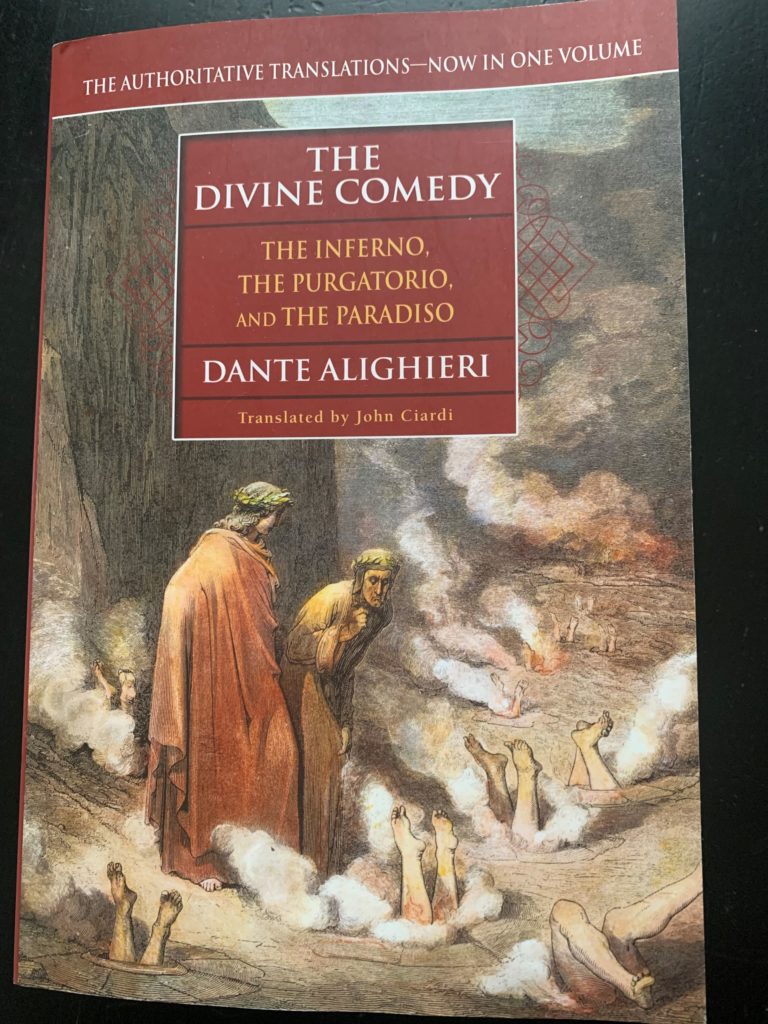
It wasn’t just my imagination but reading the notes for this canto said that the last chapter was a change in philosophy. It is speculated that Dante took a break at Canto VII and that it was intended to be one circle per canto. But that break brought out a re-imagination about how the story was going to go. As a consequence, I am rolling with it. Next week will be three cantos for the first time.

There isn’t too much going on from this level. The setting is the river Styx. The condemned seem to be under the black and stinky water. Once again there was only one encounter, a fella by the name of Fillipo Argenti. He was apparently an argent enemy of Dante’s.

If you ask me, it seems like Dante was the wrathful in the story. Dante is using his writing as the vengeance that he seeks. Very little is said other than sharply condemns his enemy. So, I guess we will have to look at the crime (or end it here).

I think we all generally know what wrathful means. So let us look at sullen. The definition that I see for for the word means gloomily or resentfully silent or repressed. I rhetorically ask, is this really worthy of the fifth circle of hell? To date, the crimes have all been pretty petty to get into hell.

Apparently, level six is a transition from what is considered outer to inner hell. To get into inner hell, it is all contained in iron wall like a prison called the city of Dis. Another thing that I kind of find interesting is that most of these so called sins to date would not be considered crimes in our society. No assault or rape or murder, maybe those will be in the inner circle but even theft or larceny? Once again, the wrathful one seems like Dante.

I am not totally sure where to really go with this today other than it is very clear that this story is personal to Dante. So I am giving you an early weekend this week. The pace is going to pickup next week and go into hyperdrive for the following week. Get ready.

End Your Programming Routine: Like a good Christian, I believe in redemption. So, it would be a good idea for my soul not to get involved in too much wrathfulness or sullenness or gluttony or any of the other sins. That being said, if we do slip into any of those things, I can’t help but be thankful that something is out there to help out eternity.

February 9, 2024 – The Divine Comedy, Inferno, Canto VII

Today we are on the fourth circle of hell. Interestingly enough, this Canto contains the fourth circle and some of the fifth. I considered covering both but then in Canto VIII it covers the fifth and sixth circles. So, we will cover the fifth next week since the sixth overlaps multiple Cantos thereafter.

When I think about it, I understand that this story is written in a formula. Each Canto is approximately the same number of lines composed of equally divided stanzas. Each layer of the the afterworld contains nearly the same number of Cantos. Since this book seems largely a social commentary, I surmise that this fourth level of hell Dante didn’t have that much to say about it and hence he combined the levels so that the story would work with the formula.

The fourth circle is interesting from the fact that it is two opposite factions pitted against one another. If you think about it, the opposite of hoarding is wasting and vice versa. It would seem as though extremes in either direction warrant an afterlife in the fourth circle according to Dante. He describes the situation that they are like two gangs, pitted against each other like they are going to brawl. Being that this is a political commentary, I find it interesting that the only constituents mentioned were clergy and church officials in this realm. I will focus in on this a little bit for now.

In today’s vernacular, it seems like hoarders are also wasters. They can’t seem to move beyond all of their possessions including garbage. And so things that have value get lost or spoil in the trash. This definition is not the strict definition of hoarding however. Hoarding is taking what you can, because you can. Just like wasting is letting something degrade because you can.

Both of this positions seem to have a personal initiative component. The term waster has a clear visible effect whereas hoarder is more subjective. A lot of people like to equate people that prepare as hoarders when I believe nothing is farther from the truth. These are people that use the time of plenty to prepare for the time without. In a season of surplus, anyone with the means can purchase, make, etc. If you look at the perspective that way, anyone that preserves a garden or purchases a whole beef would be a hoarder. They are not going to eat it all in a couple days time, but it is necessary to take advantage of when it available.

As history gets exposed, it is becoming more clear that the clergy was a home for a lot of deviants and sociopaths. If you think about the middle ages where this story was written, the church was one of the few outlets to leave of peasantry. I imagine that upward mobility combined with sociopathy lead to a lot of hoarding and wasting. It is literally the holier than thou syndrome.

End Your Programming Routine: By no means is this intended to disrespect the clergy. But, the fact remains that a some people in that profession were not living to their core values. By all accounts, Dante was middle class and it also seems like he was on the losing side of a political conflict. It seems pretty likely that he might have an ax to grind with those who were probably doing wrong.

February 8, 2024 – The Joy Luck Club

The Joy Luck Club by Amy Tan is the February Left Coast Culinary Book Club selection. This was Tan’s first published work and it has been around 30 years. There was also a popular-ish movie based on the book in 1993. I remember the title distinctly but I never saw it.

The book is termed fiction, but Tan said that it was loosely based on her life’s experience. It is structed in four parts with four chapters. There are 8 characters four women and four daughters. The story bounces around with the first section being the stories of the young moms and the next section of the young daughters. Then it is old women and grown up daughters.

I don’t know if I mentioned this or not but I am now the head of the book club. I have decided to nudge the club in a slightly new direction. I am breaking the direct coupling between the the books and the food. Half the members don’t read the book anyway and part of them don’t make recipes or food from the book either. I really wanted to have some kind of Chinese New Year dinner. I may have been able to find some kind of cookbook or something but I wanted to loosen the book affiliation more.

It is often hard to find a relevant book to fit the theme of dinner or vice versa for that matter. The group voted on the book but I suggested it. I did some internet searches for novels with Chinese food. I am sad to say that there was not that much in the way of food but that is OK. I really don’t want to read technical manuals all the time either.

I cant say too much about the story because it really wasn’t cohesive. It was basically 16 anecdotes. They were really only related because all the mothers were part of the social group Joy Luck Club or it was the mother daughter story. I have to say that I really didn’t find this story that enjoyable.

I found Joy Luck Club to be manic and disjointed. It reminded me of the TV show Gilmore Girls with emotional bickering and little resolution with each sub story other than they loved each other. The book ended with a stronger want to know this Chinese component of the inner soul but the entire story did little to help it get there.

My wife has not read the book yet. I have a feeling that she will like the book because I think women would probably identify with the struggles and dynamics. Additionally, I suspect that people of Chinese descent might like because there just aren’t that many written, familiar stories. Of course, these are just speculations on my part.

My opinion is to pass on this one. I get it that it is literature and that I do not appreciate the subtlety and nuance being a white male. For that reason, I guess I would simply say that I don’t identify with the characters or the story. It doesn’t mean that the story is worthless, just does not resonate with me.

End Your Programming Routine: I read almost anything that comes across my path. It is interesting that since I have been reviewing books, I have definitely become more discriminating in my opinions. It is the activity of thinking about what I like and didn’t that has developed that skill. I noticed that acutely with my dystopian reviews lately. So, the lesson is that you have to focus on objective qualities to refine your opinions. Even with that, just because I didn’t like something doesn’t make me right, just my thoughts.

February 2, 2024 – The Divine Comedy, Inferno, Canto VI

From pagans to the lustful and now gluttons, Dante has descended to the third level of hell. This canto seems surprisingly thin. There is only one name mentioned, a contemporary of Dante and a person of seemingly insignificance by the judgement of history. I will delve in the best I can without a ton of context to carry me through.

There were three things that stuck out to me in this Canto. The first is the description of the level. Fetid, putrid, stinking and rotting were adjectives that were used. The first thought that came to mind was that it smelled like vomit here. Seems kind of fitting considering the crime.

The second and more cerebral notion that I noticed was with Dante’s conversation with Ciacco. My book has almost as many footnotes and explanations as it does actual text. The translator’s note on this was that because Ciacco was condemned, he had no further hope. Therefore, he was very interested that the current living world still remembered him and he had a legacy there. It was his only chance of living on.

Finally, there was mention of a second judgement. All beings would be returned to flesh and have a second evaluation. I am assuming that this is the famous rapture predicted in Revelations. My church and Christian understanding was limited to judgement in the living world by the second coming of Christ. The represents a new perspective for me but I maybe I should go back and re-evaluate what I thought I knew. I don’t see why not but by the same token, I am not sure if the outcome would be any different.

To peel the next layer of the onion, I want to look at the premise a little harder. What exactly is gluttony? The Webster’s definition is excessive eating or drinking. That is exactly what I thought before I looked it up. I have always considered it a temporal activity so what does it take to get to the third level of Hell with the sin of gluttony?

We could probably agree that drinking yourself to death would be gluttony. But, if the ultimate cause of death is liver failure or diabetes and yet the user stopped six months beforehand is this still gluttony? The Christian track would say that if you asked for forgiveness in the last six months, probably not.

Alcohol poisoning or overdose I wouldn’t always think apply either. Even though they are death by excess, they may not contain the chronic aspect of substance abuse. We were all young once and if you are reading this, fortunately we survived potentially risky behavior. Some unfortunately do not, is ignorance a sin as well?

What about drugs? They are not food nor drink yet I feel like they probably fit into this category in many cases. But does gluttony have to be consensual? I find it hard to believe that someone is addicted to Cheetos but then again, it is not the particular brand but possibly the chemical composition that causes the problem.

From what I have read and heard, the body becomes addicted to carbohydrates. This bio-chemical mechanism was a survival adaptation from long ago. When plants were offering fruits, the human body would consume it to the point of adding fat. That fat would help weather the leaner times. In this time of always in season, Cheetos are no longer seasonal nor do we have the wax and wain of what is possible.

The epidemic of diabetes in this country is nothing short of gargantuan. Between solicitous marketing and government/industry collusion (that is fascism by the way), they have created it. I consider myself pretty well educated and even I don’t know the whole truth. In my opinion, it is best to error on the side of whole foods and ignore all the other advice. But, there are sure a lot of people that don’t know (or won’t) to get out of their own way so to expect them to make a good and proper change is nearly impossible.

I am not holier than thou. I eat junk food sometimes, I even eat fast food sometimes. I try not to stock it in the pantry and I try to partake in moderation. I am overweight and I know that is largely from too many calories and not enough physical exertion. So, am I a glutton? I guess we will see if this is what leads to my death.

Gluttony in Dante’s time is probably different than now. First of all, there wasn’t a lot of food for many people to get fat or have chronic health conditions of excess. They were more likely to go the other way, malnutrition from lack of food. Fairness, while subjective is born into our psyche. If the rich are taking and getting fat while everyone else is barely getting by, I can see the class warfare gearing up. Also, Christianity teaches sharing and caring for the less fortunate.

End Your Programming Routine: I do think there is something here, I just am not convinced that it is as simple as eating or drinking too much. I do think that there is a chronic component, there is also probably doing it at the expense of others as well. Based on the side text, this level of hell is likely as political as it is a sin. I think that this is probably why it is titled, ‘The Divine Comedy’.

January 26, 2024 – The Divine Comedy, Inferno, Canto V

The second circle of hell. We have made it past the pagans and into the real torture, I guess. According to the summary that I read, the second circle is the result of carnal sin. Since carnal sin is love, albeit misguided it barely qualifies the worst of things a person could do according to Dante.

I suppose the thing that I don’t totally understand is what exactly is ‘carnal sin’. Before I went looking for a definition, I would understand it to be wanton infidelity. Or, I could have speculated that it was a premarital or an extramarital sexual relationship. All I could really find was the definition of carnal being passion, of the body and that kind of stuff. What I am saying is that I really don’t understand what you have to do to get to the second level of hell.

Interestingly enough there were a few recognizable names here. The first and biggest was Cleopatra. As far as I have heard, she was a was a woman of ‘passion’. That being said, I didn’t know her to be a woman of ill repute. One of the other people that was there was a person named Dido. She was apparently married but fell in love with someone else. She killed herself when he was sentenced to death (actually suicide is a much more severe sin, not sure why she got level 2).

Even if it is simply lust as on another analysis I read, it is not our place question. Do you remember “Thou shalt not covet another man’s wife”? In the most basest of interpretations, coveting another’s wife is a synonym for lusting after another person in the sexual sense, wife or not. But then again, there are lots of things that we consider crimes based on morality. For instance, drugs. However, taking/using drugs had no consideration from Moses in the Ten Commandments.

What I am getting at is that I get it at face value. Carnal sin is worthy of damnation by our morality standards. By the same token, Carnal sin is very subjectively and ambiguously defined. For that reason, I think we should obey the commandments but we should also follow our heart. After all, I don’t believe that God wants us to be miserable. We just have to do it the right way.

I was imagining in this series that I would take a level of hell and relate it to a current event and persons in the public eye. We all know people that fit the definition and maybe we will see them in level 2 of the hell. Bill Clinton comes to mind but probably not Jeffrey Epstein here, maybe Ghislaine Maxwell? I have been doing some thinking though. If a relationship was consenting, is this really a sin? After all there were plenty of polygamist in the Old Testament. I did some quick research on the subject and you find the usual subjects.

The puritanical approach says that polygamy was a means to an end. It was accepted until the new covenant (the coming of Jesus). Just like at the other ritualistic trappings of Judaism, the veil and sacrifice and such, none of that means anything at this point according to Christianity. Arguments are made that the transition from many to one in Judaism is now one on one in Christianity. Therefore the other related bible versus two becoming one or Adam and Eve for instance are pointing to the justification that only one committed relationship is the way to go.

The more that I study psychology and human behavior, I side with the data that supports that the richest, healthiest and most rewarding relationships are one on one. This also conforms with my moral beliefs. However, I cannot succinctly say that what I (and Dante) believe are actually defined as sin. This of course excludes non-consenting adultery as mentioned in the Ten Commandments.

End Your Programming Routine: Truthfully, I didn’t think that I would end up here before I started writing this. I suppose that this puts me more on a philosophical plane rather than a Christian one. If an action hurts another, it is probably worthy of evaluation. But, these are complicated matters that are hard to solve in a single page. Was it consenting and now it is not? What if your heart changes, should two people be bound to a reciprocal, loveless marriage? I am pretty sure that this level is not for the deviant crowd but the consenting one. I am not sure I can get behind that.

January 19, 2024 – The Divine Comedy, Inferno, Canto III – IV

Had I known what I was doing, I would included Canto III last week. It is not considered a level but the crossing into the afterworld. I would call that introductory information but I was relying on another reference to help me get started. Oh well, We get the vestibule or entrance, the crossing and the first level of hell this week.

The vestibule is an interesting concept. According to Dante is is filled with fallen angels that the translator calls Opportunists. These are entities that didn’t pick a side (that is God or the Devil) and therefore were into the game for themselves. Consequently, they are denied entry into the afterworld neither heaven nor hell. They are chased endlessly by bugs as the spirits wish for a place to go.

Level one is also interesting. Last week I mistakenly said Virgil did not have a place. Actually, he is in the first level because He lived before Christ. All pagans are in this level because they were not blessed to have the opportunity to be Christian. It seems like this level isn’t too bad relatively speaking. It is the moaning of restlessness. Apparently there is nothing to do and the realization that this is the best it will ever get.

It is not completely apparent to me, but the translator indicates that this work is not just religious work but also a social and political commentary. Some of the notes related to the verse indicate contemporary figures in hell as well. There is reference to Boniface VII who became pope by manipulation. I would have never understood that without the note from the translator.

This week I am going to talk specifically about the pagans as they are described. Within the text is says that when Christ was crucified most of the previous population was in level one. That being said certain people were removed from hell and went with Christ. These would be people like Moses, Noah, Daniel, etc, the heroes of the old testament.

When I was really young, I was told that animals would never go to Heaven because they didn’t have a soul. Later, I decided that that was not possible because I didn’t want it to be true I really loved my dog, how could I be denied my dog in heaven? Since then, I have come to modify that belief a little. I am not sure if we will see our pets in the afterworld for our sake. But, they really have no free will so how could they possibly have an afterlife? Maybe reincarnation is a better explanation of animals?

Now that is settled, we as Christians have to look at the Bible in its entirety. Supposedly, Christ is the new covenant of our relationship with God. He has been described as a vengeful god in the Old Testament. That is why he drowned the world in Noah’s time. Aside from particular instances, surely not every single individual besides those mentioned in the old testament lacked the complete requirements for heaven. How is it possible that Moses was in hell until Christ arrived?

I am going to try and not hold that against Dante because I just cannot believe that and be consistent with my beliefs. Supposing that I am somewhat right, there has to be a plan for the people that existed before Christ or out of the earshot of Judaism. What about Asia or the American Natives? Surely we are all God’s people? I can’t believe that they would be condemned to hell by their existence being away from the proximity of the middle east and the ability to communicate across vast distances.

End Your Programming Routine: Next week is Canto V, the second level of hell described as carnal. According to Dante, I suppose it is fortunate that I am a Christian. Otherwise, I would have no chance at heaven. I am not here to take down Dante per se but to analyze and provide commentary on The Divine Comedy. I am sure that we are going to not just be entertained, but also learn something useful for our eventual eternity. I am more than sure we are going to find lots of behaviors to agree on before we are done.

January 12, 2024 – The Divine Comedy, Inferno, Canto I-II

Now I have gone a done it. I picked something so ambitious that I don’t know where to start. In case you are not familiar, The Devine Comedy was written in the late 1200s, set in 1300. Of course, it was written in Italian which means it was translated into English for me. Because of it’s age, it has been looked at over and over again and so there is lots of opinions about what it says and what it means.

I have read part 1 (The Inferno) before. All three of these are poems which contain much symbology making it not only abstract but also highly subjective to the translators vision. I find myself reading and re-reading because I don’t know what is exactly happening. My version is huge, it seems like half of it are notes as to what this or that is referring to or why they chose this translation versus others.

My purpose for picking this book was to spend more time talking about eternity and Devine topics more critically. For instance, I don’t particularly believe Purgatory, it will be interesting to see what Dante has to say about it. So far, I can already tell that it is helpful to have a good command of Roman history, mythology and Christianity because there is a lot here that I am referring to the notes to keep up.

This book is going to take a while. I plan on breaking it up into one topic at a time. Canto I and II are considered introductions to the levels of hell. So, when I get to the first level, that will be a week unto its own. I don’t know the book well enough to say what each week will be yet, but maybe I can do it as I go along. That being said, feel free to read ahead.

Because things are so cryptic, I am going to look at other sources while we go along. Normally, I don’t like doing that because I feel that it influences my opinion. But, in this case, it is necessary otherwise I won’t get anything out of this. If I don’t get anything, it will be pretty difficult to give anything worthwhile.

With that, Canto I and II are considered the introduction to the Inferno. Canto I has Dante entering the afterlife met by Virgil, the Roman poet. It has been speculated that Virgil is at the beginning of the journey because he lived pre-Christ. Therefore in the Catholic belief, he could not attain pure heaven nor hell. Virgil will be guiding Dante through Hell and some of Purgatory.

Canto II, Virgil explains that he was instructed by Beatrice to deliver three prayers to Dante because of concern for his love life. In case you don’t know who Beatrice is, she is the love of Dante’s life but married to another so he can’t have her. I had to look her up too, confused yet? Because of Dante, she was a semi-famous subject for nineteenth century art, but more of an inspiration to the story.

Virgil sort of lays out the land of how things are going to go including getting past the leopard of malice and fraud, the lion of violence and ambition and the she-wolf of incontinence. Now we have some foreshadowing for the hierarchical levels of hell too. If you thought like I did, hmm the worst sin is to poop all over the place. I had to think about that wording a little stronger. Actually the first definition in Webster is a the state of being incontinent. And the definition of incontinent contains 1) lacking self-restraint 2) not being under control.

We might imagine all types of sin that fall into that category. In broad strokes or my interpretation is non-violent crime, followed by violent crime and then sadistic, evil acts. All that is of course subject to the lens of the period. We will wait and see what this actually translates to in the book.

My book offers a summary before each Canto. In the summary, it claims that Dante and Virgil are symbols for human reason while Beatrice is the representing Devine love. It also talks about the levels being recognition of sin for hell, the reunification of sin for purgatory and then finally heaven. Even though I don’t hold those Catholic beliefs, I can sort of see the value of clearing them out of your existence before heaven. It is like the twelve step program, you have to attempt to make amends before you can be free yourself.

Let me cut to the chase here. If we believe everything about the symbols, then this is God telling Dante to figure it out. Use your human brain to understand eternity and I will use the most attractive bait I can find to persuade you. And so, we begin The Devine Comedy by Dante Alighieri.

End Your Programming Routine: This was and will be hard. With the advent of modified beliefs and 750 years, we will see if we can learn the same lessons that Dante did. I do not believe that humanity or behavior has changed significantly since that time but our interpretation or judgement may have. Next week will be Canto III and IV,

January 5, 2024 – Lessons In Chemistry

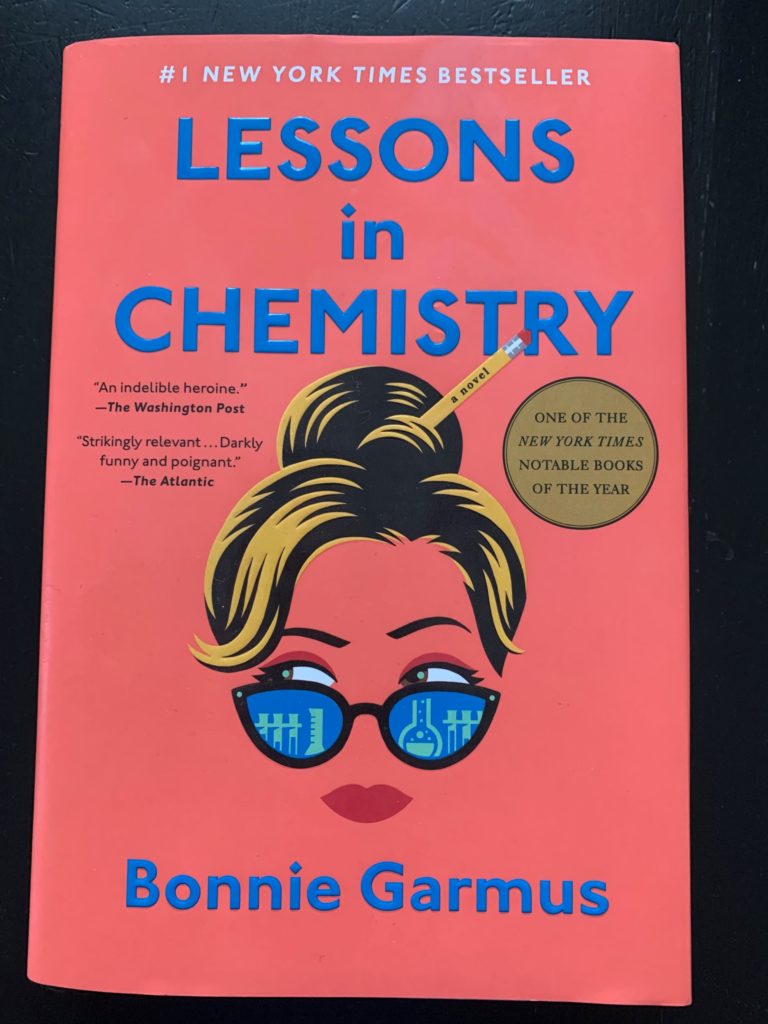
For once, I am ahead of the game. It helped that I took some time off during Christmas to do things like read. Lessons in Chemistry by Bonnie Garmus was the January Left Coast Culinary Book Club selection. I think that I would also be remised that if I didn’t say that this is not the normal Friday book review. I will talk later about what is happening next week.

This is not the typical type of book that we have been reading. For the last five years, it has been cookbooks and memoirs. We are not going to abandon those completely but lighten things up dispersing genre related fiction. This one you might say loosely relates to food as the main character Elizabeth Zott hosts a TV show about cooking.

This was one of the hottest books of 2023. It was the most checked out in the New York Public Library. It was the number one download in audiobooks and a New York Times bestseller. Of course I have never heard of it, but it was suggested by one of the book club members. It is safe to say that this is on the leading edge of trendy fiction last year.

There is a lot to say about this book. The plot has some things very familiar to me as well as things I know nothing about. It is set in the 1950s and 1960s about a woman who is in a man’s world in many ways. She is a chemist (something I know a little about) trying to be taken seriously in a science which I could imagine.

Elizabeth is a bit of a dichotomy. She wants to make waves in research but refuses to play the game in order for her to compete or gain respect for that matter. I am certainly not excusing wrong doing or even pretend that I totally understand the mindset of the 1950s because I wasn’t there. I was born post women’s revolution and a child of the 1980s, Women were always in the workforce, including a very few chemists.

I do have a bit of an Elizabeth streak in me too. Maybe it is a chemist thing, but sometimes you get a bit of right is right and it doesn’t matter what the consequences are. That attitude is not without its drawbacks however. I think that the trick is to deploy that tactic at the proper time. It is really hard to do and something that Elizabeth really doesn’t master either.

The major theme of the book to me is women’s rights. In my class of ten or so graduates, I think two of them were women. So, I have been watching the small tidal change of females in STEM for the last thirty years. What I am seeing is the shift of the sex demographic in higher education. The numbers are overwhelmingly female at all higher education institutions so it eventually has to trickle into the male dominated fields at some point.

I enjoyed the book. I suspect that if it had not been set in chemistry, maybe I wouldn’t have as much. It has that Mississippi Burning kind of appeal to it. The injustice is so strong that you root for the character to get vengeance. I suppose that I never gave it a thought about what life would be like for a woman in the 1950s trying to make a go of science in the academic world.

I have never read a work of fiction where chemistry played such a major role. I am also saying that I never really read Michael Creighton, so maybe that would qualify my statement a little. But, the Back to the Future/Weird Science/Honey I Shrunk the Kids type of portrayal is much more common way to put science out of reach for most people. The writers don’t understand it, so they are not going to make an attempt to make it approachable.

Heads up for next week I am starting Dante’s Devine Comedy. Dystopian fiction has kind of run it’s course for the time being. I thought that we might investigate the afterworld, not just our current one and so that is what I am picking for the next book. I have read the first third before. That is what we typically refer to as ‘Inferno’ and talks about the layers of hell and their corresponding sins. I am trying to figure out exactly how to break it down at the moment.

End Your Programming Routine: There is a good reason that this book was so popular last year. It is a fresh subject and a new approach to mystery. It reminds me a little of an alternate Julia Child plot. She shares many of the traits of Elizabeth with a little more worldly acumen. The story line kind of follows a similar arc but you can read that for yourself.

December 29, 2023 – Slaughterhouse – Five, Conclusion

This is the end friends, for the book and the year. The reason that I got turned on to this book was I was looking at reading lists related to 1984 and Fahrenheit 451. Most of the books that I have been working on for the last two years have been on that list. This one, I can see that it is a very distant cousin at best.

It’s not that I didn’t enjoy the book, I certainly did. It is just that the book wasn’t what I expected. The truth is that I didn’t really know what to expect. Or maybe more specifically, I expected it to be more dystopian that it was. This was an acid trip on the horrors of war.

I enjoyed the dark humor and satire throughout the book. It reminded me a lot of “Hitchhiker’s Guide to the Universe” but set in a more historical setting. I guess I don’t follow the alien encounters interlaced throughout the book. If I were to hazard a guess, I would say it was either to lighten up the darkness or make the whole story of war a farce. I am not sure which.

The main character Billy Pilgrim is made out to be a buffoon. In many ways, it was hard to empathize with him. The only thing that really changes this is that many of the other characters are even more dislikable. The sci-fi author Trout is a two-bit hustler, Billy’s wife Valencia is a glutton, most of the different soldiers were blood lustful jerks as examples. It makes the hapless Billy much more likeable compared to everyone else he encounters.

Does this book fit into the AltF4 reading list? I am gong to say no if you are following along. I would say that if this is the first book you read with me, then maybe. As far as it goes with changing your programming, you should already know that I am pretty anti-war. Even if we give World War II a pass as a ‘just’ war, it more than likely wouldn’t have happened without our meddling.

You had Churchill begging the US to get involved. You had the neutral US running arms and ammunition to the allies while at the same time embargoing raw materials to imperial Japan. And Hitler’s rise to power was a direct result of the World War I settlement and punitive policies that the US was instrumental in codifying. Sure, the Nazis were disgusting but they were only following our lead on our progressive, eugenics ideas. Using hindsight, who didn’t think that we were going to get involved?

Ever seen the movie where the bully antagonizes someone until they get fed-up and strike? We are the bully. Let me be clear, this is not what the book is about but the time to fight is actually before we get to the fight, not when we get in theater. It is too late by that point and then we have Billy’s account.

Now that we know what the book is not about, let me give a quick opinion on what I think about the book. Many pundits think that this is Vonnegut’s view of war through his personal experience. I can buy that. Kurt is Billy and arrives to the scene by what he feels as unprepared. As the “F’n New Guy”, not only is he scared and unprepared but also not battle hardened. So, everything that he sees seems revolting, including all of the people that he meets that are tempered by war. This is exemplified by the war winding down and people acting out of anger making things seem more senseless than in the context of battle.

I liken this book to all the flashbacks that Kurt sees as the result of PTSD. Whether he really had that or not, he probably had seemingly unrelated triggers bringing him back to those horrible days in the war. Truthfully, I think that a movie like “Platoon” does a better job transcribing the horrors to the uninitiated than this book. But the book is not so depressing and a lot more humorous than “Platoon”.

End Your Programming Routine: “Slaughterhouse – Five” does not make the AltF4 reading list. But, after reading it, I am more interested in more of Vonnegut’s work. There is nothing wrong reading a recognized author for entertainment. It just doesn’t quite bring the punch of foreshadowing deceptiveness as many of the other titles I have read in this vein. It is only the lens that I am evaluating the work that causes this opinion. “Slaughterhouse – Five” is a unique book with a good message that entertains along the way.

December 22, 2023 – Slaughterhouse – Five, Chapters 7-10

We have reached the end of another book. This was a different sort of book then the ones I have been reading in this series. I would say that it is the lightest of all of them but before I get carried away with the totality of the work, today I am going to focus on the last four chapters.

Here is a quick section summary of these chapters. There is a crash of the plane full of optometrists in Vermont. Billy was the only survivor. Then the bombing actually happens. Billy’s wife Valencia dies of carbon monoxide poisoning on her way to visit Billy in the hospital. The war ends for Billy as the Germans flee the Russians

I am struggling to perform a linear read a chapter, note the theme and then write about it. So much so that I went to read what other people was saying about the chapters. The story jumps around so much that it is hard to draw any sort of direct correlation to a strong point.

Some of the analysis I read talked about things like Tralfamadorian theory and drawing analogies to Einstein with four dimensions (X, Y, Z plus time). There was also the very strong antiwar theme, that one seems obvious and is the one that I would pick overall. There is also a bunch of symbolism that is pretty heavily abstracted.

For instance, on analysis I read said that the bird at the end represents the nonsensical-ness of war. I suppose that because the bird is the last thing written and not a character in the book, then maybe I could buy that it does mean something. But there were other speculations where Billy’s hatred of the barbershop quartet was related to the faces of the singers versus the faces of the Germans when they first saw the destruction of Dresden. Have you ever seen the ‘Gilmore Girls’? The show is annoying enough but then when you have the random barbershop quartet interlude into your conversation, it is downright obnoxious. In my experience, a barbershop quartet can be wonderful or downright inappropriate.

I missed this when I read the previous chapter block, the significance of the title. Before I read the book, I made an assumption was the title was going to be something like five individuals participated in some sort of urban firefight. As it turns out, the title is actually the POW’s address. This comes up several times in Billy’s delusional dreams as he goes back and forth between being in the war and other random events in his life.

End Your Programming Routine: I am struggling to find meaningful, consistent themes so I am going to cut it here. I definitely have more to say next week and I don’t think I will be so blasé. Distinguishing a very non-linear story with a specific portion of the book makes it hard to pick appropriate anecdotes. So it goes.