Read along: http://www.ntslibrary.com/PDF%20Books/Mere%20Christianity%20-%20Lewis.pdf
Hopefully you have all finished the book by now. I have not but maybe you listened to my podcast of excuses yesterday. I really did not plan to just go silent for weeks but my life runs me at this point. Those are the the things that I can do along with the things that I have to do and limited by the things that I am able to do. Enough of that.
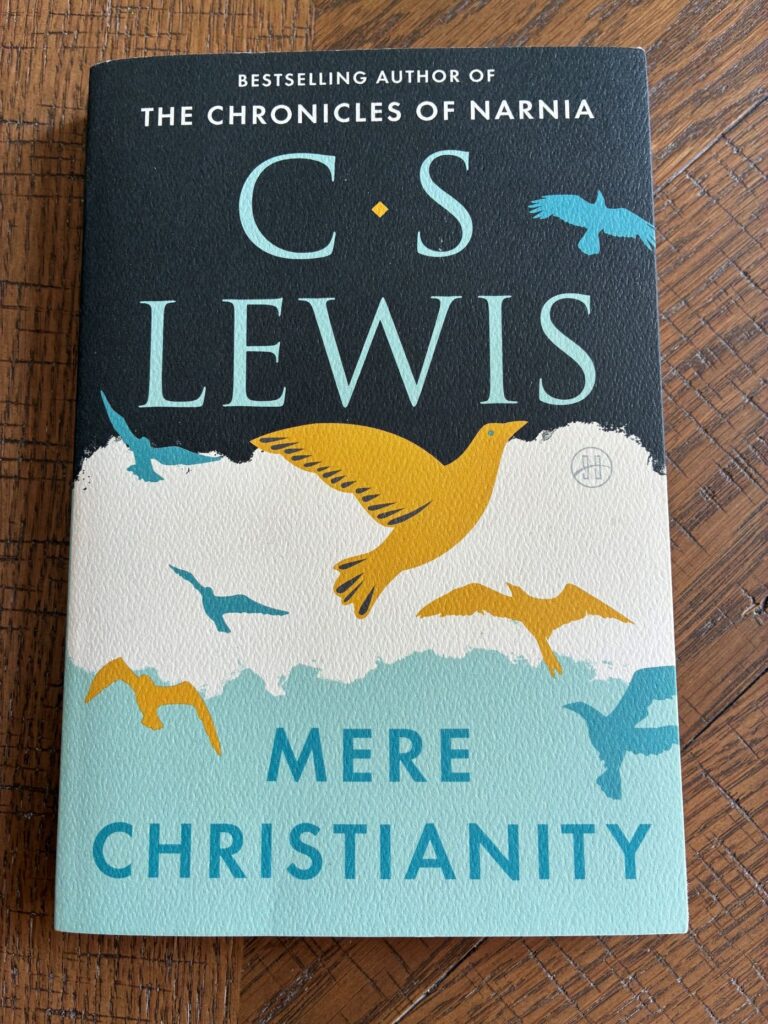
Below are the bullet point summary. One for each chapter.
- Morality is a set of rules that attempt to regulate individuals internally as well as between each other. All rules are equally important and not to be picked and chosen.
- Prudence, temperance and justice are three virtues essential to Christianity. These are not binary, all or nothing ideals but have degrees of gray that have to be weighed.
- Biblical views should support political opinions and not run them.
- Psychoanalysis, very popular and up and coming academic idea is separating the unconscious from free will. This is controversial idea when equating self worth and sin. Those were Lewis’ thoughts.
- Sexual morality; repress it and get more of it. Yet, Lewis subscribes to the traditional idea of celibacy outside of marriage. It does seem a little counter intuitive.
- Being in love and relationship love are two different things. This is the concept that relationships change or progress over time. Interestingly, the begins the chapter with divorce and that is why it is important to recognize the progression of love.
It is good that I did this chapter summary weeks ago because I have a hard time remembering what I read two months ago. This is really half of what Lewis was trying to get across but it makes it more convenient for me to split this section in two. What is he saying anyway? I say that the message is that morality is necessary to the human race.
You might say what does morality have to do with proving that there is a God? I would probably be in your camp as well. Lewis tries to make the connection between God and morality. After all, the Old Testament is generally many, many pages of Jewish laws largely about morality. The new covenant sends Jesus to edit many of those laws.
I think that it is an interesting idea that Lewis comes up with that morality is not to control people or sort them out per se. Rather, he has this idea that morality is a training ground for Heaven. Meaning, these are the skills necessary to be successful in Heaven. I suppose that you could say people self select entrance to Heaven by being moral or not. I really do not know how this could be proven.
I really do like the idea that virtues are not binary. When I learned the ten commandments as a child, I learned the words “Thou Shalt Not Kill”. But, I have heard the more modern “Do not Murder” which I think is actually more appropriate. If the commandment was more in my language, then so many biblical heroes would have violated that commandment and could have never been in favor of god. That is also presupposing that there are exceptions for things like war and self defense. My personal feeling is that it would be better to stick to “Thou Shalt Not Kill” but then there are always those gray areas like what if it was an accident? Therefore, I have to agree that morality is not binary.
The world is full of paradoxes. I mean what about surrogate parenting. I really don’t believe that it is infidelity but by the strict definition of fidelity we have somehow agreed that this is a place where a woman bears a child that does not belong to her is morally OK. To play devil’s advocate, what if God was saying that particular couple was not supposed to have kids for whatever reason? And what if that reason was that one of the parents poisoned their bodies with diet or drugs or whatever? Or what if the person just did not want to go through the pregnancy process (Paris Hilton anybody)? The permutations are endless.
End Your Programming Routine: Next week we will get the full effect of this Book and what Lewis was trying to do. It seems amongst the literary analysis there is some speculation that this is a weaker argument then the first two books. I tend to agree but that doesn’t mean that we cant refine a little value out of this. Let’s keep going into pride, hope and faith next week.
Recent Comments