Chapter two is among the longest of the book which is why it gets it’s own week. Did you know that that there is a legal principal that force response has to be equal or lessor? Most of us would slap our foreheads when someone says you can’t just shoot somebody that simply insulted us. That seems like an obvious inappropriate response but there are more nuanced scenarios that you probably never considered or at least don’t know.
I am going to quickly cover some of the legal definitions in this chapter. To play in any world, you must learn the vocabulary. Otherwise, we cannot have any meaningful communication because it is likely two people would not understand what each is saying.
Lethal Force – This is a particular type of assault that has an expected outcome of death. This should not be confused with Deadly Force where the outcome is actually death. Depending on your skills and stature, simply punching someone may be deadly force but not lethal force. A man punching a baby is lethal force, an average man in a bar fight that ends in busted knuckles is neither.
Disparity of Force – This has multiple implications. Generally speaking in a one on one scenario, the person with the firearm has a disparity of force. But what if there are four people unarmed versus one armed? It is not favored in court to apply unequal force in the case of self-defense, particularly when it is deadly.
Equal Force – Unless you are in a Castle Doctrine state, it is generally considered imperative that self defense is only justified under equal force (or less). This is why we need to understand the concept of disparity of force first.
Reasonableness – The reasonableness standard is of course subjective and possibly changes with time. I think about the incidents where there is some kind of traffic issue and then the ‘victim’ chases the offender for redemption (or whatever). Would a reasonable person feel victimized in the situation and all of the above response reasonable? If the offense or response is not reasonable for the jury, then neither is self-defense.
Premises – The location of deadly force makes a huge difference to the standard by which you are judged. Incidents that happen at home have significantly different latitude that something that occurs at a public place.
Bare vs Reasonable Fear – Bare fear is fear that exists. It would be going to a certain part of town or someone wearing a motorcycle club vest. There must be more to the situation than bare fear like proximity and even more, belief of intent. You are on the same side of the street and they are aggressively moving toward you with agitation. Only reasonable fear is considerable for justifiable self-defense.
Innocence – The best legal defense is no protoorganism whatsoever. Remember that innocent is not the same as not guilty. If you knew there was going to be a gun-fight, it would be best to not go there in the first place.
Escalation – Escalation rarely is justified in self-defense. It get’s pretty muddy when you participate in some of the back and forth before deadly force. You possibly could have provoked the incident but met the other standards in the use of deadly force. For that reason leave the area/fight/confrontation before it starts.
This is a super quick run through of the key vocabulary terms. Many definitions have a significant amount of additional information, particularly reasonableness. So again, if you conceal carry and have not educated yourself with the intent for mastery in these subjects, you need training.
I find it untenable that someone can physically assault you and it still may not provide justification for deadly force. It all depends on what your grand jury neighbor’s feel is reasonable. As I keep saying, your particular jurisdiction may have broader interpretations of what is permissible, but if you stick to these definitions, it is much more likely that you stay in the clear.
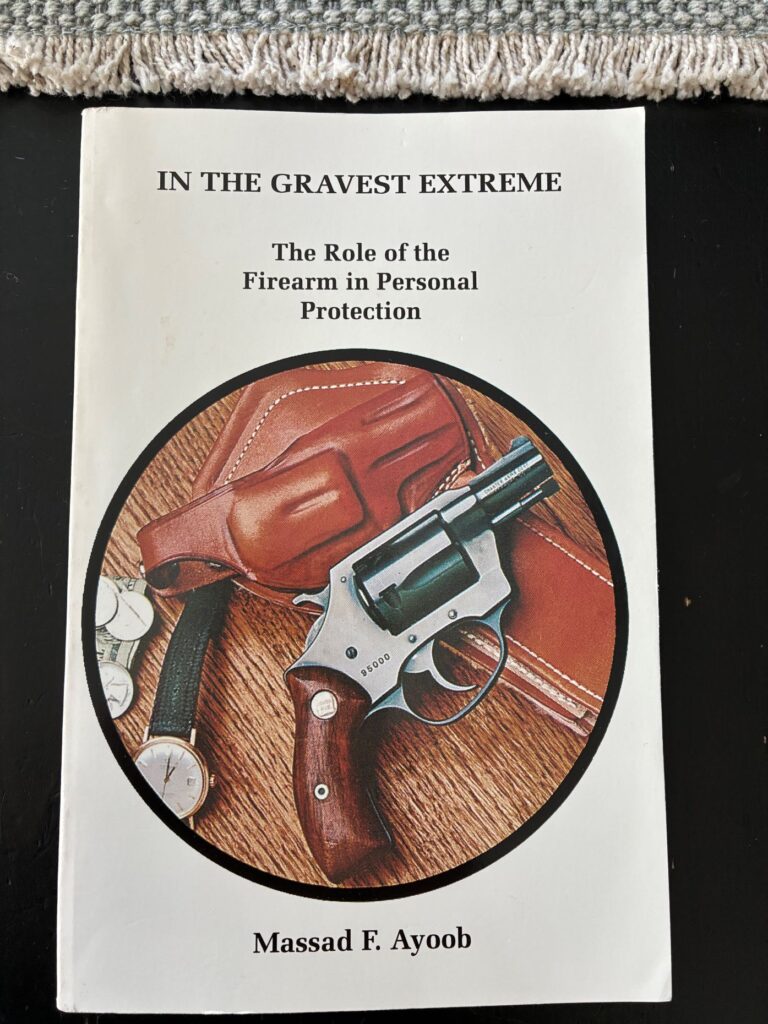
End Your Programming Routine: In chapter one, Ayoob mentions that carrying a firearm is a privilege. I agree and disagree with that statement. It was certainly true that 1980 NYC (and today) it was a privilege because it is a very strict ‘may issue’ jurisdiction. Given more recent Supreme Court interpretations of the second amendment I disagree. Those are functions of changing opinions over time. One opinion that does not change is Ayoob is amongst the foremost experts in this topic. It would be wise to get these definitions down pat.
Next week, chapters 3-5.
Recent Comments