This is a book that I have had on my list for a long time. I heard about Josh Niland on the Anchored Podcast four or five years ago. Actually, looking at the podcast publish date it was more like seven years ago. I put it on my Christmas List for a few years and then finally I cashed in my hotel points that were about to expire for a Barnes and Noble gift card.
A month ago, I went to the Barnes and Noble store because I wanted to spend the gift card before we moved. Yes, it could also be used online but there is something about going to an actual bookstore. The store is a couple of years old and I had never been in it. I figured that as soon as we moved, the likelihood that I would ever go would be slim to none since I hadn’t gone in when it was much more convenient.
I had no plans on what I was going to purchase. Because of our budget constraints, I certainly couldn’t get crazy. I picked up a copy of Anthony Bourdain’s “Kitchen Confidential” which I also want to read. But, I kind of ho hummed because I didn’t want to pay $20 for something I could certainly purchase used for $5 or potentially even get at the library. Then my eye caught “The Whole Fish Cookbook”.
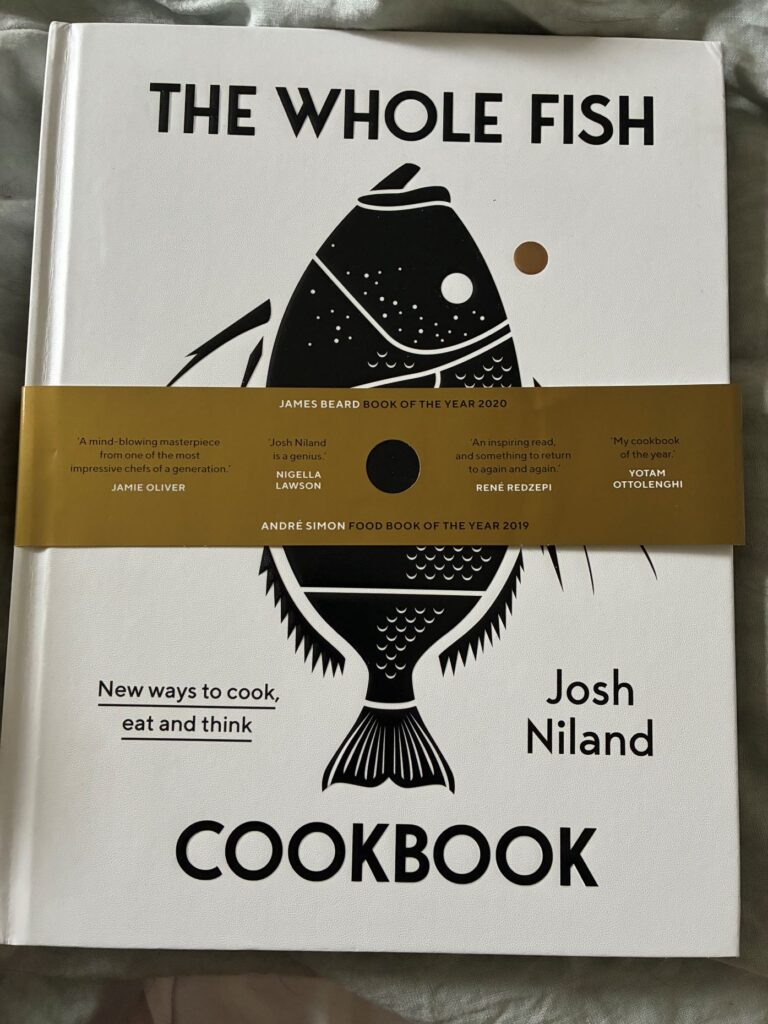
I figure that with our move to the beach comes a large probability that our seafood consumption is going to increase due to proximity to the source. In fact, I have made the mental switch that this is going to happen and besides packing, I have had fishing on the brain. I have been searching real thoroughly for a surf fishing setup. In addition, I have purchased a bait casting rig as well as a new reel for one of my backup poles.
Since it has been so long since the podcast, I really didn’t remember a single thing other than aging fish is a thing. It wasn’t explained and I was very intrigued. The number one thing that I learned about this book is that fish and water do not mix. I suppose that if you were a fisherman, then images of the cleaning station come to mind. Gut or fillet and rinse. That is a no, no.
According to Niland, adding water to the flesh of the fish is an accelerant to decomposition. The fresh off the boat mildness is the result of minimum decomposition. Aging however in fish is as complementary as beef but the fish has to be handled correctly. That means no water.
I will admit that I have not tried it yet but I certainly have plans to. The other thing that Niland promotes is using the whole fish. That means heads, eyes, bones, liver and even scales. I will admit that I am a little less gung ho about some of that but I am willing to try something like a fish liver pate or making a fish sausage. The trick is getting enough livers at any one time to satisfy the recipe requirements.
I just finished the book and so I really haven’t had a chance to try anything yet. I will give some commentary on what I read however. Niland is an Australian so this book is written in the perspective of what is local to him. That also means that this cookbook is addressing saltwater species and not freshwater. I would say that the handling instructions are much less accessible unless you are buying fish off of the boat, not always possible for most.
I suspect that this can somewhat translate from saltwater to freshwater species, it just requires a little more research. It is just that I am not aware of a freshwater tuna as an example. But, certainly a trout versus salmon or panfish versus snapper is possible.
End Your Programming Routine: Because I haven’t tried anything yet, I cannot yet recommend this book. What I can say is that this book opened my mind to new ideas, particularly things that go against traditional preparations and handling. For that, it is worthy of considering. The cooking follows traditional French and British flavorings and the pictures are very appealing. I am ready to try.
Recent Comments