I enjoy the show Life Below Zero. When I first started watching it, I believe that it was 2019. I remember finishing all the episodes on Netflix in my early days of ‘retirement’. I would take the time to find tasks that I could do with the TV on such as sewing patches on the kid’s Boy Scout uniforms. Then I kind of forgot about it until we were in Montana for Thanksgiving.
Most AirBnBs today have internet and the idea is you will log into your services on the TV. My wife had logged into Hulu and I was up several hours earlier than everybody else. I decided that I would put on some background show while I worked on clean-up and breakfast for the day. I found that Hulu had some seasons of Life Below Zero that I had not seen.
That got me thinking about filling in the gaps. I found out that Disney Plus had all of the seasons and episodes. Low and behold, we pay for that as well so I started catching up where I left of on Netflix. This is one of those shows that has a lot of reality to it. But, I have noticed that it has a lot of not reality as well. For instance, they will play up a character that lives 200 miles from the nearest town and yet they will have a snowmobile or four wheeler that requires a significant amount of fuel in between trips to town.
It feels like characters actually run out of things to do. Not every episode but frequent enough they are building a hot tub in the middle of nowhere. One character built a solar powered boat. I mean, these are people that are supposed to be hustling to make it? Let’s not kid ourselves, they get paid to be on the show and that salary affords them luxuries that non-TV stars don’t have, like fuel drops by airplane.
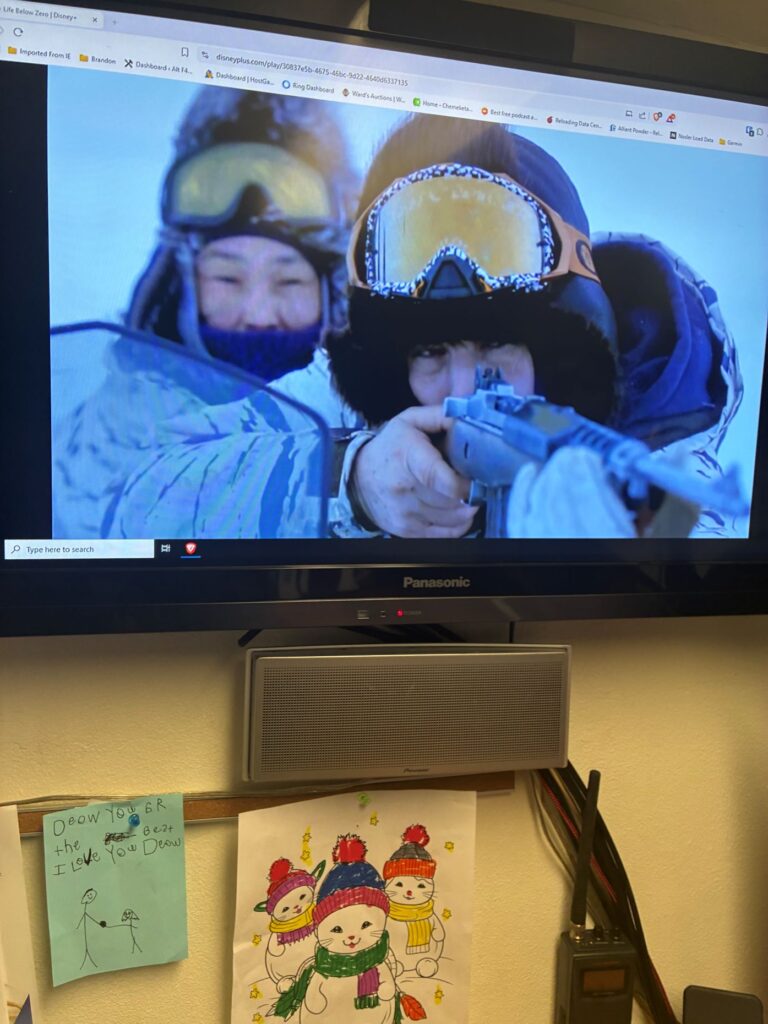
Hunting has a huge share of the TV time on the show. As such, I have noticed some discrepancies between what I would expect under the American ethos and what happens on TV. For example, it is considered unethical to shoot turkeys from a roosting position. Turkeys fly into the trees at night and come down to the ground in the morning. The ‘proper’ way to hunt turkeys is on the ground. Well, Alaska does not have any turkeys so that is not an issue.
In the show, nearly every single waterfowl is shot on the water. That is supposed to be a no no for bird hunters. With the exception of turkeys and grouse, birds are supposed to be shot in the air according to hunting ethos. Make no mistake, this is not illegal but it is considered non-sporting.
Another thing that I see all the time is bad shooting. It can be caribou quartering away (this means with the butt facing the shooter) or shooting into a herd of animals. A huge part of hunter’s safety is shoot/don’t shoot. If you cannot clearly identify and isolate your target then that should be a don’t shoot. You wouldn’t want to accidently wound a second animal or damage the meat that you are hunting for.
If this were a show like Meat Eater, that kind of film would never make it to the final product. They go out of their way to do everything by the book even to the point of punching their tag if they cannot recover a wounded animal. My guess is that the producers at National Geographic have no idea what the ethics of hunting entails.
Life Below Zero is a dichotomy of should and should not. I am amazed at the number of times there is a nuisance predator that they devise all kinds of schemes to chase the undesirables away rather than just killing it. Much of the reasoning comes from Native American spirituality than from ethics even if it is within the legal purview to eliminate the problem.
There is a lot of talk about the reverence of the animal and the eco-system in general. Animals that I don’t consider food, primarily fur bearers get eaten. Most trappers here would discard a beaver or muskrat once skinned. I am not clear what happens to the rare fox or lynx. I have seen where natives burn the wolverine due to cultural belief. While many of the harvesting methods can be questionable, there is no doubt that killing is serious business to not be taken flippantly.
I think what we are seeing is hunting for survival. The rules of ethics were developed as a result of shooting a million bison from trains just for the hide and tongue. With these modern tools, we should have some limits to make it fair for the animal and to not entirely eliminate the species. When it comes to survival, many of those artificial limits are out the window. It is not self serving to eliminate the species and the number one rule is to actually survive.
End Your Programming Routine: Salary aside, hunting is very important for food procurement. I could name some other things that I have seen on TV to support my discussion today but I would also point out that there are some things that natives can do that non-natives cannot. I would point out that I am not an expert in ethics, Alaska law or a lot of other things related to the show and I don’t think that Nat Geo is intentionally exposing questionable processes. But, I think that they would do better to craft a message to the ethical hunter’s expectations.


Recent Comments