Alright, alright, alright as Matthew McConaughey would say. I am starting to get into this book a bit. Chapter Three examines hot beds of excellence and Chapter Four is about how to get the benefit of deep practice. This is both the facts and the myths about what we think we believe about life if we are paying attention.
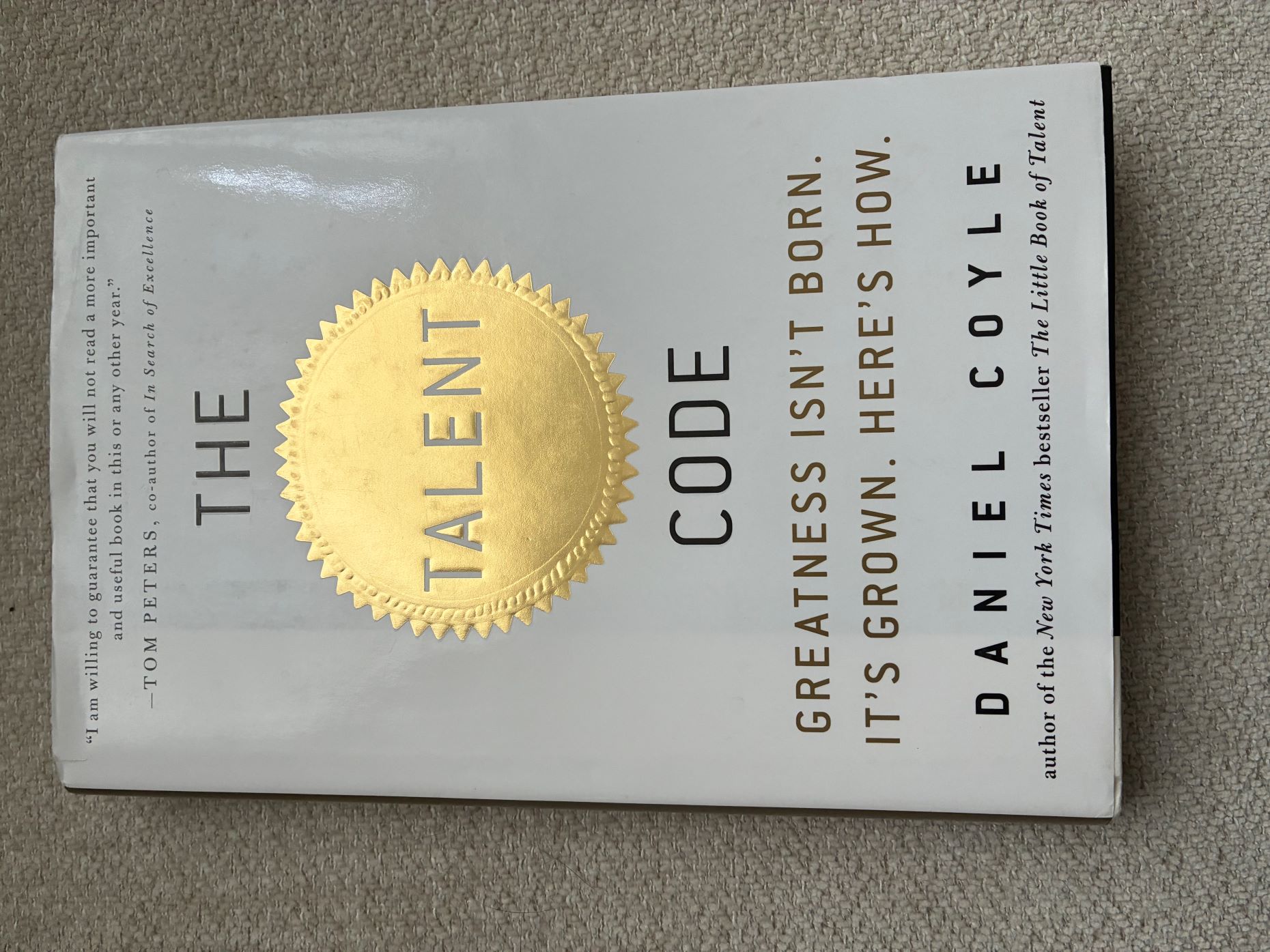
Coyle starts off chapter Three with the Bronte sisters. Now, I am pretty well read including a lot of the classics but I had never read Jane Eyre, Wuthering Heights or heard of the likes of any one of the three Bronte sisters. I recognize the titles and I am peripherally aware that they are considered amongst the best literature. I guess I always perceived them as a little too feminine for me. Even though I will admit I don’t know anything about the plot so I could be dead wrong.
That being said, Coyle asserts that they became great authors by starting out writing quasi-nonsense. Poor spelling, poor sentence structure, poor punctuation and stories that were almost plagiarized from popular magazines is where the development of greatness occurred. This is the attack on the gene theory that some people are simply born great and hence three sisters are the best authors of the mid 19th century.
It would seem like nurture has a much stronger connection to greatness then nature. Renaissance masters were connected to each other via apprentice to master and master to master within the Florentine guild structure. I suspect that this is why college athletes are frequently from the same high school. Professional athletes are often from the same colleges. The athletes are in proximity to deep practice.
Recently Indiana beat Miami for the college football championship. It was said that prior to two years ago, Indiana was the losingest Division I football team in history. I can bet you that at the beginning of last year the new coach did not go out and replace the entire team. No, he worked with what he had. This year’s success will certainly make it easier for Indiana to remain on top with better recruiting and retaining top talent, but what shifted was mindset.
Nobody thought that a 3-9 team in 2023-4 would become an 11-2 team in 2024-5. In fact, when it came to playoff selection, they were deemed a fluke, had a soft schedule and not really worthy. Yes, they did lose their one playoff game to Notre Dame who went on to play in the championship against Ohio State (Indiana’s other loss on the year). You might say that they probably earned a number three ranking for 2025 based on those results. This team stayed together and became a juggernaut. The way they dismantled Oregon in the semi-finals was embarrassing for all of my Ducks fans (I only accept family in that category). Not used to losing badly like my Beavers, most of them gave up by halftime.
I strongly suspect that Coach Cignetti has unlocked the ‘Talent Code’ at Indiana. I wish that I could say that about my team’s coaches. Enough of football though, Chapter Four are the three elements of deep practice. They are chunk it up, repeat it and feel it. I will explain.
To chunk it up, you have to look at the whole picture and figure out where logical breaks can occur. Then you set about mastering any one of the chunks, that is the repeat part. Once you master a chunk you move on and combine the chunks, that is the feel it. It is that kind of thing where when you are right handed and you try to do something with your left hand.
I have tried this with several things like batting, shooting and writing. The first time is comically awkward. Then after hundreds of repetitions, it starts to feel normal. Keep practicing after that and all of a sudden, it is not just natural but intuitive. I sometimes try experiments like that when I am struggling because of bad habits. My logic is that if I relearn it on my other side I can start fresh and hopefully get away from the limitations I have on my primary hand.
While reading this book it has started to occur to me that there is a reason why I was a mediocre to poor high school athlete, musician andcollege student. I always thought that my super power was never give up. Sure, I would outlast the people that would give up and if I stayed long enough I would be the longest tenured and probably the best in comparison. But in those areas, I never did deep practice following the three rules.
But when I look at my success in other areas like leadership, I kind of do that intuitively. I am always more successful when I am allowed to to see the whole picture and I pretty much flail when I only have a myopic understanding. It leads me to speculate on the order or importance of certain aspects.
It is the reason that I always write with so much context. I want the reader to understand the why this thing is so important. Sometimes I even look at my podcast notes and wonder if I have put enough emphasis on the topic over the context. The punchline can sometimes be so subtle that it gets lost in the story. I should work on that but I see why this works for me. It is my talent code process.
End Your Programming Routine: I am glad to find out that we are strictly bound by our genes to our destiny. Yes, I will never be an NBA player and I have come to terms with that but it doesn’t mean that I could be the best at 95% of other things in life. I think I would rather be the best steelhead fisherman than and NBA star anyway. Next week, we will cover all of Part Two.
Recent Comments