Tag: conclusion

October 20, 2023 – We, Conclusion

As I like to say, this is the end friend. As a quick synopsis we have D-503 as the main character and builder of the Invictus a rocket ship to move people to other planets as the savior of humanity via sponsorship of United State. He meets I-330 who effectively tries to recruit him to sabotage the Invictus by seducing him. Ultimately, D-503 fails to prevent the launch of the Invictus and I-330 is caught to be executed. As well, D-503 gives up his imagination because he feels as though he cannot control his thoughts between his internal conflict and his infatuation with I-330 which is illegal.
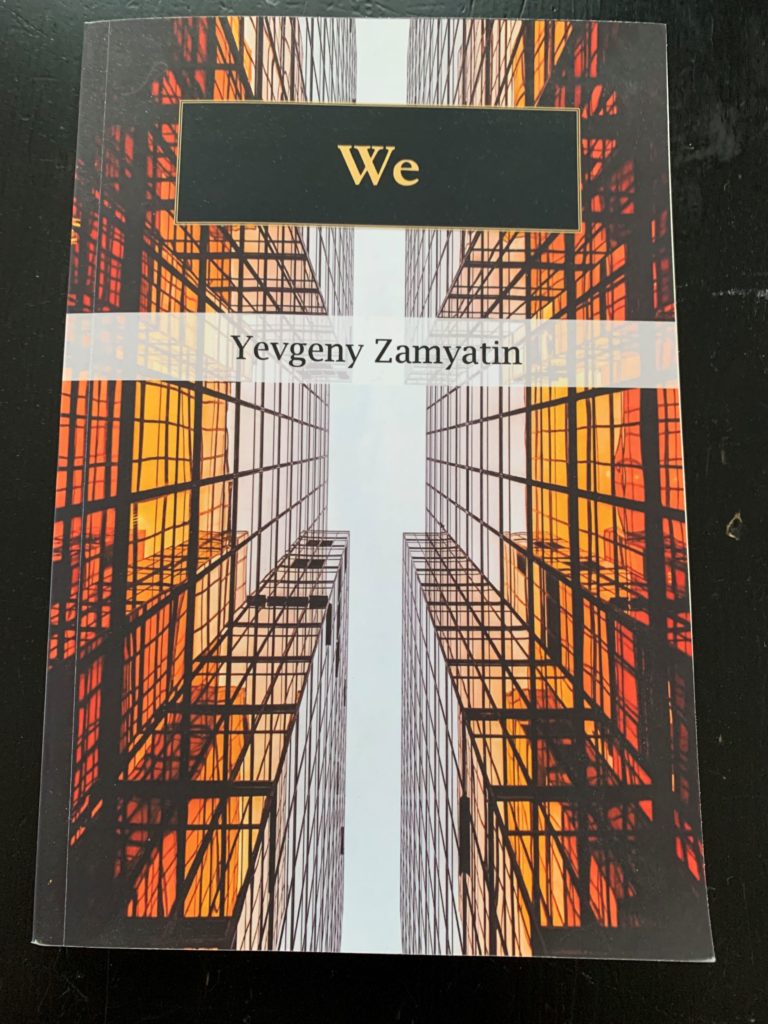
So, not a very happy story. Going in, I really didn’t know what to expect. I certainly echo the criticism that I think 1984 is a highly similar story. Given that Orwell wrote 1984 shortly after he read We, I can not in good conscious say that it wasn’t a direct rip off. That being said, I found 1984 easier to read and more relatable. Imitation is the sincerest form of flattery.

As to the broader concepts of the book, I think that is what we should focus on. Does humanity require free will to thrive? Of course, I think the answer is yes. But it really does boil down to a philosophical argument. For instance, can we say that any other animal species is not thriving despite not having an imagination?

Maybe what we can say is that for a species to live up to it’s potential it needs as much free will as biologically possible. You can say that all critters have free will of sorts but they do not have a conscious to evaluate and learn from those decisions after they have happened. If that is our premise, then we can certainly say that humanity is at risk in We.

The greatest danger is not to have free will but to assume you have free will that has been programmed or manipulated without cognition. There is a saying that even a stopped clock is right twice a day. This saying is to validate that there is always some good with the bad. I think most people assume that this is the worse case scenario. Actually, what is worse than a stopped clock is a clock that is 15 minutes off. Because if you believe that this is the right time, you are going to be wrong every time. A stopped clock would be right more often than a clock that is off.

I think that the other major theme is that you cannot beat the system. That is definitely something I can identify with. Why do you think that we try so hard to stop it before it becomes what it is? Once in place, it is nearly impossible to change it as individuals. Pick your pet issue, did heath care get repealed when Republicans were completely in charge? No, of course not.

Merging the two themes together, lets take one other look at things. “We hold these truths to be self-evident, that all men are created equal, that they are endowed by their Creator with certain unalienable Rights, that among these are Life, Liberty and the pursuit of Happiness.” Everybody has heard and remembers this statement. But what about this one? “Prudence, indeed, will dictate that Governments long established should not be changed for light and transient causes; and accordingly all experience hath shewn, that mankind are more disposed to suffer, while evils are sufferable, than to right themselves by abolishing the forms to which they are accustomed.”

If we subscribe to our very own tenants, then what do we have to say about something like the Patriot Act? We have been convinced that it is necessary for our safety to give up privacy and have virtually obliterated the fourth and fifth amendments. Yes a warrant is required to tap our land line phones (Olhmstead v. United States) but we have accepted that all other electronic communication is monitored and saved. Nobody is even talking about repealing such anti-American spirit law. I wont even go into the moral paradox of waterboarding being legal based on the fact that the Constitution does not apply to non-US citizens.

I liked the book. I think that it is the right order to read We after 1984. I suspect that I need to read it again to get the subtlety of some of the concepts. I did have difficulty sometimes bridging the gaps between what was written and what was the meaning. Like much science fiction, the story is not always congruent and leaves gaps that the reader has to speculate on how or what one event leads to another. I say this because I think 1984 conveys the same concepts in a much easier way to interpret as well as a host of a whole lot more concepts.

End Your Programming Routine: We have a new book next week. It will be a familiar author with a new book. Given Zamyatin’s station in life, exiled from his home country, I suspect that this book was driven by his observation of this situation more so than some sort of freedom savant. Given the gift of time, I think that it was Orwell who codified Zamyatin’s observation into the theory of tyranny. Both are going to be on the AltF4 reading list.
August 11, 2023 – Lord of the Flies, Conclusion

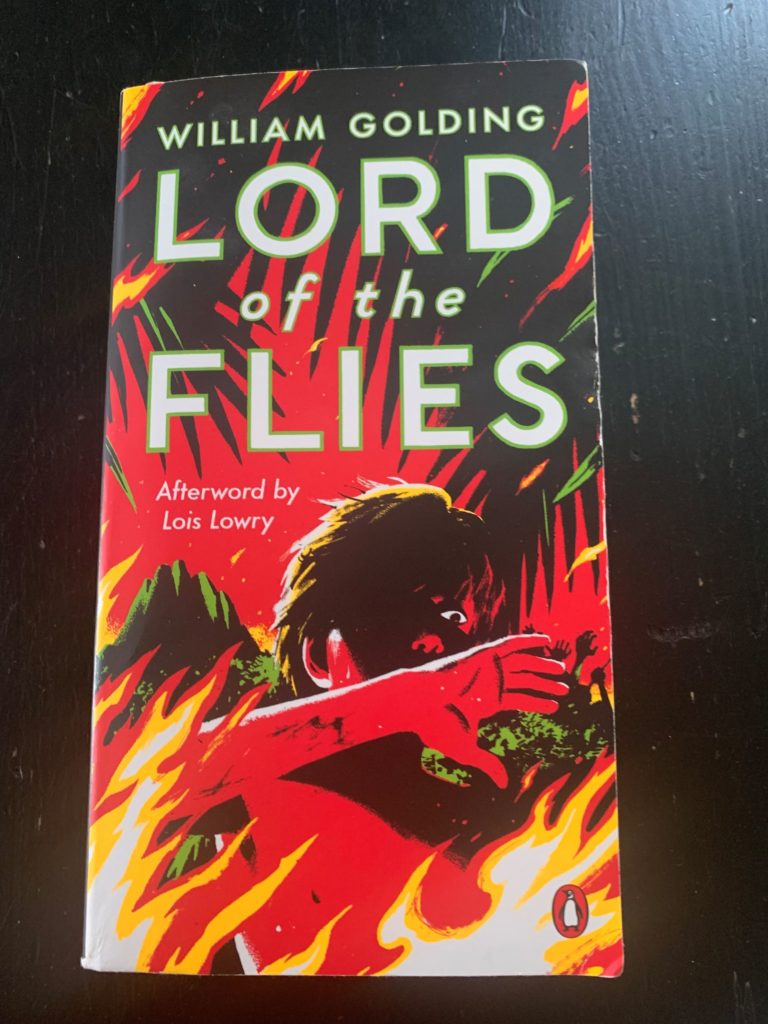
Dare I say that I am ready to move on? I am glad that I read the book so I can no longer say that I haven’t read this classic. I will say that I did enjoy the book on a topical/story level. But, I think that my analysis period was a little long and drawn out. I have thought about it a number of times, I am not sure what makes sense other than a chapter by chapter breakdown unless I just did arbitrary chapter blocks.

I did something that I told myself I wouldn’t do. I read the afterward and analysis before completely forming my own opinion. I think that it colored my opinion a little bit. More on that in a minute.

I guess the first place to go is, does this is book fit into the AltF4.co genre and does it fit with ending your programming? I have to answer that the programming is really what everyone else is saying the book is supposed to mean and not making your own analysis. Ostensibly in traditional analysis, this story is a metaphor for how humans are savage by nature and that civilization is the only restraint containing our natural state.

As a Christian, I have to fundamentally reject that humans are born savage. If if I didn’t, it would not be congruent with my beliefs. I do believe that humans are born Anarchist and Lord Of the Flies heavily supports that concept. This is probably where the internal conflict begins. You see, Anarchy is a form of existence without rulers and not necessarily without rules.

We see this all the time in our world that people just want to be left alone to do what they want to do. That being said, we have other people that do not permit them to live as they wish in peace. So, we have one neighbor that thinks another neighbor aught not have cars in the driveway. So, they call the Home Owners Association to enforce a collective agreement to fine them (or whatever punishment is contractually allowed).

Someone actually called the police and complained that a bush of mine was too far into the sidewalk. The police came and said that I needed to handle it today (or what…?). I did, but again I am going to use the power of the state to get my will. We claim to want freedom, but generally we cannot handle the implications of it.

In the afterward, the author starts by talking about sympathy towards certain characters and disdain for others. She continues that reading the book multiple times over the years has dulled the emotions for the characters. She ends with one true villain, while not named is described as the Navy officer that recues the kids from the island.

Isn’t that interesting. The villain in the book is not Jack or the hunters but the state. Why do you suppose that is? Is it not the state that caused the war that put them in this position in the first place? Do they not create artificial boundaries and drum up animosity between different parts of it’s own citizenry? It’s no wonder when anarchy reins people act savagely.

Is this book as impactful as 1984 or Atlas Shrugged? I actually don’t think so. If we take the stance of government being the true enemy, the story is very obtuse. It takes a stretch to get there whereas the lessons in the other books are in your face. I also think the others are more creatively predictive when we are in the state that we are whereas Lord of the Flies speculates on the results of being a controlled population. Said another way, the former books are what happens and the latter is the results. That is a harder leap to make.

Truth be told, it is a short book. It is one that could easily be read multiple times in one’s lifetime without too much effort. I am not sure that I will, but I could. Of course, I didn’t think I was going to re-read Animal Farm or 1984 either. I like thought stimulation but not necessarily darkness. I found the book to be dark and that seems to be a dangerous place to stay. It is kind of like the advice, if you want to be successful try to hang out with successful people. I assume the same advice would apply to darkness.

End Your Programming Routine: From that analysis, Lord of the Flies is a perfect Altf4.co book. You have to keep sifting through the dirt, rocks and sand to find the gold. Every time someone says ‘There’s no gold in that river. Everybody knows that’. Meanwhile they keep mining for fools gold and discard everything else. That is the definition of programming.

March 3, 2023 – Fahrenheit 451 Conclusions

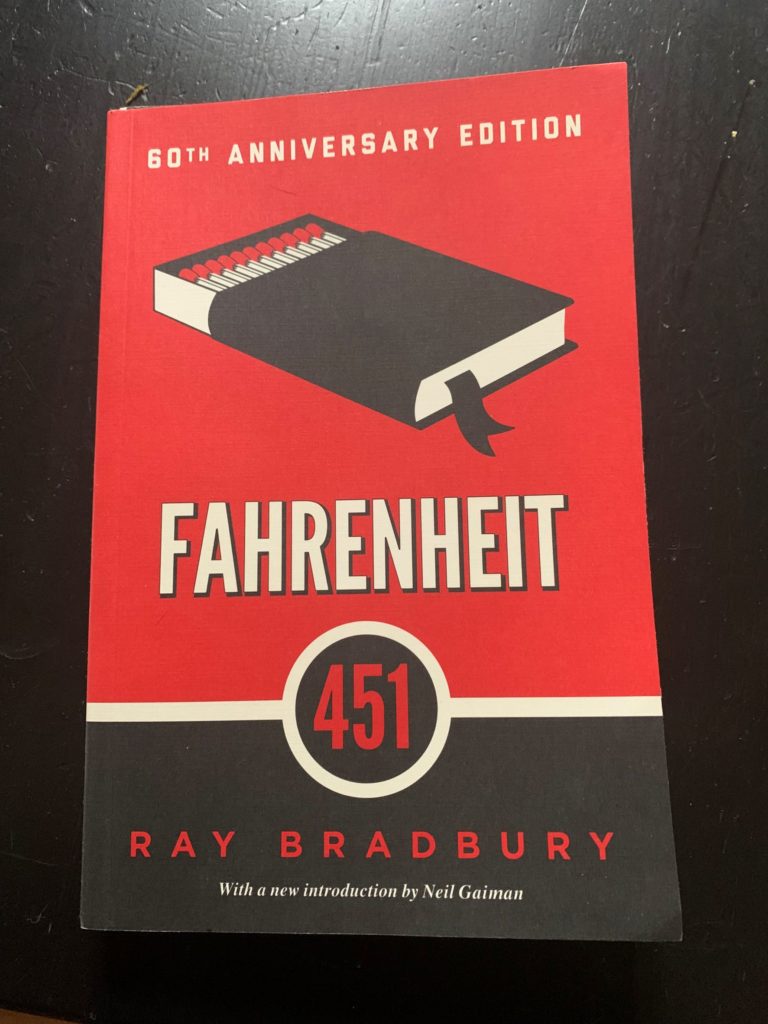
To understand Fahrenheit 451 is to understand the backstory to how it was written. Of course, none of this is written in the book but it was part of mine as an appendix.  Fahrenheit 451 is an evolution and combination of several short stories and an ongoing effort to get published. Unlike Orwell, Bradbury was alive for many decades after it’s publishing and indeed had some words to say in confirmation of what I am about to write.

The inspiration for the story came from a book called “Darkness at Noon” by Arthur Koestler.  This is not a book that I have read or am familiar with, but the description seems worthy of going on the reading list especially if it inspired Bradbury. It is a story of persecution in a totalitarian regime.  It was at that time that Bradbury decided that science fiction was the genre of literature the permitted the most leeway for his beliefs and story. All that being said, I don’t think that this was a protest story as much as it was a warning.

Though not formally educated, you could probably say that Bradbury had a desire to write. One of the precursor stories to Fahrenheit 451 was a short story called “The Pedestrian”. Essentially, this was based on an encounter with police that Bradbury thought he was wrongfully accused. This interaction pissed him off enough to write a story about it.

Later, Bradbury developed another short story titled “The Fireman” as a science fiction magazine submission.  This was the true basis of Fahrenheit 451 with the portions of “The Pedestrian” weaved in.  That part of the story was Montag’s interaction with Clarisse whereas most of the rest of it was “The Fireman”.  This was all done in an attempt to make a book length story for publishing.

On an interesting note, as Bradbury’s work got critical acclaim it began to be read in schools in the 1960s. The publishers took it upon themselves to sanitize the book from the largest adult themes such as language unbeknownst to Bradbury.  It was some years before it was brought to his attention and Bradbury immediately demanded that be stopped, which they did.  I think that you can say that he walked the walk.

In the grand scheme of things, Bradbury was no slouch. He could read the tea leaves on the way things were going and the subject manner of banning books was no coincidence. With the age of new media coming, and I mean TV he could anticipate that books being passed over.  The reason the subject matter was banning books was because it was more palatable considering TV was quickly surpassing reading for entertainment.  It was also Bradbury’s belief (and mine) that there was more to lose banning them. You see, with books you have to think about what is being said and interpret what is happening.  Thinking is what makes them “dangerous”.

I realize that this has been a little different than some of my other wrap-ups because I have a lot of information on and from Bradbury himself. With that, I think I will leave the analysis there. This is a short book that can easily be read in a couple sessions. The story is easy to follow and I think that it is approachable science fiction. In today’s world, it doesn’t even seem too far out there. That was probably different when it was written in the 1950s.

You can probably tell from my complimentary tone that I hold a high opinion of the book. I think a lot of factors come together between the story, the length and the approachability to make that happen. If I had one criticism, I would say that the ending was a little unbelievable. I am not totally convinced that after multiple nuclear detonations that it would be possible to go back to the city. I imagine that the radiation and fallout would be off the charts.

But, in Bradbury’s defense the first nuclear bomb was tested in 1952 which was one year before the book was published. We know so much more about the effects of nuclear detonation now the at that time. Plus, we have the benefit of almost instantaneous and comprehensive information with the internet. I am sure his depiction of nuclear war was was colored by the perception what the public thought about war at the time with the information that was available.

End Your Programming Routine: The warning that I am referring to in the first paragraph is the warning about taking in your surroundings or some people use the phrase being in the moment, that is living.  With your earbuds in, driving around at 200mph to get home and watch TV people are losing touch with reality.  I feel like that is just as relevant today as it was in 1953. And maybe even a little more so as we approach that era of life in a four-screen environment.