Read along: http://www.ntslibrary.com/PDF%20Books/Mere%20Christianity%20-%20Lewis.pdf
Two weeks in a row, what is happening? Did I get my mojo back or have major roadblocks been removed? No. But, I have gotten this far in the book and I would really like to keep the rhythm of at least the Friday reviews going. My neck is feeling a little better than it has in week’s past but this recent flurry of activity really has more to do with topics stubbed out months ago. Don’t hold your breath because we have a valid offer for this house which means that the move is one step closer.
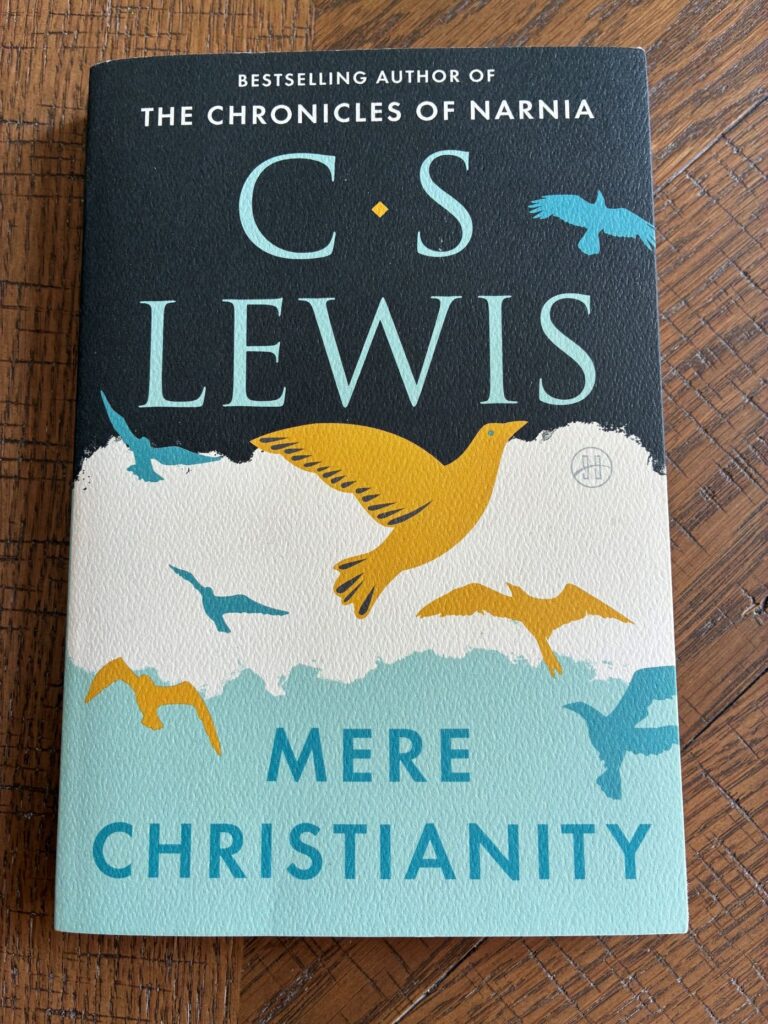
This is the conclusion to virtues that we started last week. When I look at these six chapters as a whole, these are supposed to more important then the ones from last week. There are a couple of things jumbling around in my head, including pride is not actually a virtue but a sin and the opposite of the rest of the group. That weakens the overall argument when things are not completely buttoned up. Below is a couple words on the points of each chapter.
- Love your neighbor
- Pride is the worst sin
- Love without like
- Christianity is focused on Heaven without any real knowledge
- Faith is a prerequisite to be a Christian.
When I look at this group, I see all of the most popular sermon topics. Faith, charity, hope, forgiveness and fighting pride are all of the tenants of Sunday morning. This is not to say that chastity or or marriage virtue are not important but they are typically not the focus in my experience. It seems appropriate that Lewis would put the focus on these virtues this week as they are in line with the typical Christian dogma.
I think that Lewis actually make some really good points this week. The Christian focus on things that we have no knowledge such as Heaven are pretty good fodder for non-believers. We like to come off as authorities in things that we really have no basis. In fact, we barely even have sources inside of the Bible and hearsay. While I choose to believe in the Bible, I will admit that the text has some dubious origins. I guess that is the very definition of faith.
Speaking of faith, this is an interesting topic. My definition of faith is belief in something that is not fully provable because of the desire to want it to be true. This can have what I would call good intonations and bad ones. We use that word in context of belief that a new coach will recruit better, hire better assistants, be able to see things other coaches did not. In other words, there is no definitive proof that the future will be better but that we want it to be.
We use faith as a transference of things that are too distant or outside of our circle of influence. I have faith that the fund managers for the mutual funds in my 401K are being executed to the best of their goals. I have no idea if this is true or not, but I want to believe it and as long as the funds are meeting my expectations. I have no idea whether those funds could have made 50% more and I never will because I am not there.
Faith has to have some ambiguity to it. If it is 12AM, it is not really faith to say that by 9AM the next day there will be daylight (in most months). Unless the sun explodes overnight this is more of a fact than faith. We can have faith that we will wake up the next morning, but that is not guaranteed. People of all ages go to sleep and don’t wake up. This is not to mention that there will come a day that will be our last. That being said, the probability that I will go to sleep and not wake up is extremely low. It is not nothing so I have faith.
I used the word dogma earlier in this post. That was intentional. I think where Lewis’ arguments here break down is the overall purpose of the work. You cannot use circular logic to prove something. God exists because you should take care of people less fortunate than yourself. It is commanded through the Old Testament and approached in softer ways through Jesus. That is not proof, the supporting the argument is reinforced by the very subject in doubt.
I don’t think anybody ever said that Lewis was a trained philosopher. Maybe his reputation as a celebrity was the best way to make a convincing argument. It happens all the time in this current culture. I guess what I am saying is that the overall argument is weakening for me. We will see if by the time we get to the end things hold up.
End Your Programming Routine: It is not explicitly stated in the book or in some of the other analysis that I read that we have shifted from proof completed to what is inside of Christianity. I am speculating that this where we are at this point. That being said, I go back to this work being a message of hope during the Nazi air raids of WWII. Strict adherence to Christian chastity doesn’t really do that for most. They might have wanted some faith that their bomb shelters were good enough. I don’t know, I am getting a little lost in the point now.
Recent Comments