Tag: Chapter 2

January 23, 2026 – The Talent Code: Part 1, Chapters 1-2

Admittedly, I did not know anything about this book before I purchased it. It came from a co-worker recommendation a couple of years ago. If I remember this conversation correctly, I was telling him about my former position at another company. I believe that he said something like, you should read this book that I just read. I wrote the title down and then I just waited until I had some time to fit it into my reading.

Honestly, I was expecting the book to be about techniques to get the best out of people as a leader using teambuilding skills. At least, that is the conversation I was having with my co-worker. I didn’t even read the dust jacket and just jumped into reading the book. To my surprise, it has nothing to do with that. The book is all about how the individual masters skills.
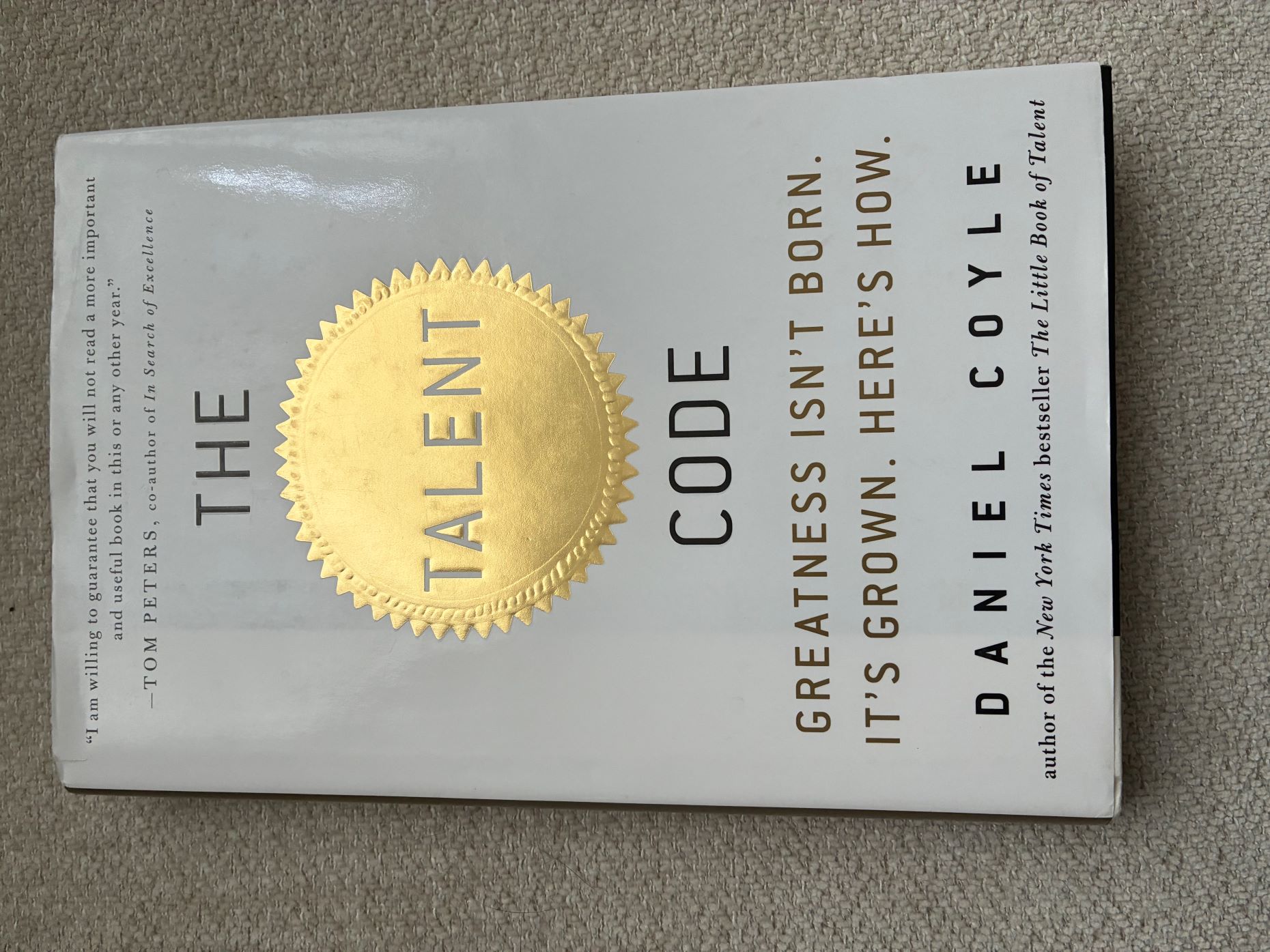
Because I was expecting something different, I was puzzled when I read the introduction. What do high performance teams have to do with a middle schooler practicing the clarinet? It is no surprise there, nothing really. OK, I am going to change my paradigm now, we are going to get educated on how to learn skills well. This is up my alley.

This is going to sound a little spacy but Coyle’s assertion is that the way we master skills is by something called deep practice. That act of deep practice in turn causes a bio-chemical reaction for the body to build a compound called myelin. This is the material that wraps nerve fiber. The more the deep practice, the thicker the myelin gets. This then causes the message transmissions to become faster and more precise. That is mastery.

The phrase deep practice has a specific implication. Deep practice is the act of working until a mistake is made, stopping and analyzing the problem and starting again at that point. Coyle uses a word exercise to try and prove a point. If you struggle with something then you are more likely to recall it and in turn master it. The list of words that he provided with missing letters was more memorable then the list where everything was filled out.

Coyle’s also asserts that there is a phenomenon out there that seems to line up with the theory anyway. Why do so many major league baseball players come from the Dominican Republic? It is because the culture has mastered deep practice when it comes to baseball. They are not a super race of baseball phenoms and certainly pound for pound when you look at Olympic medal totals it not because of genetic athleticism and deep population pools.

He also maintains that poorer demographics are more likely to use deep practice because they don’t really have any other options. They are less likely to have analytics and coaching, not discounting those things but they are making mistakes and learning from them which is what then leads to greatness.

If that is then true, I am reminded of several misguided coaches that I have had over the years. They boldly assert that the phrase “practice makes perfect” is wrong. It should be “perfect practice makes perfect” when in reality the first statement is actually more true. Someone cannot get to perfect practice without practice. And it should also be noted that using this theory, repetition holds no value. If you are not trying to do it faster or better or some other variation then likely you are actually repeating the same mistakes in your ‘perfect’ repetition.

Another novelty to me is the 10,000 hours theory does not play a role but not as big as you would think. Remember that is that it takes 10,000 hours to master something. But, combine Deep practice with 10,000 hours and you will be a master. That make sense for me because when I think about certain things like reading, sometimes I have a difficult time remembering what I read. I am sure that I have probably read that many hours in my lifetime and yet that information is only temporarily available. It goes into my brain and then six months later I would have to read the book again to even know what that is about.

And yet, I think that I am a pretty good programmer. I struggled and struggled to get it. After months of debugging I sometimes found that the program did not work like it should. Things that technically were correct did not execute in ways that they were supposed to. I learned from that particularly to be a better programmer and test my work in smaller chunks to the point that I didn’t need to do that anymore because I had mastered the nuance.

End Your Programming Routine: Despite the fact that this is not the book I was thinking that it was going to be, I actually think that it might be better than that. Sometimes, things that matter are comfortable and familiar, but sometimes they are stretching us and making us better. While a business book is interesting, this may not be the right forum. Next week, we will cover chapters 3 and 4.
May 9, 2025 – In the Gravest Extreme: The Role of the Firearm in Personal Protection, Chapter 2

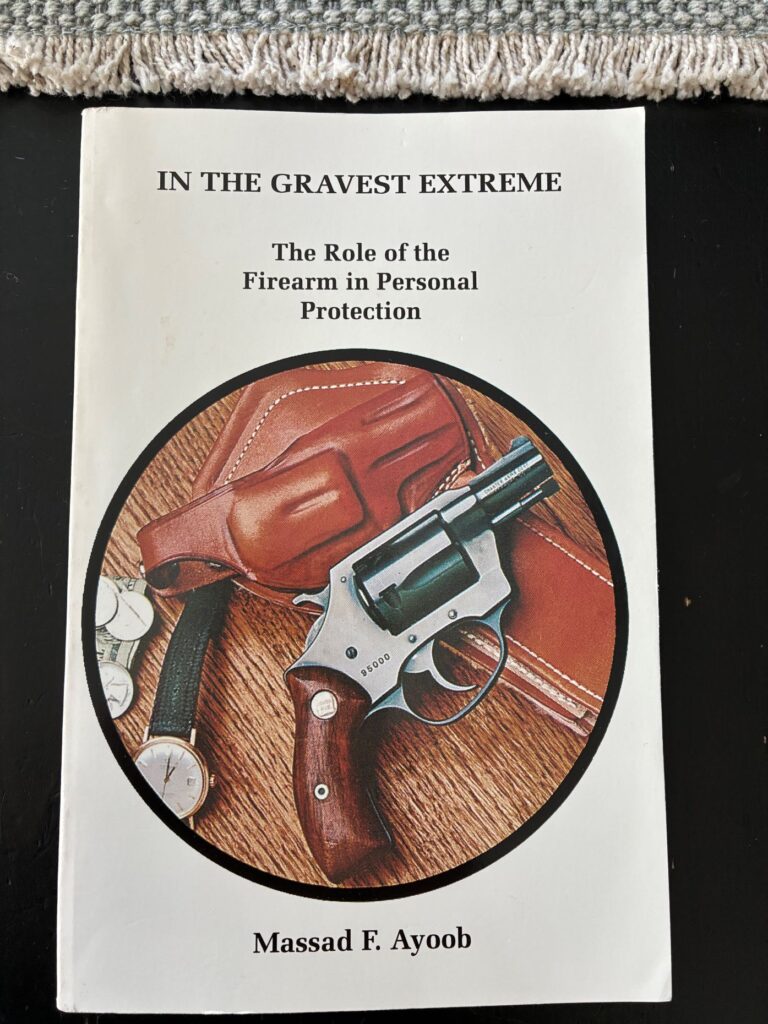
Chapter two is among the longest of the book which is why it gets it’s own week. Did you know that that there is a legal principal that force response has to be equal or lessor? Most of us would slap our foreheads when someone says you can’t just shoot somebody that simply insulted us. That seems like an obvious inappropriate response but there are more nuanced scenarios that you probably never considered or at least don’t know.

I am going to quickly cover some of the legal definitions in this chapter. To play in any world, you must learn the vocabulary. Otherwise, we cannot have any meaningful communication because it is likely two people would not understand what each is saying.

Lethal Force – This is a particular type of assault that has an expected outcome of death. This should not be confused with Deadly Force where the outcome is actually death. Depending on your skills and stature, simply punching someone may be deadly force but not lethal force. A man punching a baby is lethal force, an average man in a bar fight that ends in busted knuckles is neither.

Disparity of Force – This has multiple implications. Generally speaking in a one on one scenario, the person with the firearm has a disparity of force. But what if there are four people unarmed versus one armed? It is not favored in court to apply unequal force in the case of self-defense, particularly when it is deadly.

Equal Force – Unless you are in a Castle Doctrine state, it is generally considered imperative that self defense is only justified under equal force (or less). This is why we need to understand the concept of disparity of force first.

Reasonableness – The reasonableness standard is of course subjective and possibly changes with time. I think about the incidents where there is some kind of traffic issue and then the ‘victim’ chases the offender for redemption (or whatever). Would a reasonable person feel victimized in the situation and all of the above response reasonable? If the offense or response is not reasonable for the jury, then neither is self-defense.

Premises – The location of deadly force makes a huge difference to the standard by which you are judged. Incidents that happen at home have significantly different latitude that something that occurs at a public place.

Bare vs Reasonable Fear – Bare fear is fear that exists. It would be going to a certain part of town or someone wearing a motorcycle club vest. There must be more to the situation than bare fear like proximity and even more, belief of intent. You are on the same side of the street and they are aggressively moving toward you with agitation. Only reasonable fear is considerable for justifiable self-defense.

Innocence – The best legal defense is no protoorganism whatsoever. Remember that innocent is not the same as not guilty. If you knew there was going to be a gun-fight, it would be best to not go there in the first place.

Escalation – Escalation rarely is justified in self-defense. It get’s pretty muddy when you participate in some of the back and forth before deadly force. You possibly could have provoked the incident but met the other standards in the use of deadly force. For that reason leave the area/fight/confrontation before it starts.

This is a super quick run through of the key vocabulary terms. Many definitions have a significant amount of additional information, particularly reasonableness. So again, if you conceal carry and have not educated yourself with the intent for mastery in these subjects, you need training.

I find it untenable that someone can physically assault you and it still may not provide justification for deadly force. It all depends on what your grand jury neighbor’s feel is reasonable. As I keep saying, your particular jurisdiction may have broader interpretations of what is permissible, but if you stick to these definitions, it is much more likely that you stay in the clear.

End Your Programming Routine: In chapter one, Ayoob mentions that carrying a firearm is a privilege. I agree and disagree with that statement. It was certainly true that 1980 NYC (and today) it was a privilege because it is a very strict ‘may issue’ jurisdiction. Given more recent Supreme Court interpretations of the second amendment I disagree. Those are functions of changing opinions over time. One opinion that does not change is Ayoob is amongst the foremost experts in this topic. It would be wise to get these definitions down pat.

Next week, chapters 3-5.

March 17, 2023 – Animal Farm, Chapter 2

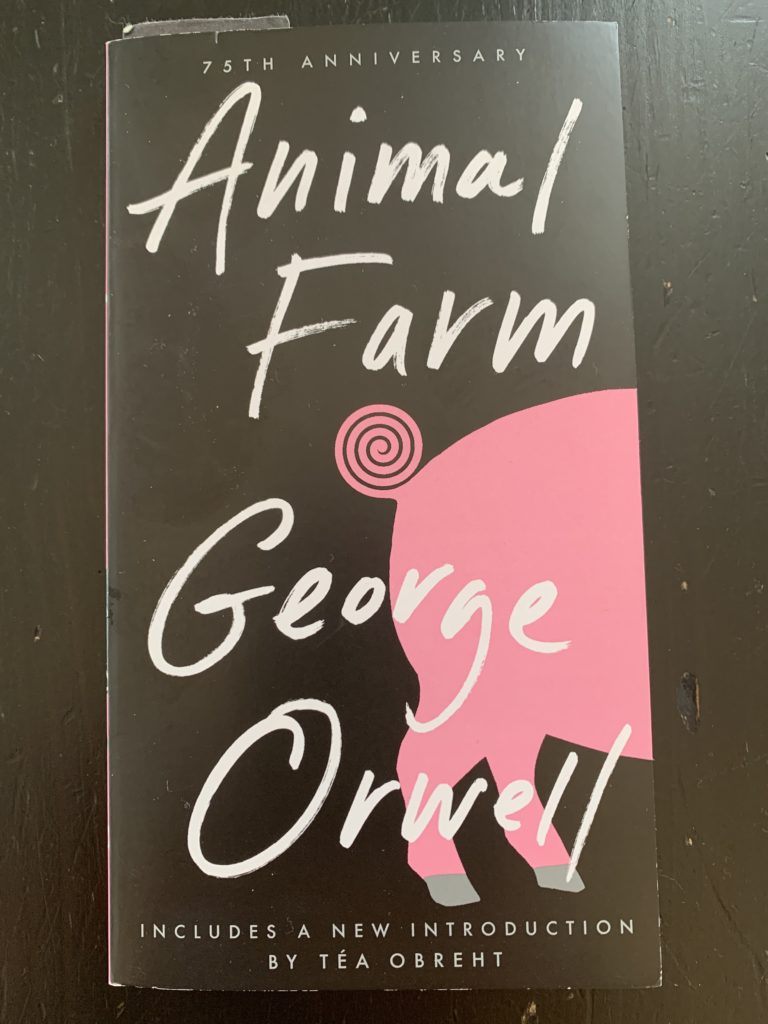
And in this corner coming in at Week 2, we have the bantamweight champion of the dystopian fiction universe, Animal Farm. There is still a lot of fight left in it as we have only seen one chapter. Animal Farm came out swinging with the Animal’s grievances against the human population. They landed some solid hits with accusations of starvation and abuse. This chapter they are going to put their fight plan into action but I think the humans are going on the ropes before it is all over.

Kind of silly of me but, I heard it in my head when I sat down to write. I hope that I can always laugh at myself and take some chances. Life is too short to be stiff and serious all the time.

All chapters of this book are short, so I am not going to keep repeating that. But as a synopsis of the chapter we have the animals chase out the Jones. Manor Farm is renamed Animal farm. The new leaders of the movement are the pigs Snowball and Napoleon. They come up with seven rules to represent the new movement. They are as follows.

  1. Whatever goes on two legs is an enemy
  2. Whatever goes on four legs, or wings is a friend
  3. No animals will wear clothes
  4. No animal shall sleep in a bed
  5. No animal shall drink alcohol
  6. No animal shall kill another animal
  7. All animals are equal

While this is seven specific rules, another word for that is a core values. Each successful movement is guided by things such as core values. Values differ from beliefs as values drive internal behavior as well as being outwardly visible. They help devise a code of conduct for behavior as well as provide a framework for evaluation when specific rules do not exist.

While not surprising, you could probably describe these values as anti-human. This type of behavior is sometimes described by the boomerang effect. Briefly, that means that when people get tired of a long period of one set of ideas or operating parameters, they often double down on on going the opposite direction in policy and attitude. The periodic swings in the US House of Representatives is a good representation of this.

I thing that it also goes without saying that movements are judged by their core values or more specifically adherence to. I think most people consider the legitimacy or sincerity of all members particularly leaders when they meet and live their core values. How many times are Christians chastised for not living up to values? Ironically, most non-believers have no concept of sin and fallibility. Nevertheless, it is an example that most people can relate to.

It is a little early to say how this will go, the animals just got started running their own farm. Will they all get it? Will they all buy in? Will they truly be equal? I think that we have enough human data to answer the question, but will the animals be any different?

End Your Programing Routine: Buying into core values are the first step to programming. Once the premises have been accepted, many decisions are boiled down to litmus tests. “Is this situation good” is compare to established criteria within your values and there is really very little additional judgement is involved because the outcome has already be predetermined.