When I was planning on how I was going to break this week out, I really didn’t know what was in chapter 17. The fact that it is a fictional story of the women that previously did not have boundaries and how she was buffered around by life and now she is promoted and in control I find to be a little bit pedantic. With that said, I am not going to address chapter 17 any further.
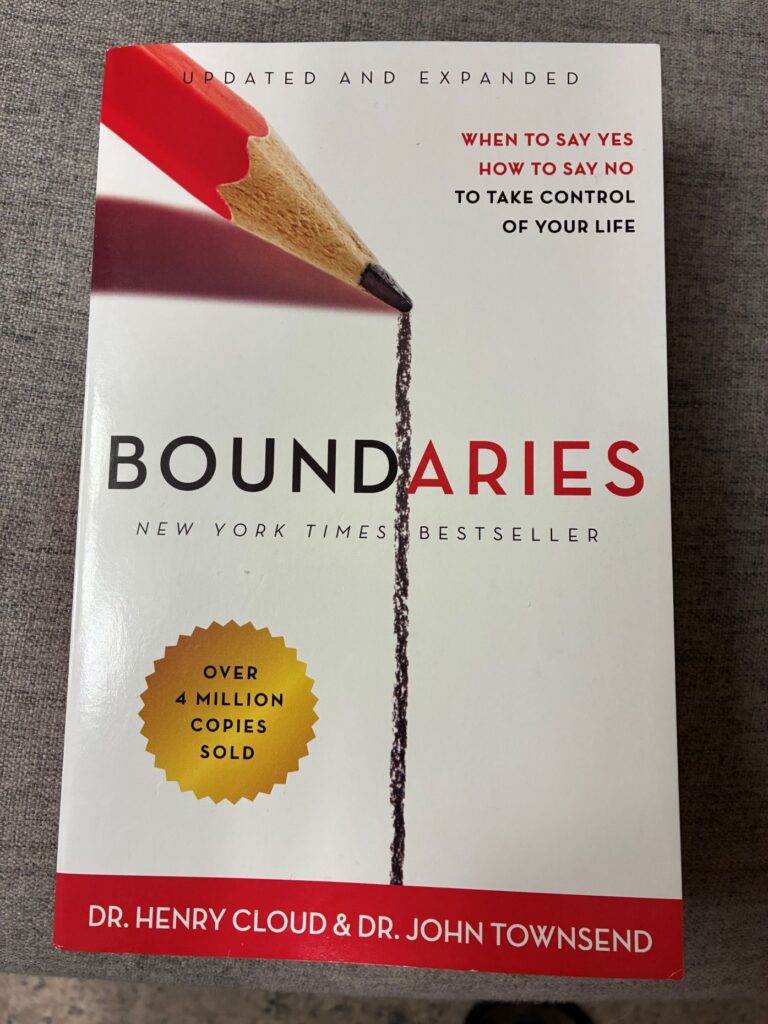
I won’t say that I did not learn anything from this book because that is not true. But, what I will say is that I found myself annoyed reading it sometimes. The bent toward being too Christian to have boundaries and the anecdotal fiction that ‘read this book and everything is going to be alright’ is problematic. I don’t think that if Dave Ramsey wasn’t constantly pushing it that it would have ever made the sales numbers that it did and for good reason. It just is not that good.
Let us not throw the baby out with the bathwater though. I know from personal experience that when you have deficiencies, it is extremely difficult to change even with cognizance. I really appreciated the perspective that you cannot fix it yourself. Even when you read chapter 17, Jean didn’t change her boundary problems alone, she had a therapist and a support group. I think that is what to take out of this book, serious boundary problems need help.
If you think that there might be a problem, reading this book is a good step in sort of getting a baseline. This also requires that you read it with intellectual honesty. It should be read, digested and contemplated. If you do that, then I think you will eventually come to the realization that there are things that can be done but real change cannot be done alone.
What more can I say? I guess that if someone were to ask me what to do about addressing boundary problems, this would be my first suggestion and really because it is the only one that I know. That being said, this is really not a recommendation. I think that if you knew nothing about anything, “Seven Habits of Highly Successful People” would be much more valuable even though it is not a one for one subject replacement. It is just that if you think of life holistically, one situation shares many similarities with many others even if they are not related.
Another thing about this subject is that there is only one person that can be changed and that is yourself. It is very difficult to deal with someone that is overbearing, especially if you are a pleaser like myself. They have to have the same realization that they have boundary problems and want to do something about that in order to have a day with boundaries.
As I said in the opening week of this series, I have been wanting to read this book for over ten years. I was married into an entire family of significant boundary problems. Just one example was that when my sister-in-law got married, that night they were paid a visit by the parents at their hotel. Years later, they laughed about it because they intuitively knew how wrong that was and yet they never internalized how damaging their constant inappropriate behavior was.
Quite possibly if I had read the book ten years ago, I would have realized that I should probably done some things differently. That is unfortunate because the primary reason for wanting to read the book is no longer with us. Possibly, I missed an opportunity to be a better person earlier then when I realized I also have boundary problems, just of a different nature.
End Your Programming Routine: Let me bottom line this book. I am glad I read it but I really don’t recommend it. I get it that it is intentionally marketed to Christians but I found the biblical case and support too weak. I also think that waving the Christian flag was a crutch for the not addressing the significant numbers of secular interactions we have every day. As an example, nearly every single person I interact with at work is from India and not Christian. It is just not someone trying to be overly godly that I am interacting with. If you have a problem, seek therapy now, don’t read a book.
Recent Comments