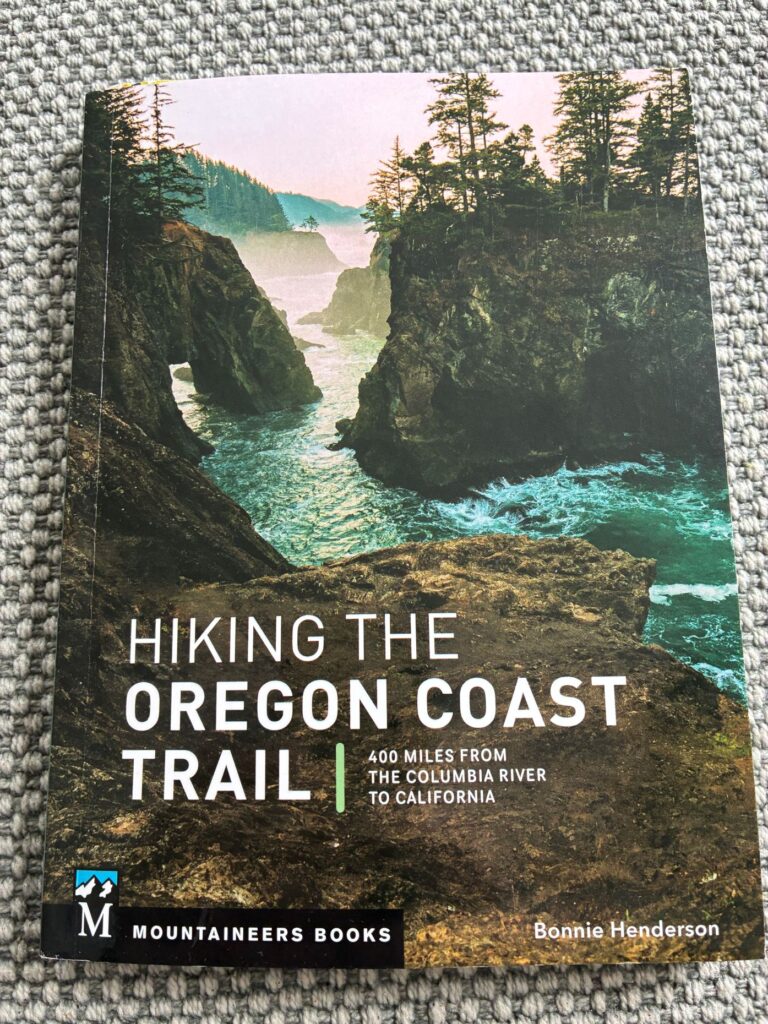
This is the self proclaimed guidebook that you don’t need. I didn’t say that, Bonnie Henderson the author did. The Oregon Coast Trail is a route that runs the entire length of the Oregon Coast. It is also one that I have hiked a portion of in the early 1990s as it was being actively developed.
One of the things native Oregonians stake their claim on is the precedent setting legislation that happened in the 1960s. But it actually starts much earlier, in 1913. Governor Oswald West declared that the Oregon Coast was a state highway. The declaration claimed that the high tide line was the extent of guaranteed access.
In the 1960s, a bill was introduced to make all beach access public. This would be all the sand/shoreline above the high tide land. After a supreme court case was settled, all the beaches became public property. The book claims that there are 262 miles of beach, other sources say 360 miles. It probably depends on how you define beach as to which number you go with.
The reason that the author says that you do not need this guide is because 90% of the trail is on the beach and therefore no trail guide is really needed. I can say with my experience that we walked a lot of the beach, in my memory it was more like 50/50. Memories can be fallible for sure and I have no way of measuring or validating that number. I simply remember spending a fair amount of time in the coastal forest.
The selling point from the author is that this book will make the experience better. For instance, if you want to keep to 90% beach hike, then you will need to ferry across some rivers. If you opt to stay on the ground, then you will need to detour up to a road, likely US101 and cross in a standard fashion. This not only adds some extra miles but also potentially makes your hike more like a highway walk.
From the central coast north, it is relatively populated. What that means is that even walking the beach you can go out to eat or stay the night in a hotel. In theory, you could walk from hotel to hotel for the night making this a very different experience than very remote Pacific Crest Trail. But, if you are more inclined for the roughing it badge, there are tons of camp grounds that provide amenities like water, toilets and cell phone charging.
I have a lot less experience south of the central coast. It is farther from me and there are many less ways to get there. In other words, it is much more wild and rugged. While the beach is 100% open all the time, the author claims that hiking October through April is not recommended due to the amount of water draining to the ocean. I can say for a fact that most cities storm water drains are piped directly to the beach. This can easily become a deluge of water given how much it rains and all of the elevation there is on the coast.
I personally think it would be crazy to hike in the wetter months to begin with. While we don’t have many hurricane type storms, I have seen roofs ripped off of restaurants due to such storms. I can’t imagine being exposed all day in that kind of weather. Not to mention, who would enjoy a day of 4 inches of rain.
My sudden interest in non-PCT trails should be obvious. With my decision to delay my hike a year due to lack of physical fitness, I need to find some places to test my abilities. Being that I am only an hour to the coast, this seems like a natural fit for more exploration. The author also claims that this is a trail that can be done in about 30 days. I am thinking that this actually seems attainable rather than the six months for the whole PCT.
End Your Programming Routine: The recommendation to hike southbound seems tame enough. That is because northbound is into the prevailing wind (which is the way I did it). Those are the kind of recommendations a book like this gives. This is a local author who has done it more than once. Even if I never do the hike, I am proud to support people who are willing to help others with their experience.
Recent Comments