We have made it to the end once again. I have to apologize that my focus has not been nearly as good as it should have been. This is only a 220 page book that took me over four months to read. On one hand, when something is dense and thought provoking, speed is not a good metric. But, my plan was not to read and ponder each word but to read a reasonable length block a week. This should have been approximately one short chapter a day.
I think what is pretty telling is that I read about a third of the book before I even started writing. I had a huge jump start at the beginning of fall which lagged and lagged. On both fronts it is telling about how I approached things. One being how late I am and the other about what I thought about the book.
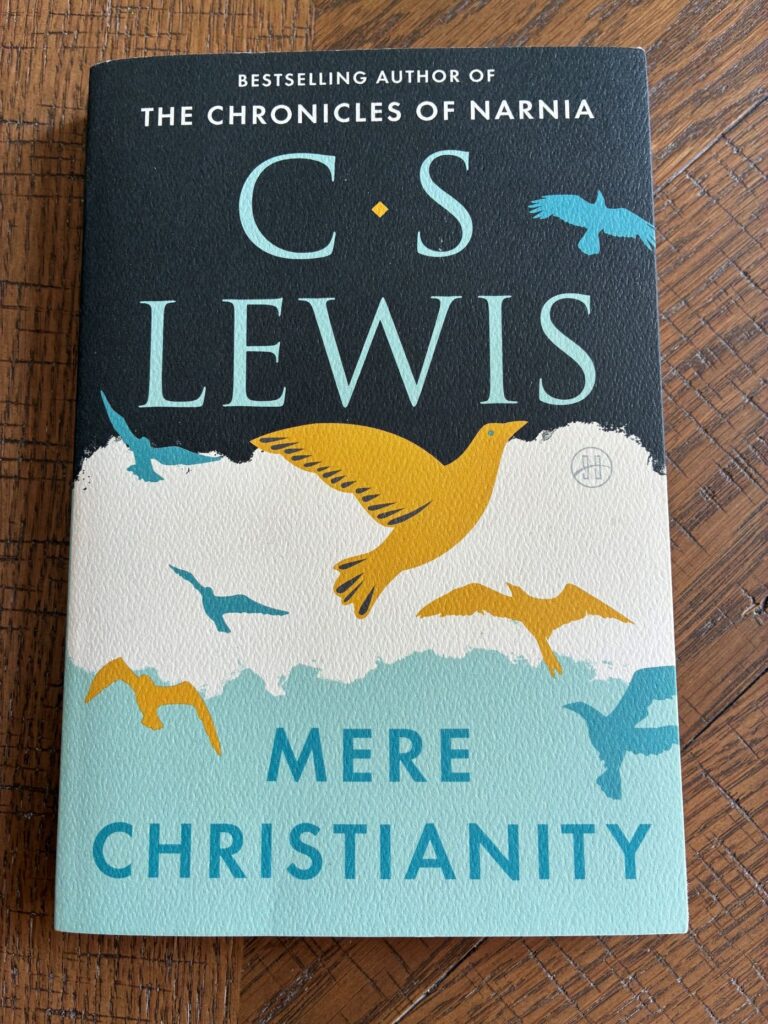
I started out with pretty high hopes. Not only did Lewis attempt to do something nobody else has ever done, but he went about it in a way that was disciplined and secularly approachable. After a quick and spectacular start, the book and the argument got bogged down. That is as good a place to start as any.
In the introduction to this book, it was stated that this was originally a radio broadcast to the British people during World War II. The stated purpose of the broadcast was to provide hope to a nation under a looming cloud of war, specifically the early German bombing London. I think that it is a pretty good strategy to reassure everyone that there is something better than this life if things don’t go well.
I think where I got stuck on a hump is after book one, it is pretty much assumed that the point was sufficiently made. From Book 2 forward, it is all about doctrine. I suppose that if you were a brand new convert you might be at that point of tell me more, tell me more. It is probably a pretty good bet that this radio broadcast landed best with the non-believers followed by the conservative Protestant denominations. That more than likely is the majority of the British citizenry.
I definitely don’t want to argue theology. One, I could get my behind whipped by someone educated and prepared. And two, I don’t really care. I might not agree with doctrine such as the trinity but you can be darn sure that I am open to it and I respect your right to believe differently. I also strongly agree with the better good position rather than pick at nuance.
Despite what I said above, the rest of the book didn’t do that much for me. I am aware of biblical virtues and the supposed way to eternal salvation. I am aware of theology and beliefs and where they differ from mine. I think also that we have to look at mindset. Because I am already a believer and this does not reinforce my beliefs already, the whole things kind of fall flat.
The way that Lewis presented his case, he of course took from his own line of belief as defacto truth. Sitting from where I am, I would have been more interested in going deeper into the justification for those items. I am not opposed to challenging my own beliefs, in fact I would welcome that. But, then again I guess this is not the intent of the work in the first place.
OK then, who is this book for? I would say that it would appeal to Lewis fans, historical fans and people questioning the existence of God but are open for the possibility. I am not going to say that I didn’t get anything out of it but where it started and where it ended were disappointing for me. In that vein, I am glad to say I read it and I can recommend it circumstantially.
End Your Programming Routine: This is one of those books that I should come back to in a couple of years. Now that I know what to expect, it is likely that I will come back to a different opinion. It is short enough to read pretty quickly and I wouldn’t be surprised to have a more favorable outcome or at least new perspective. When something is labeled one of the greatest at anything, it is only an opinion. Just like this.
Recent Comments