Author: bhayes952

January 23, 2025 – A New Year, New Gear Part 3

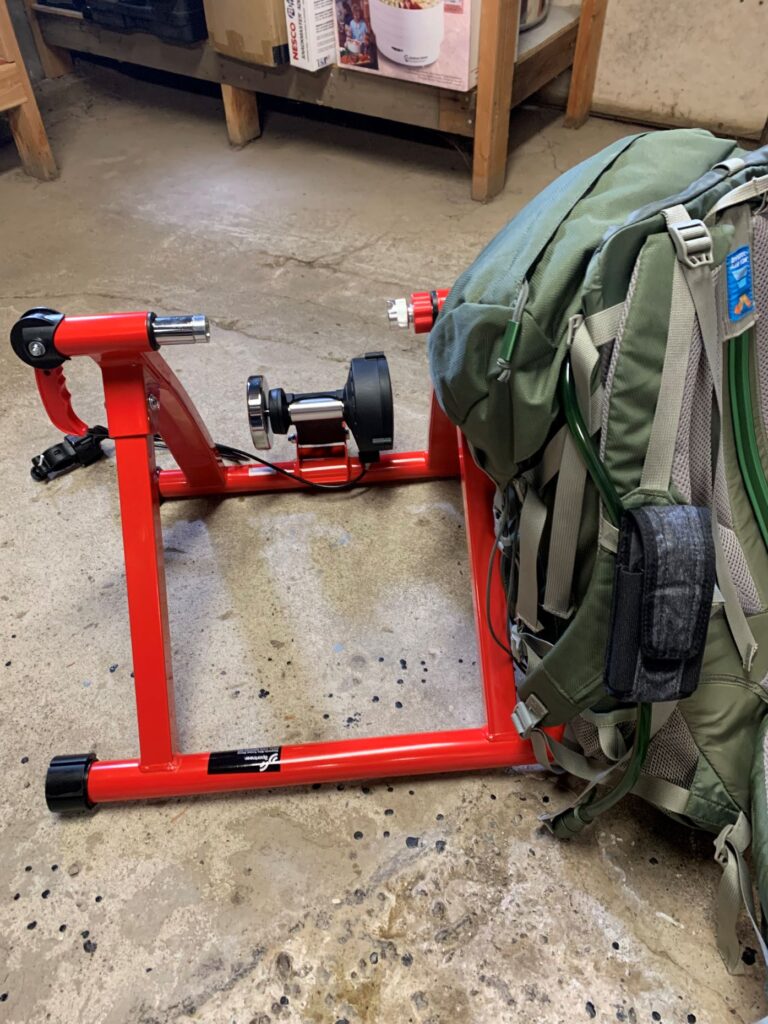
It is not as sexy as a new pack for sure. But one of my worries has been having enough water during the day. I have never been in love with the water bladder but it might be something I warm up to. The volume, form factor, weight and the fact that all packs are designed for it are starting to change my mind. The one I have pictured is what I am calling my practice setup.

The reason it is practice is two fold. The bladder pictured is smaller than I intend on carrying. It is also sized to carry in some of my smaller packs that will use for day hikes and less ambitious endeavors. The other is that it is inexpensive. I plan on primarily filling it with water and just carrying around for additional training weight. I would rather do that with a $10 item than a $50 item.

I have been thinking. I may in fact choose to carry two bladders. Here me out, if water is a mile away, then I don’t want to fill up at the end of the day and then cook, wash, etc only to have to go back another mile the next day before starting. That would give me the capacity to carry additional water to the camp site without making an extra trip.

It is also a known fact that I am preparedness minded. Water is primary to life, I can loose all my food to a bear or something but without water, that can be terminal. If for some reason my one reservoir breaks, doesn’t hold water or doesn’t work there are no other options. I was also trying to solve how to carry up to 6L of water, I think this is it.

My boys are users of water bladders for years. It is common for me to see them sitting on the dish drying rack for a month while I patiently wait for the boys to deal with them until I finally have had enough. For that reason, I invested in a cleaning kit that also includes a hanger or spreader. I take care of my stuff, even cheap stuff but I hope that they will too.

To the far right, is the worlds most expensive piece of aluminum. Of course the purpose is to dig holes. Reading the instructions, I was surprised to read that the initial digging was with the handle. Then you flip and pry with the spade side. We all know what the holes are for, but it would be useful for clearing tent sites and other things a shovel is for.

I’ll be the first to admit that I don’t appreciate water and sanitation. You might even say that I take it for granted because I have never really been effected by the lack thereof. That being said, I am a student of history and take any pre-modern event and look at the lack of sanitation. The Oregon Trail being a very famous one but more people died from disease than the battle field in Civil War.

It is not to say that pre-modern man dug holes before doing business but in a concentrated area like the PCT, nobody wants to see that. That is the real purpose, not that it is going to contaminate the earth. Another interesting factoid that I heard on the Outside podcast was that in the Grand Canyon, everything needs to be packed out, everything. Supposedly, the humidity is so low that waste never decomposes, so it is not allowed.

This is exactly the kind of thing that needs some practice and that is why I am working to get geared up in order to do that. Maybe I will find I don’t like the bladder, I haven’t used it but I have carried it. I chose the shovel because it was light. If it sucks digging holes, then it would be a lot better to know that now so I can start looking for and alternative.

End Your Programming Routine: Not every week am I going to be able to buy (and write about) new gear. Next week will be one of them. I am not sure exactly what is next on the gear list. Clearly, I have been on a buying frenzy since the beginning of the year. Christmas, my birthday and good fortune have aligned for that. No matter what I choose, I have a list of things and I will keep plugging at it until it is time to go. However you slice it, water and sanitation are not sexy but critical.

January 22, 2025 – Hot Dish Confidential

Hot Dish Confidential: That Year My Friends Taught Me to Cook by George Sorensen was the Left Coast Culinary book club selection for January. As it turns out, one of our club members has a shirt tail connection to the author and apparently he lives locally even though the story largely takes place in Minneapolis.

I am just going to have to play the hand that I am dealt. The book starts out really promising with a description of a family dinner at a restaurant that no longer exists about a hour from me. I couldn’t follow exactly but somehow George feels guilty about the fact that he cannot cook and starts what could best be described a dinner club.

According to the book, the author takes the lead in organizing themed dinners where each of the participants contributes something to the effort. There are a some differences between what they do and what we do. Ours is a dinner theme based on a book. It seemed like many people were actually cooking immediately before the meal in most months of the book. They sometimes incorporated costumes and there was one person in charge of wine.

The theory is that this is a story of a year learning how to cook. Therefore, each chapter is a month to make up that year. My criticism is that he never really talked about learning to cook. The way that I read it, George organized each dinner an nearest I can tell he learned by being there. On top of that, I would guess that at least a third of the book is him travelling to other countries and at least one section he talks about how he was suckered into an Amway meeting.

To be blunt, the book is poorly written and would benefit from some serious structural editing. Late in the book, he starts talking about Susan as someone special like it was obvious to the reader. I inferred that this was to be his eventual spouse but there was no mention prior and I even went back to re-read the previous chapter to see if I missed something. I got the feeling that most of the book were events in his life that were thrown into a blender and reordered to fit into the idea of the book.

I definitely understand that travel and culture can relate to appreciation of food and by proxy recipes and technique but I have never learned anything about cooking by going to a restaurant. Given that was such a prominent proportion of the book, I have to call bull on the premise in the first place. The book would have been so much better if it had just been anecdotes of a year of this supper club.

Even the title is misleading. There is a small definition of Hot Dish in the beginning. For those of you that don’t know, Hot Dish is midwestern term for casserole. It is what it is, not fine dining but as much as I like good food, I don’t turn up my nose at casserole. Other than a couple of pages, Hot Dish played no role in the book at all. Just based on title, I am disappointed that the book wasn’t more relatable or down to earth.

It was not one hundred percent bad, I enjoyed learning about how they ran their club. There were some recipes in the book. I made the Asparagus quiche for the meeting and it turned out well. There was a number of ideas and pairings as a result the monthly menus that I think were inspirational.

End Your Programming Routine: It is not a cookbook, it is not even a cohesive story. Because this book club is a voluntary event that I enjoy, I do not regret reading the book but I cannot recommend it given so many other choices out there. If I had one piece of advice for George, the author I would say rework this thing so he could make a much more compelling argument for reading.

January 21, 2025 – Two Scanners Scanning

Six months ago, I had zero scanners and now I have two. Most work days I will have both of them on because I have a lot to learn still. I figured out a couple of channels by using Radio Reference. The real reason that I have two is that I would like to have one not just in my office but also upstairs, where we live.

My newest scanner (the handheld) has a neat, preprogrammed set of frequencies that are commonly used by emergency services. I have learned at least three new channels that I didn’t see on the Radio Reference database. Eventually, I am going to add them to my stationary scanner so that I get a more comprehensive listen to what is going on.

The thing about the pre-programmed scan list is that there are so many channels that it takes it takes about 5 seconds to scan through and I am pretty sure I am missing most of the conversations that are taking place. I think this because sometime I catch the tail end of the conversation on the handheld that I have been hearing on the larger scanner. This means that there is a meaningful limit to the number of channels to put into a scan group.

Another cool thing with the handheld is that is have several built in scan-lists. For instance there is a CB list. So I could run the scanner to determine a good channel to talk on. It also has a VHF channel list. This would be more helpful in a marine environment where I could listen to Coast Guard radio. Most of those channels are reserved for certain purposes like ships and harbors.

Do I need to have two scanners running? I don’t think so but once again there does seem to be a practical limit to the number of channels that effectively are scanned in any one group. I am doing it to collectively build a better list of channels. I cant say if the ones on Radio Reference are old or out of date or what. I could imagine a situation where you might not want the scanner to jump to public works while things were getting hot.

Currently, of the two I am liking the handheld better. It has an electric plug as well as batteries making it portable. It seems to get decent reception despite the fact I have the desktop version plugged into an exterior antenna. My only knock is the programming and use seems to be more complicated and less intuitive than the desktop. Actually, I have to read the manual each time I want to do anything for either. So, that is not saying too much.

Both of these I purchased from eBay for about $50 each. Don’t be surprised to find them for a significantly higher price though. You just have to keep an eye out and jump on the opportunity for lower price. What you might find for higher priced models is more accessories or possibly better condition. Then again, just keep watching for a good one.

I have yet to figure out how to handle trunking (or digital channel skipping) and that may be why I have not really figured out the Law Enforcement frequencies. Be aware that technology moves on and buying used may not get you what you want to hear. Do the best you can to research what technology your local agencies are using and compare that to the used models out there. Both of mine support dual trunking but not triple trunking. Fire, medical, public works are all using standard radio.

What I am saying is be wary of paying too much for something that might not meet your needs. You might end up disappointed. On the other hand, sometimes an out of date scanner for $20 may be exactly the entry point you want without breaking the bank.

End Your Programming Routine: Don’t be surprised if I end up with three scanners. I would love to own the Uniden Home Patrol for the very reason that it would shortcut a lot of the trial and error that I have been doing. Basically, you put in your zip code and a database with all of the active frequencies are ready to go. These are things that often come with subscription services and other costs (which is why I don’t have any now).

January 20, 2025 – Winter Is the Time For Rest

Since the beginning of time, man and nature rested in the Winter. I think I am inventing a new tradition. Just kidding, but today I talk about current events in my life and what my plans are moving forward. There is a reason the saying ‘No Rest For the Wicked’ is common. It describes me perfectly.

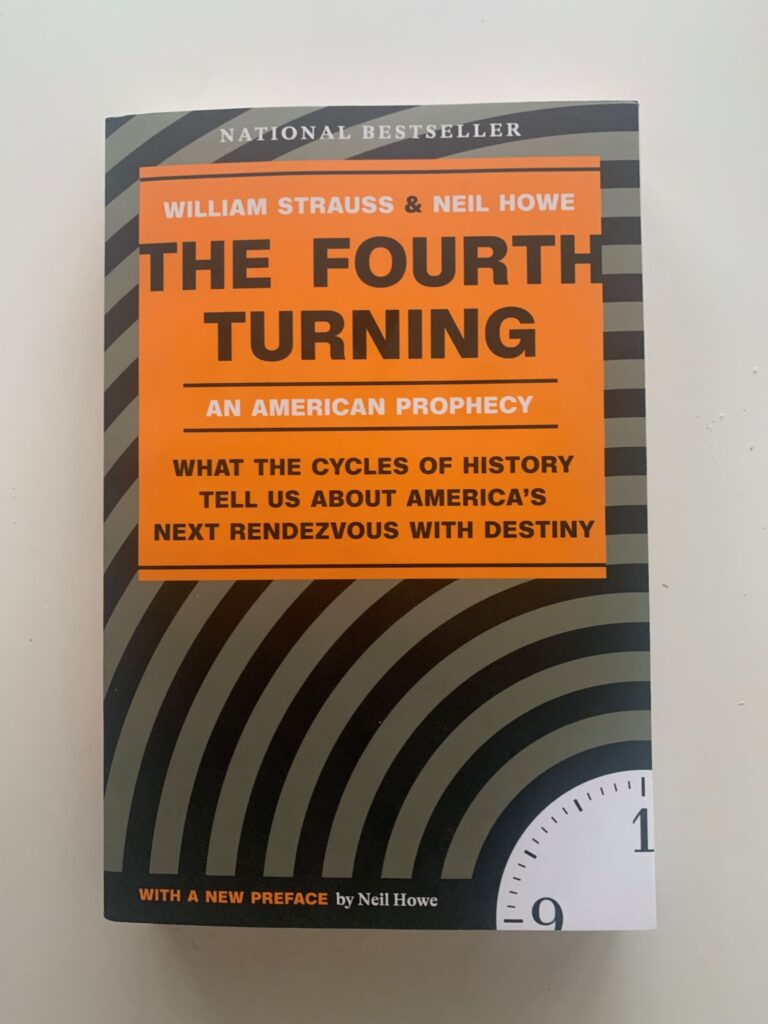
January 17, 2025 – The Fourth Turning, Chapter 2

In my exuberance to keep reading, I forgot some of the facts. I definitely got the main points but I wanted to make sure that I got the important things in detail since I have a whole day to write for. So, I had to kind of re-read the chapter to refresh myself on the details. This is the whole definition of saeculum.

The word saeculum is of Latin origin. The actual etymology is unknown but the term is attributed to the Roman Censorinus. He essentially codified or named the belief that the Roman competitors called the Etruscans believed. The way it worked was when the last living person that remembered a particular event died, then time started over.

It would be interesting to figure out what that actual thing was, but certainly we have had some galvanizing events in our history, say 9/11 or Pearl Harbor. This saeculum is deemed a human century. But, circular time is not unique to European culture for good reason. The Mayans and Hindus also had circular time because it was natural, following the seasons.

If time was circular, then certainly halfway between where you start and where you end is another significant event. This is the concept of Yin and Yang, something I have talked a little about with the Art of War. This is the reason for the balance between the two like Summer and Winter. I would be remised to not mention that others put a little more granularity into the circle. This is where we have Spring juxtaposed against fall.

As of 1997, American history perfectly followed a 80-100 year cycle. I am going to summarize the author’s analysis of American history.

  • Medevil
    • Crisis: War of the Roses (1459-7)
  • Reformation (103 years)
    • Climax: Protestant Reformation (1517 – 42)
    • Crisis: Armada Crisis (1569-94)
  • New World (101 years)
    • Climax: Puritan Awakening (1621-49)
    • Crisis: Glorious Revolution (1675-1704)
  • Revolutionary (92 years)
    • Climax: Great Awakening (1727-46)
    • Crisis: American Revolution (1773-1794)
  • Civil War (82 years)
    • Climax: Transcendental Awakening (1822-44)
    • Crisis: Civil War (1860-5)
  • Great Power (81 years)
    • Climax: Third Great Awakening (1886-1908)
    • Crisis: Great Depression and World War II (1929-46)
  • Millennial
    • Climax: Consciousness Revolution (1964-1984)
    • Crisis: 2025?

There are some of us that are wondering when the next crisis is due. By the math it would be this year. Something to note is that puts us at 81 years past the last cycle. Some cycles are 100 years while others are only 80 and therefore, it could be that the Consciousness Revolution is not at the climax at only 30 years beyond WWII.

However, having lived through most of it, I cannot see any other climax in that time frame. Generation X fits the prototype of the Fall generation with Millennials as the Crisis generation. We just don’t know.

One thing I find extremely interesting is every single climax is religious based. I have to wonder about our perceptive shift away from religion since the last Crisis. As such, has there been a true or detectable climax in this cycle? It was probably easier to say that the Consciousness Revolution in 1997 was the climax and add fifty years.

But what if the climax was secular? I would probably pick the late 1990s to early 2000s as the Internet revolution. The economy was the new God. If that were true then that puts the next crisis at 2030-2045. I would certainly argue that today’s political climate seems more like the 1850s with talk of succession and very clearly disgruntled constituents. The other thing to consider is that if Strauss and Howe are correct, we are due for some pain very shortly.

End Your Programming Routine: Hopefully you got the gist of saeculum. I find it fascinating that history has tracked so tightly to these timelines it gives a lot of credibility to the theory actually being true. It looks like the next chapter is about more granularity in that cycle. Think Spring and Fall.

January 16, 2025 – A New Year, New Gear Part 2

Meet my new pack. A brand new, 65L pack made by Gregory. As far as I am concerned, I am pretty brand agnostic. I guess to be totally truthful, I would prefer to support brands and companies that reflect my values and I bought this one without any research because it was the right size and fit the load the best of the ones I tried.

What I want you to know about packs is to go somewhere where people know what they are talking about. Yes, I bought a pack from a box store in the past without any sort of sales help. And if you are already an expert then that is fine. But this time, I went to a specialty store. I am not going to lie, it was REI and they do not generally reflect my values. That being said, they offer options and they provide help by people that actually do the work.

The first thing that they asked was have I been measured? Of course, the answer was no. I don’t remember the exact numbers but the results were the top end of medium and the bottom end of large. The reason this is important is that packs are sized both in what they can hold and the structure on how they fit on the body. Not only that, but different brands interpret S/M/L as exactly the same. Hence, go to a store that is knowledgeable about the product.

Another service that I got was having the pack roughly adjusted and a load added for each of the potential options. I was able have the pack optimized and walk around the store, including flights of stairs and see which one worked the best. You don’t get that from a box store or the internet for sure. Most of the other gear can be coped with but a pack is critical to be right. Hopefully, I made my point.

Another major difference between my 1990s, external frame pack and my new one is that the old one was designed to lash gear to the outside. That is where I put my sleeping bag, tent and pad. All bulky and heavy. For that reason, new gear needs to be considered to be put inside of my new pack. Everything, including sleeping bags are smaller today because they need to fit inside the zippers. So, the gear strategy is different than it used to be requiring evaluation of all of my old stuff.

A general rule of thumb is bags up to 25L are considered day packs. 30-50L packs are a couple of days and 50-70L are the week long size. Any larger than that and things are too heavy to reasonably pack. My current training pack is a 40L pack. I put some weight in it to give me something to lug around. I bought this pack with the idea that I would use it for weekend trips. Truthfully, I have used it very little since I bought it so it was almost new when I started training.

Incidentally, I was looking at the tag on my 40L pack and it was marked S/M. I have been having some problems with straps staying tight as I walk, While not completely uncomfortable, I wonder if that pack is actually too small for me. I thought the size denoted the capacity not knowing that they were built for body types.

One last thing to consider on packs. My two older packs are top loading. The advantage of that is that everything is well contained and they are considered to be able to hold more. Packs that can access the contents from the front are significantly easier to use. You do not have to dump everything to get to the bottom. I found with top loading options that the pack needed to be repacked every day.

I have tried to pack strategically but inevitably you should only be packing the things that you need. Therefore, everything needs to be accessed. This leads to dumping the pack every day and repacking. That is kind of a pain, I am hoping that this new, front loading pack is much more user friendly, but I will have to use it to be sure.

End Your Programming Routine: I have one more major piece of gear that I need to get and that is a tent. I am researching that now so more on that later. My plan is to keep using my training setup on a daily basis and to take my new pack out on some weekend testing. That probably wont happen until I have the tent however. Right now, I am just filling the new pack up with new stuff. That is my specialty.

January 15, 2025 – Wildfire, Go Now!

It is hard for me to say that fires are getting worse or there is just so many more people in proximity to the wild fire boundaries. Of course, the usual suspects wasted no time assigning this fire to climate change and it is our retribution for our fossil fuel reliance. I say it is waaay more complicated than that.

Early indicators say that this is another fire triggered by high winds causing sparking transmission lines in an unkempt power right away. Now we have Paradise, Maui and almost assuredly the LA fires with the same cause and deadly results. The latest conventional wisdom says to prevent these fires, turn off the power before the transmission lines spark.

Why that was not done, I don’t know. If I were to speculate I would say that it was probably too inconvenient for the residents and a lot of loud mouth, wimps that are prevalent in Southern California. That being said, let us put further blame and speculation behind us. Wild fire is no joke and survival is not a political topic.

We are very familiar with wildfire in the west. It just so happens the our fire season correlates with the dry season July – September. Being fire ready in January seems very out of mind to me. But, I suppose that is altered reality of California; nothing ever seems real.

The first step in this is to survive. Yes, there are anecdotal stories of people staying behind in Paradise and hosing down their homes with garden hoses and ultimately saving them and surviving. However, eighty-four people didn’t survive that fire. I would venture to say that more people died than survived staying home. The best tactic is to leave.

I don’t know the details and therefore it would be presumptuous of me to say that I would have been ready to leave with everything that I needed. But house fire or wild fire have the same result, so a fire plan is in order for everyone. What is your prioritized list of things to grab if you have time? Do your vehicles have enough fuel (or range) to withstand hours worth of traffic? Is there even an exit route possible when vehicles clog the roads?

I highly doubt that that it is possible to develop a perfectly, flexible plan. But thought can be a head start to reduce panic and regret. Having an assembly point, a place to go, insurance and documentation can go a long way to evacuation peace of mind. Everyone talks about the regret of losing memories, but it is often times not practical to grab that stuff before you leave unless you keep them ready to go at all times. That also seems not very practical.

I like a prepared car and a go bag would be a pretty good idea as well. This way if it is flood or fire or a zombie hoard you have a few things to hold through. Some snacks, a change of clothes, some toiletries and a deck of cards and a refillable water bottle would make life a little more comfortable for a couple of hopeful days. Those things could be ready for any emergency and a moment’s notice.

End Your Programming Routine: We all say this ‘It’s just stuff’. I sure would hate to have to make that decision but I also understand that we are not taking it with us. From that standpoint, survival is paramount. I am a big proponent of leaving when the ‘Go Now’ is given. Fortunately, I live in a very low risk area for that sort of thing but that doesn’t mean that I cannot have a house fire. Mindset. That is the most important thing.

January 14, 2025 – I Have GPS, Why Would I Need a Compass?

When I was a Boy Scout, it was a troop requirement to have a whistle and compass if you were going to leave camp. The theory was that you weren’t going to get lost but if you did, the compass was going to get you home and if that failed, blow your whistle until you were found. Keep reading to find out that was partially hooey.

My new compass

A GPS is an incredibly useful device. You can set a pin for your vehicle or camp and in theory, all you have to do to get back is keep walking to the pin. Rather an absolute navigation tool, the best use for GPS is actually relative data like how far or how fast it has been because strictly speaking it is not a perfect navigation signal.

While GPS can be pretty basic, it can also be much more interactive. In the simplest terms, The world have been mapped as a grid. A connection between you and the satellite just says where you are in that grid. Without a map, the context of that number is almost meaningless. It is possible to get coordinates to a destination and then you can simply navigate between where you are at to that coordinate destination.

The more sophisticated devices have an internal memory or at least a way to insert a micro SD card. That is where you would put your map which then gives context to the screen. Today’s younger generation has bypassed those devices in favor of the mobile phone which already has a GPS built in and plenty of memory. Services such as On-X provide detailed maps as a subscription service making the old GPS devices seem like dinosaurs.

Great… so why would we need a compass if this gizmo does everything that I want? First of all, if you don’t know how to use a compass it does you no good at all. Second, without a map even knowing how to use a compass has very little value. Sure, you should be able to find North pretty easily, but I would expect even a novice outdoors person to be able to do that by the sky. This is why carrying a compass in Boy Scouts was little more than mental dissidence.

I have found two significant problems with GPS devices. The first is terrain and vegetation will block satellite signals. This makes these expensive gizmos useless. The second is that they all run on batteries, so unless you are going to have a way to power them, they are going to stop working (relatively quickly). This is not to say that I am not going to continue to use them, but I recognize the limitations and they may not make the final gear list.

I will carry a map, so I might as well also have a compass. I should also point out that the map should preferably be a topographic map. You are going to use the highest points as targets to try and figure out where you are on the map with lines called azimuths. Once you know where you are, then you can figure out how to get where you are going to go. A compass will provide the bearing as you continue to walk in the direction of your target.

I will likely not use orienteering for navigation. The trail will be relatively well marked and the map will likely come out with signage and other landmarks. People do say that at times the trail is not well marked or covered with snow so it is possible to get off course. I have learned ‘Be Prepared’ even if it comes with a weight penalty. I will also have my watch (GPS) and likely my phone another GPS. All of these things need practice for proficiency.

End Your Programming Routine: I should probably write another article that talks about orienteering strictly because there is more to know as well as some other issues. But I think that you can tell I am advocating for map and compass. The National Geographic map of the PCT is larger than pocket sized but very detailed. You can’t go wrong with learning another practical skill especially one that doesn’t need batteries or a satellite signal. It might even save your life.

January 13, 2025 – If There Was Something To Like …

about a Politician, then this might be the one. There has been a lot of to do about recently deceased, former president Jimmie Carter. I acknowledged last week, while I was alive during the entire term of Jimmie Carter I don’t remember a single thing. As a result, I have been reading a lot of anecdotes and other things about the man. Dare I say, his legacy as a President might be dubious but his legacy as human is impeccable. Is there anything else more important?

January 10, 2025 – The Fourth Turning, Chapter 1

Finally, it seems like a book that I can get into. I have already read beyond the required chapter as I am writing this. This book seems like one of those that I could read a couple of times because it is pretty deep. Not only is it filled with history and facts but it is deep as well.

I will cover a little more than Chapter One today because the preface is relevant to the whole story of the book. The preface is an update on the span of things that have taken place since the book was written. Unfortunately Strauss has passed away but the book was published in 1997. For you math challenged, that is over 25 years ago. And if you follow the book, that is an entire generation.

I talk about the nineties a lot but it is helpful for perspective. 1997 was squarely in the heyday of Generation X. The oldest Xers were in their early thirties and the youngest were in their mid teens. Not only has twenty-five years of history past but so has the perspective of what those events meant. I will extend some grace to the book as result, but any good and valid theory should be able to stand the test of time.

The key concept in this chapter is the measurements of time. According to the authors, there are three measurements of time. They are described chaotic, linear and circular. Let me give a brief definition of each.

  • Chaotic – Random or unrelated
  • Linear – Continually evolving or not repeating
  • Circular – Repeating

Let me try to explain a little more behind these three from the perspective of Strauss and Howe. It is widely held that Chaotic time is pre-recorded history. What they are saying is that there was no record of events beyond the living. As a result, everything seemed random or unrelated. The hundred year flood probably occurred before the last living soul and therefore it seems cataclymic.

Linear time came into being largely as a result of religion. I am most familiar with Christianity so I can speak to that. When Christ was born, the Jewish belief of the coming of God was fulfilled. As we sit, we are waiting for the rapture or the second coming in 2025 Anno Domini. Once that occurs, life as we know it will no longer exist. Therefore, as far as Christian history is concerned this is a linear pattern.

Many ancient cultures actually believe in circular time. There is much more about this next chapter so I don’t really want to spoil next week. Regardless of religion, the earth has a cycle, seasons have a cycle so why not time? This belief was superseded after the fall of Rome and the heavy dominance of the church but was rediscovered in the Renaissance in the western world.

It should be no surprise that I think the truth is somewhere between the Vin diagram of the three. There has to be some random events, Those would have to lead to linear time but in turn, common existence is circular. Lets go back in time to a controversial or unproven history. What if the meteor had not hit the earth and created a global cloud that killed the dinosaurs? That is random and linear. While the earth’s celestial travel is circular, the chances of a collision again have not been mathematically determined. The odds of it happening again are not known but it at least seems chaotic.

I don’t think that it is foreshadowing or even a spoiler to say that Strauss and Howe believe in circular time. For that matter, I believe I do as well. It is their contention that cycles have highs and lows but that means that we as a society are bound to experience both. When you look at their perspective and timing of the book, they were in the midst of a huge economic boom and the fall of the Soviet Union. The US was unstoppable in the late 1990s. Uh Oh, trouble is bound to follow, but where? Hence the name of the chapter “Winter Comes Again”.

End Your Programming Routine: OK, so we are off to a good start. Next week is going to be all about the origin and particulars of circular time. This is the setup for the whole premise theory so we have to restrain ourselves just a little bit. Let us enjoy the journey a little bit since last year was a difficult one on Friday.