Here we go again. This book by Mareya Ibrahim is the Left Coast Culinary Book Club selection for July. It is part cookbook and part guide book for clean eating. I don’t know all of the specifics but we now have a member that has dietary allergies. This is kind of unfortunate for the club but we are working our way around it by now labelling all of our dishes with an ingredient list.
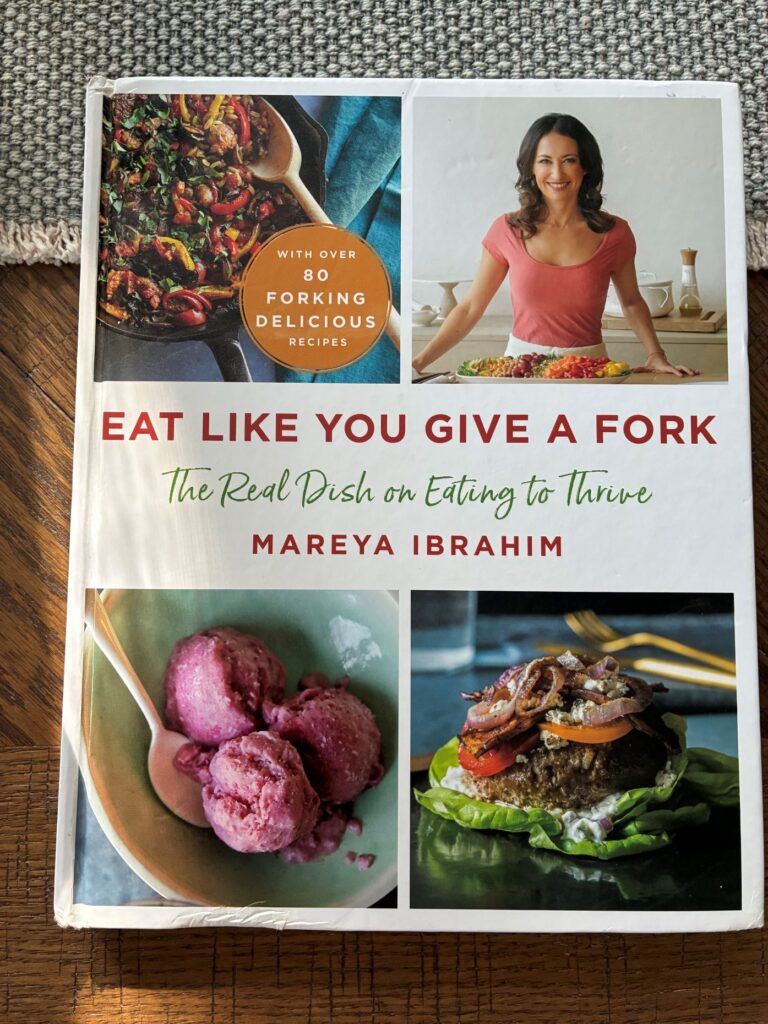
When it comes to cookbooks, I don’t really read them word for word. I do scan every recipes and I will read any sort of ancillary comments or recipe introduction. This book is really half text and half cookbook. A lot of it is a justification or overview of the section. More on that in a minute.
This book is a conundrum for me. Part of it I absolutely agree with and part of it I absolutely disagree with. But, let’s save the overall judgement to the end. Ibrahim’s reasoning for clean eating I absolutely agree with. The basic premise is our American’s diet is garbage. Like any other detox, you have to break your association of activity to result. She suggests a two week training course to re-adjust your taste buds. She talks about how kids need to try new things a number of times to get accustomed to the food. This is the first section.
I have no issue with that. I do feel strongly that our diet is a choice. Many of us are lazy more than we should be. Lazy becomes habit forming and pretty soon we have health problems. Ibrahim’s suggestion is that every plate should be 50% non-starchy carbohydrates. I have no issue with that either, it seems pretty smart.
When you start to re-introduce starches, she goes into a lot about good and bad grains. I certainly understand that people with gluten sensitivity absolutely need to stay away from gluten. The research that I have done into paleo says to me that it is not the grain per se that is the problem, but the glycemic conversion of sugar to energy that is actually the problem. It is that conversion reaction that causes inflammation and inflammation is the root to many of our modern health problem.
The next subject that the book talks about is protein. Guess which way it went? You guessed it, fish and white meat chicken. Red meat is highly recommended to eat very sparingly. I can certainly say that I disagree with this recommendation. Fish, chicken and red meat are all good sources of protein. This is especially true when you are not combining fat and inflammation at the same time.
Since I brought up fat, I certainly side with Ibrahim on eliminating trans fats. In my book there are two types of fats that are good. One is pressed from something like olive oil and the other is from animals. I can in no way endorse grape seed oil or any oil that is the result of distillation.
What I will say as a positive for the book is that if you followed it, I am confident that it is an infinitesimal improvement over the typical American diet. I think my concerns over the book is I cannot fully endorse the science or lack thereof. This is a huge problem in the health and nutritional field. It is so convoluted with industrial food, pharmaceuticals, politics and money that it is almost impossible to find truth.
My real worry is that people already ignorant of how to use logic to assess truth from fiction come out of this reading half baked. One other thing that bothered me about this book was that the language was pretty chippy, it is even in the subtitle. Just like all the crap on YouTube/Facebook/Tick-tok that is entertaining more than educational. There is an old saying that ignorance is dangerous.
End Your Programming Routine: Maybe I was a little harsh on the book? It’s not bad, it’s just not great. I wouldn’t give it as a gift to someone else but if you wanted to start somewhere why not here? This is why I started where I did today because I could strongly agree and disagree with parts of the book. The first place to start is actually starting and this book can help with that.
Recent Comments